
Lieferung heute & morgen

Qualitätsgarantie

Willkommens-Angebote freischalten: KOSTENLOSE Lieferung | Bis zu 80 % RABATT | Kostenlose 30-Tage-JoyPlus-Testphase
App herunterladen
SPF 50 face sunscreen is part of many people’s daily skincare routine – not just when they’re on holiday. In Germany in particular, choosing the right product can be tricky, with terms such as ‘invisible’, ‘water-resistant’ and ‘for sensitive skin’ to consider. These claims don’t always mean that a formula will suit your skin type or how you plan to use it.
The SPF rating mainly indicates protection against UVB rays, which are one of the causes of sunburn. SPF 50 or SPF 50+ offers a high level of UVB protection when applied correctly. However, how well it protects you depends greatly on applying a generous amount.
A thin layer may feel more comfortable, but it reduces the protection you actually get. Use the amount recommended by the manufacturer for your face and neck. If you’ll be in the sun for a long time, you’ll need to reapply regularly.
Lightweight sunscreen can come as a fluid, gel-cream, lotion or milky formula. Dry skin often needs more moisture, while a shiny finish may be unwelcome if your skin is oily or blemish-prone. ‘Non-greasy’ also doesn’t tell you whether a product will pill under make-up or work well with the skincare you already use.
If you’re looking for non-greasy sunscreen, check for texture descriptions such as ‘fluid’, ‘watery’ or ‘gel-cream’, and read the full INCI list.
Water-resistant sunscreen can stay on your skin for longer while swimming or sweating heavily. Even so, you’ll need to reapply after drying off, when sweating heavily and at regular intervals. Water resistance isn’t a licence to spend longer in direct sunlight.
For everyday use, a product with SPF 50 or SPF 50+ is a good choice if you want a high level of UVB protection. You should also look for clear UVA protection. The European UVA symbol inside a circle and claims such as ‘broad-spectrum UV protection’ can help you identify it.
The PA++++ sunscreen rating comes from the Asian rating system and indicates a high category of UVA protection. You may see it on Korean sunscreens or Japanese products, but it isn’t directly equivalent to every European labelling system.
Mineral filters such as zinc oxide or titanium dioxide may be worth considering if you have sensitive skin, but depending on the formula, they can leave a visible film. Modern organic filters often allow for a transparent finish and a lightweight texture. The overall formula matters just as much as the type of filter.
If you have sensitive skin, consider fragrances, alcohol and potentially irritating ingredients on an individual basis. Trying a small amount on an inconspicuous patch of skin can help you assess how well you tolerate it. If you have an existing skin condition, you may want to discuss your choice with a dermatologist.
Fast-absorbing fluids or lightweight lotions are usually a good choice for sunscreen under make-up. Products that leave a visible white cast may stand out on darker skin tones or when applied over several skincare products. A transparent formula can help, but it won’t necessarily feel comfortable on every skin type.
Apply sunscreen as the last step in your morning skincare routine. You may want to leave it to absorb for a short while before applying make-up. For outdoor activities, sport or days at the beach, choose a formula that states it is water-resistant.

Why it suits this profile: This Korean sunscreen combines SPF50+ and PA++++ with a creamy texture described as lightweight. Rice and fermented ingredients may appeal if you want to combine sun protection with a nourishing skincare routine.
The claim that it ‘layers well’ addresses the concern that many products can feel heavy when applied in the recommended amount. It’s still worth checking how well your skin tolerates it.
50 ml, SPF50+, PA++++ and a formula containing rice extract, niacinamide and fermented ingredients, according to the INCI list.
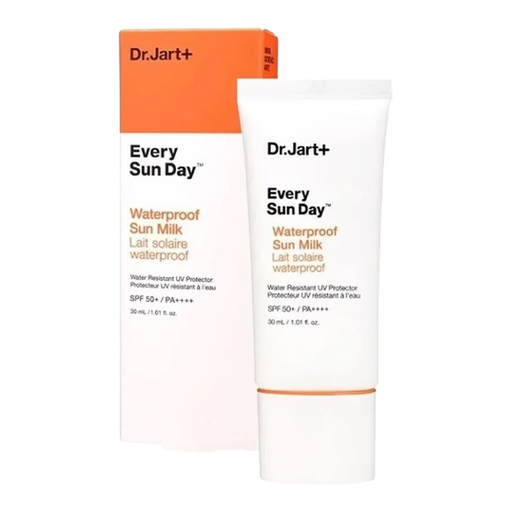
Why it suits this profile: Its milky texture and stated water resistance make it a good fit for outdoor activities, sport and warm days. The 30 ml size is also handy for taking with you.
The product description clearly states that it is water-resistant, highlighting an important difference from formulas designed purely for everyday use. You’ll still need to reapply after drying off.
SPF50+, a milky texture and stated water resistance for active use.
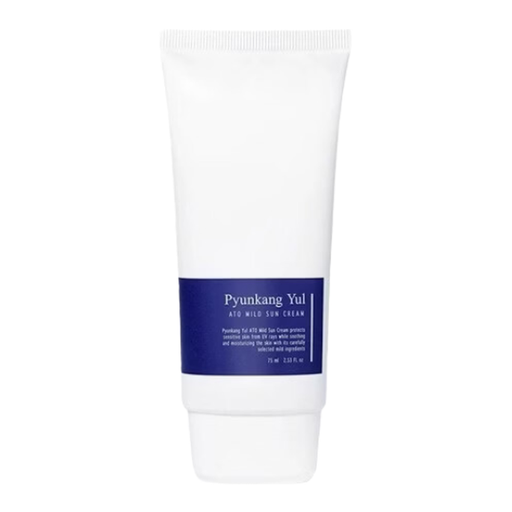
Why it suits this profile: According to the product description, the ATO range is designed for dry and sensitive skin. With SPF50, PA++++ and 75 ml, this formula is worth considering for regular use.
The product description mentions a lightweight, non-greasy texture and a reduced white cast. If you have sensitive skin, it’s still worth testing how well you tolerate it.
SPF50, PA++++, 75 ml and a product range designed for sensitive and dry skin.
We’ve put together a complete, regularly updated list of products that meet these strict selection criteria and fully comply with the safety regulations in force in the EU.
If you’re in the sun for a long time, reapply your protection about every two hours. Reapply straight away after swimming, sweating heavily or drying off. If you’re in the office and out of direct sunlight, how often you need to reapply will depend more on your day-to-day circumstances.
SPF 50 can be suitable for dry, sensitive, blemish-prone or mature skin. The texture, filters, fragrance, alcohol content and how well your skin tolerates the formula matter more than the SPF rating alone. If you have blemish-prone skin, you may prefer a lightweight, non-comedogenic formula; for dry skin, moisturising ingredients often feel more comfortable.
Check the best-before date and the period-after-opening symbol on the packaging. Heat, direct sunlight and opening the product frequently can affect its quality. Keep the packaging closed and store it as directed by the manufacturer. If the smell, colour or consistency changes noticeably, stop using the product.