
Lieferung heute & morgen

Qualitätsgarantie

Willkommens-Angebote freischalten: KOSTENLOSE Lieferung | Bis zu 80 % RABATT | Kostenlose 30-Tage-JoyPlus-Testphase
App herunterladen
Finding the right SPF 50 face sunscreen can quickly become overwhelming. The market is flooded with products promising lightweight textures, an invisible finish, and added skincare benefits. However, these products often fail to live up to their marketing claims. A greasy, white cast or even breakouts are common consequences of the wrong choice. This guide will help you understand the crucial criteria and distinguish marketing promises from genuine product features.
Many purchasing decisions are based on common misconceptions or persuasive-sounding advertising. To make an informed choice, it's helpful to be aware of the following three pitfalls.
The term "water-resistant" is often misleading. According to EU regulations, it simply means that at least 50% of the original sun protection factor remains after two 20-minute sessions in the water. For "extra water-resistant" products, this applies to four 20-minute sessions. However, it does not mean the protection lasts all day. Sweating, towel-drying, and friction significantly reduce its effectiveness. Consistent reapplication every two hours is therefore essential to maintain the stated SPF 50+ face sunscreen protection.
The Sun Protection Factor (SPF) primarily indicates protection against UVB radiation, which is responsible for sunburn. Equally important is protection against UVA rays, which penetrate deeper into the skin and are a major contributor to premature skin ageing and the development of dark spots. Look for the UVA symbol (UVA in a circle) on the packaging. It guarantees that the UVA protection is at least one-third of the stated SPF. Products from the Asian market, such as Korean sunscreen, often use the PA system (Protection Grade of UVA), where PA++++ represents the highest level of protection currently available.
Terms like "clean," "natural," or "hypoallergenic" are not legally defined and offer no guarantee of better tolerance or efficacy. A sunscreen for sensitive skin is not defined by marketing terms, but by a specifically engineered formula that avoids known irritants like fragrances or certain UV filters. Instead of relying on buzzwords, it is more effective to examine the objective product features and the list of ingredients.
To find a sunscreen that protects, nourishes, and is comfortable to wear, you should focus on the following three technical characteristics.
Modern sunscreen products use different filter technologies, each with specific advantages and disadvantages:
Nobody wants to wear a heavy, sticky layer on their face. Whether a sunscreen is perceived as non-greasy largely depends on its galenics (the way it is formulated).
A good SPF 50 face sunscreen not only protects but also cares for the skin. Look for formulations tailored to the needs of your skin type.
Based on the objective criteria mentioned above, we have compiled a selection of products for different user profiles.
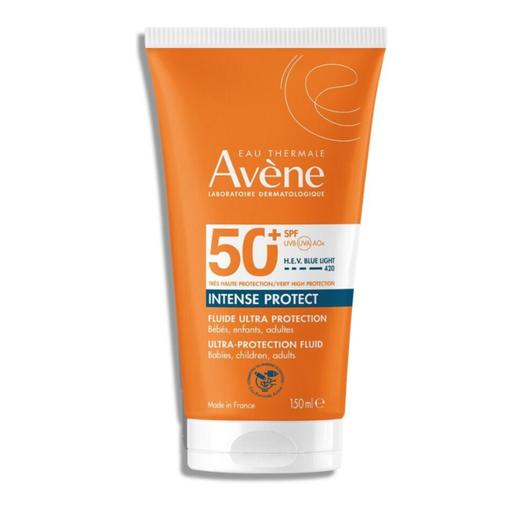
Why This Fits Their Persona: This product is specifically designed for the needs of sensitive skin. The fragrance-free formula is suitable for the whole family, including babies from 6 months, and offers very high tolerance.
The formulation goes beyond standard UVA/UVB protection to also shield against high-energy visible blue light (HEV). It is water and sweat-resistant and minimises the risk of irritation with a reduced number of filters.
Provides up to 8 hours of hydration, according to the manufacturer, and absorbs in just three seconds without leaving a white film. The formula is silicone-free and octocrylene-free.

Why This Fits Their Persona: Ideal for users who dislike the feel of traditional sunscreens. The texture is similar to a light moisturiser and is perfect for daily use, even under makeup, without feeling heavy.
The formula absorbs quickly without leaving a white cast or a sticky film. The PA++++ rating signals very high UVA protection, exceeding the European minimum standard.
Contains 30% rice extract and fermented grain extracts that moisturise and nourish the skin. The light, creamy texture feels comfortable even with multiple applications.
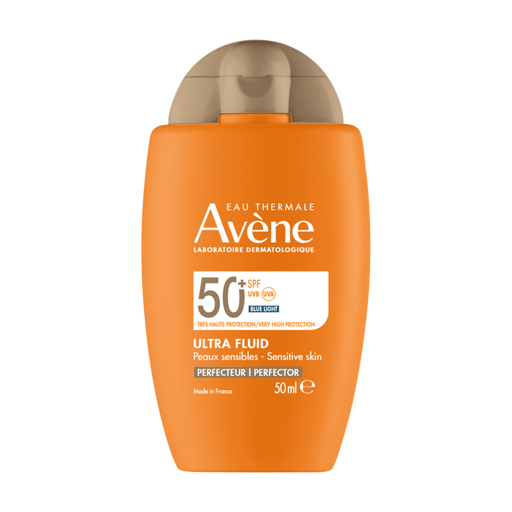
Why This Fits Their Persona: This product is a 2-in-1 solution for those who want high protection and light complexion correction. It works as a makeup base or can be worn alone for a naturally radiant finish.
The tinted SPF 50 sunscreen not only provides high broad-spectrum protection (UVA, UVB, HEV blue light) but also subtly evens out the skin tone without the heavy coverage of a foundation. The result is an even complexion without a mask-like effect.
The ultra-light, water-like texture is easy to apply. The formula is fragrance-free, water-resistant, and designed for sensitive skin.
We have compiled a complete, real-time updated list of products that fully meet these strict selection criteria and UK/EU safety regulations.
A common and practical method for dosage is the two-finger rule. Dispense two strips of sunscreen onto your index and middle fingers. This amount is generally sufficient to completely cover your face and neck and achieve the sun protection factor stated on the packaging. Using too little significantly reduces the level of protection.
Yes, daily sun protection is recommended. While the intensity of UVB radiation varies with the season and weather, UVA rays penetrate clouds and window glass year-round. Since UVA radiation is a major contributor to skin ageing, consistent protection 365 days a year is a sensible preventative measure.
The PA (Protection Grade of UVA) system is a standard introduced in Japan to measure protection against UVA rays, commonly found on Korean and Japanese products. The rating ranges from PA+ (low protection) to PA++++ (extremely high protection). A product with PA++++ therefore offers very high and reliable protection against the skin-ageing effects of UVA radiation.