
Lieferung heute & morgen

Qualitätsgarantie

Willkommens-Angebote freischalten: KOSTENLOSE Lieferung | Bis zu 80 % RABATT | Kostenlose 30-Tage-JoyPlus-Testphase
App herunterladen
SPF 50 face sunscreen should provide reliable everyday protection without feeling greasy, pilling or leaving a visible film under make-up. But choosing the right one involves more than just the SPF rating. Texture, UVA labelling, skin type, water resistance and the amount you actually apply all affect how practical a facial sunscreen is to use.
SPF primarily indicates protection against UVB rays, which are associated with sunburn, among other things. For everyday use, you should also look for clearly stated UVA protection. Korean and Japanese sunscreens often carry the PA++++ rating. For products sold in Germany, look for a UVA symbol or a corresponding statement on the packaging too.
A high SPF does not replace applying enough product or topping it up regularly. Even when wearing sunscreen, spending a long time in the midday sun without additional protection is best avoided.
A watery or alcohol-based texture may feel pleasant on oily skin but leave dry or sensitive skin feeling tight. Conversely, rich formulas can feel uncomfortable on blemish-prone or shiny skin.
So check the specific product description:
“Water-resistant” does not mean a product will stay unchanged on your skin after swimming, heavy sweating or towelling off. Reapply water-resistant sunscreen afterwards. Water resistance is not essential for a normal day in the office, and depending on the formula, it can make the product harder to remove.
You need to apply enough product to your face, ears and neck. As a practical guide, use around two finger lengths for your face and neck, unless the product instructions say otherwise. If you apply significantly less, the protection you actually get will be lower than the rating on the packaging.
Apply facial sunscreen as the last step in your morning skincare routine. If you’ll be outdoors for a long time, sweating or in contact with water, you’ll need to reapply regularly. Avoid the eye area unless the product is specifically designed for it.
A lightweight sunscreen with no white cast is particularly practical for medium to darker skin tones and under foundation. A glowy finish can make dry skin look fresher, while silica or mattifying ingredients may be helpful for shiny skin.
If you’re using it with make-up, try a small amount first. Some formulas pill when rubbed, particularly if you have several serums or a rich moisturiser underneath. Allowing a short time between skincare, sunscreen and make-up can help.
“Non-comedogenic tested” or “suitable for sensitive skin” does not guarantee that a product will suit everyone. If you know your skin is sensitive, test the product on a small area first. Stop using it if you experience stinging, redness or itching.
Formulas can change, so check the ingredients, warnings, expiry date and batch information on the original packaging before use.
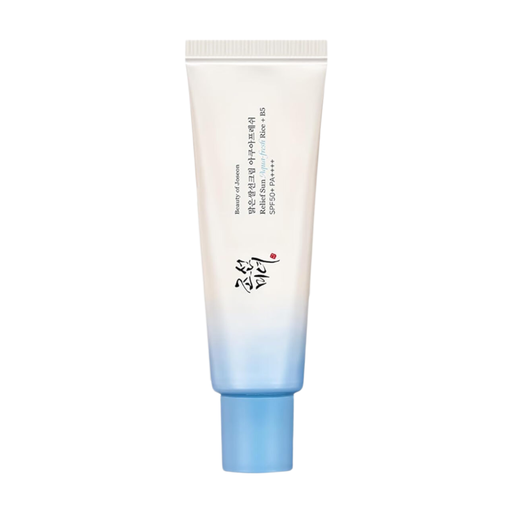
Why it suits this profile: Its watery, lotion-like texture is for anyone looking to combine hydration with a light feel on the skin.
The stated formula is designed to spread quickly without leaving a white cast, an oily feel or sticky residue.
According to the product information, it contains SPF50+ PA++++, rice bran water and panthenol.
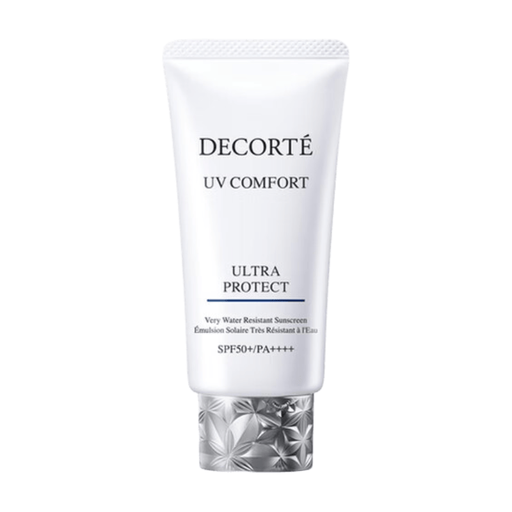
Why it suits this profile: Its stated water resistance makes it an interesting option for outdoor activities, sport and changeable weather.
The product page describes it as water-resistant. Even so, reapply after contact with water or a towel, and cleanse your skin thoroughly.
SPF50+ PA++++, a 50 ml size and a formula intended for use on the face, neck, hands and body.
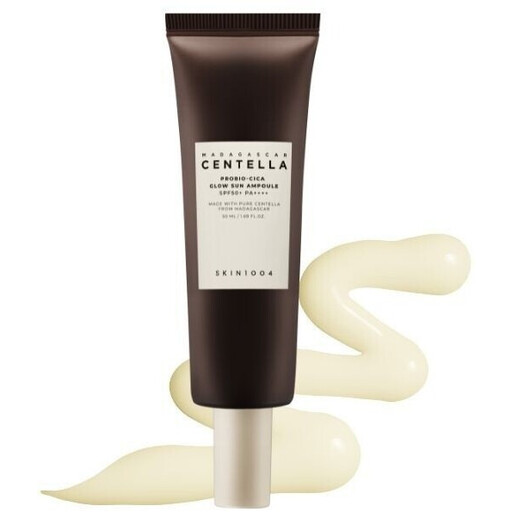
Why it suits this profile: Its ampoule texture is designed to leave a satin-like, softly radiant finish and works well with a pared-back skincare routine.
The description highlights a lightweight texture with no white cast or alcohol, and a finish that can be worn under make-up.
According to the product information, it offers SPF50+ PA++++ and contains Centella asiatica extract, panthenol and niacinamide.
Around two finger lengths is often used as a guide for the face and neck. The key is to apply the product evenly and remember easily missed areas such as your ears. Reapply after heavy sweating, swimming or towelling off.
Yes, many lightweight fluids, essences and ampoules are designed to work as a base for make-up. Wait a short while after applying sunscreen before putting on foundation. If the product pills, try using less of the skincare underneath or allowing it more time to absorb.
Check the printed best-before date or the symbol showing how long the product keeps after opening. Store sunscreen in a cool, dry place away from direct sunlight. If its smell, colour or consistency changes, stop using it.