
Lieferung heute & morgen

Qualitätsgarantie

Willkommens-Angebote freischalten: KOSTENLOSE Lieferung | Bis zu 80 % RABATT | Kostenlose 30-Tage-JoyPlus-Testphase
App herunterladen
An SPF 50 face sunscreen should be reliable and comfortable for everyday use, without feeling greasy, pilling or reacting with make-up. But choosing one isn’t just about the SPF number. Texture, UVA protection, skin compatibility, tint and the amount you apply all affect whether you’ll use it regularly.
The SPF rating mainly describes protection against UVB rays, which cause sunburn, among other effects. For everyday sun protection, you should also look for a clearly stated UVA protection rating. Labels such as “UVA”, the UVA symbol in a circle or, on Korean sunscreens, “PA++++” can help you assess this.
No product allows you to stay in the sun indefinitely. A hat, sunglasses and clothing, as well as avoiding the strongest midday sun, are still important additional precautions.
An SPF 50 sun fluid may feel pleasant to apply, but on its own it might not be nourishing enough for dry skin. On the other hand, a rich SPF 50 sun lotion may leave oily or blemish-prone skin looking shiny. The key is to find a formula and finish that suit your skin type:
A thin layer may look more elegant, but it won’t match the amount used to test the product. A common practical guide for the face and neck is the two-finger rule: two lines of product along your index and middle fingers can give you a rough idea of the amount needed. Always follow the specific instructions on the packaging.
A product labelled SPF 50 or SPF 50+ should clearly state that it offers broad-spectrum protection. Korean products often also carry a PA rating. PA++++ indicates a high category of UVA protection within that rating system. PA ratings aren’t directly equivalent to the European UVA circle, but both help you assess UVA protection.
The product description should suit your skincare routine. Moisturising ingredients such as glycerin, hyaluronic acid or panthenol may appeal if your skin is dry or dehydrated. Niacinamide appears in several formulas and is often used in skincare designed to promote a more even-looking complexion. However, this doesn’t mean it has a medical or therapeutic effect.
If you have sensitive skin, check the fragrance ingredients and the full INCI list. Even a formula described as gentle or soothing should first be tested on a small area of skin.
‘Water-resistant’ doesn’t mean a product will continue to protect you unchanged after swimming or drying yourself off. Reapply after contact with water, heavy sweating or towelling. Even without these factors, you should regularly top up your sun protection when outdoors.
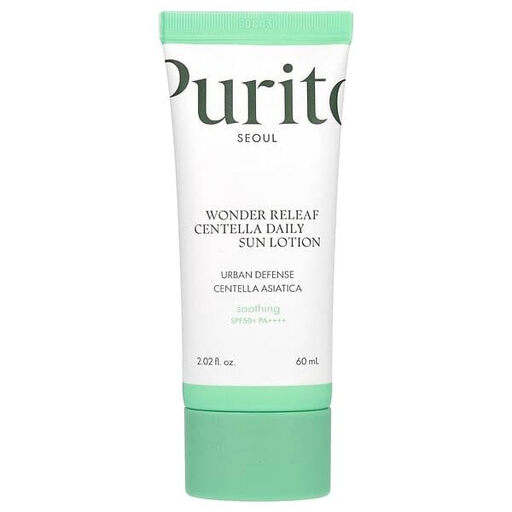
Why it suits this profile: This lightweight lotion is designed for daily use on the face and contains Centella asiatica extract, several forms of hyaluronic acid and niacinamide.
The product information describes a lightweight, non-greasy texture and says it contains no common fragrance allergens. Even so, check the current ingredients list on the packaging.
SPF 50, a lightweight lotion, Centella asiatica extract and several forms of hyaluronic acid.
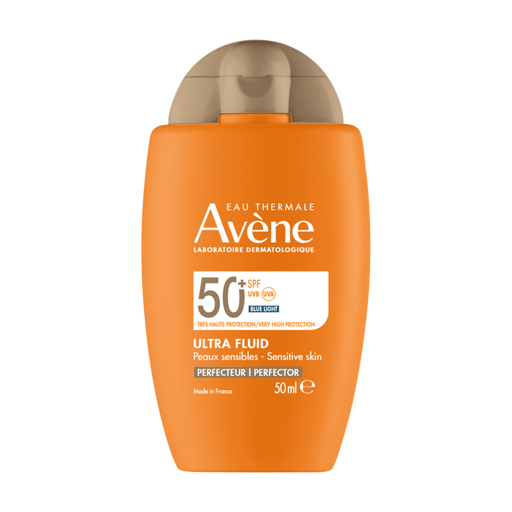
Why it suits this profile: According to the product information, this ultra-light, tinted formula was developed for sensitive skin and can be used as a make-up primer.
The tint isn’t a substitute for foundation, and a universal shade won’t match every undertone. Testing it along your jawline and on your neck can help you avoid a disappointing purchase.
SPF 50+, UVA and UVB protection, plus HEV protection according to the product information; water-resistant formula; fragrance-free.
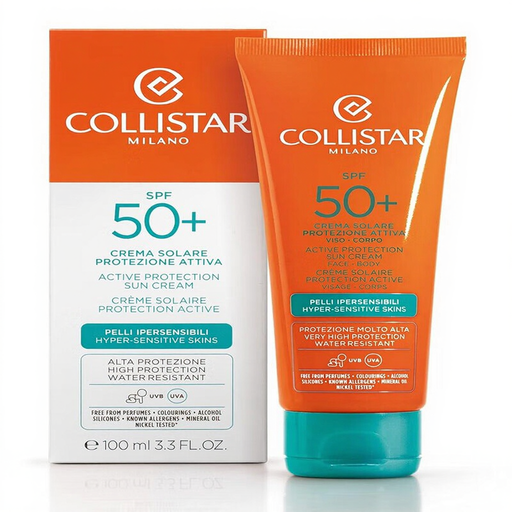
Why it suits this profile: This 100 ml formula is designed for the face and body, making it a practical choice for holidays, outdoor activities and frequent reapplication.
The instructions specifically advise reapplying after swimming, sweating or drying yourself off. This helps make clear that water resistance doesn’t mean lasting protection.
SPF 50+, suitable for the face and body, and a 100 ml size for regular use.
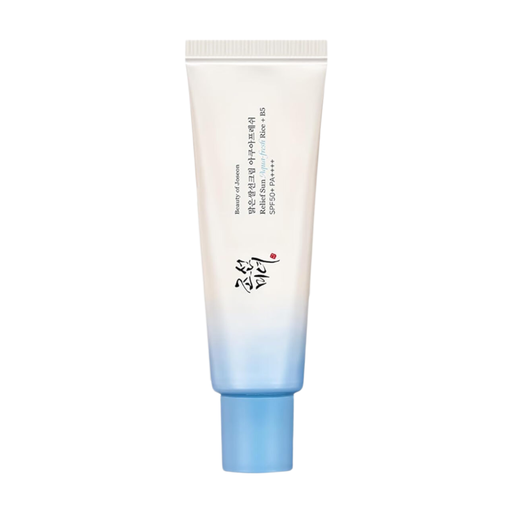
Why it suits this profile: This watery lotion combines SPF 50+ and PA++++ with rice germ water and panthenol. It’s a good option if you prefer a lightweight finish that layers well.
The fluid texture is designed for repeated application. Even so, you still need to apply enough product rather than relying on its lightweight feel alone.
SPF 50+, PA++++, rice germ water, panthenol and, according to the product information, no white cast.
We’ve put together a complete, regularly updated list of products that meet these strict selection criteria and fully comply with the safety regulations in force in the EU.
SPF 50 is particularly suitable if you spend time outdoors regularly, have fair or sensitive skin, or are exposed to strong sunlight. You should use enough product every day, too. If you spend most of your time indoors, whether to apply it depends on factors such as your desk’s proximity to a window, the time of year and your personal routine.
Check the open-jar symbol showing how long the product lasts after opening, the best-before date and the manufacturer’s instructions. If the smell, colour or consistency changes, or the product no longer spreads evenly, you should stop using it. Store the tube or bottle away from heat and direct sunlight.
Many lightweight sun fluids and Korean sunscreens are designed to work as a make-up base. Let the sunscreen absorb evenly first. Tinted formulas usually offer only a subtle colour correction rather than the coverage of foundation. If the product pills, this may be caused by applying too many skincare products underneath, not waiting long enough between layers or rubbing as you apply it.