
Lieferung heute & morgen

Qualitätsgarantie

Willkommens-Angebote freischalten: KOSTENLOSE Lieferung | Bis zu 80 % RABATT | Kostenlose 30-Tage-JoyPlus-Testphase
App herunterladen
SPF 50 face sunscreen should provide reliable everyday protection, feel comfortable on your skin and fit in with the rest of your skincare routine. However, claims such as ‘invisible’, ‘for all skin types’ or ‘water-resistant’ don’t automatically mean a product is right for you.
Lightweight formulas are often applied more sparingly than recommended. This reduces the actual level of protection, whatever the stated SPF. Apply enough to cover your face, ears and neck. As a practical guide, use around two finger-lengths for your face and neck, but always follow the instructions on the packaging.
Transparent or fast-absorbing formulas can help reduce visible residue. However, the result also depends on your skin type, how much you apply and how much you rub it in. Mineral filters such as titanium dioxide may be more likely to leave a pale film, while modern organic filter systems often feel lighter. The full INCI list and product description are therefore more informative than a single marketing claim.
Reapply water-resistant sunscreen after swimming, heavy sweating and drying yourself with a towel. Not all face sunscreens are water-resistant, either. A stated level of water resistance only applies in the conditions specified. It doesn’t replace reapplication, clothing, shade or sensible limits on time spent in direct sunlight.
SPF 50 or SPF 50+ mainly describes protection against UVB rays, which can cause sunburn, among other effects. For everyday sun protection on your face, also look for clearly stated UVA protection. Labels such as PA++++ come from the Asian rating system and indicate a high UVA rating within that system. For products sold in Germany, the UVA symbol on the packaging may also be relevant.
A high SPF doesn’t mean you can stay in the sun indefinitely. Reapplication is still important, particularly if you’re spending a long time outdoors.
If you’re considering a Korean sunscreen or a Japanese product, check the information on sun protection, how to use it and any warnings in full on the product page or packaging.
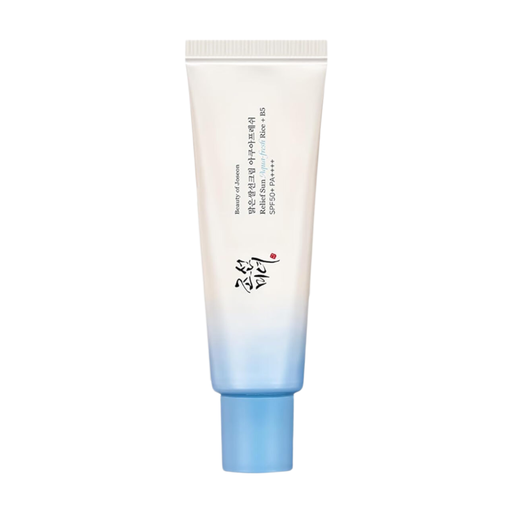
Why this product suits you: Its lotion-like texture may appeal if you’re looking for a lightweight face sunscreen that’s easy to reapply and offers SPF 50+ PA++++.
The product information says it absorbs quickly without leaving a white cast or sticky residue, even when applied in several layers.
Rice bran water and panthenol are listed among the ingredients. The product is designed for the face and body and has a PA++++ rating.
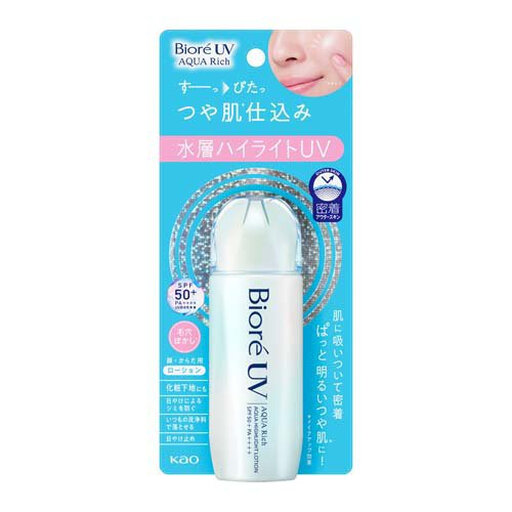
Why this product suits you: This 70ml essence is designed for the face and body, and is aimed at anyone looking for sun protection for outdoor activities, the beach or sport.
The product description states that it has been tested for water resistance for 80 minutes. You’ll still need to reapply after contact with water or sweat.
SPF 50+ PA++++, a 70ml size and an explicitly stated water resistance of 80 minutes.
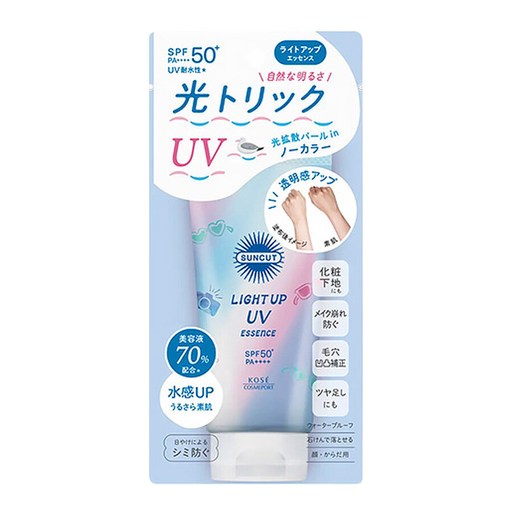
Why this product suits you: According to the product description, this cream is designed to provide sun protection and act as a radiant make-up base, making it a good choice if you want a noticeable glow.
If you’re not after a matte look, there’s no need to mistake a glossy base for an oily texture. Decide on the finish you want before buying.
An 80g size, glycerin in the stated formula and light-reflecting mica for a glossy finish.
We’ve put together a complete, regularly updated list of products that meet these strict selection criteria and fully comply with the safety regulations in force in the EU.
If your skin is sensitive or irritated, don’t apply the product to broken skin. Stop using it if you experience redness, stinging or itching, and seek medical advice if the symptoms persist.
SPF 50 can be a good choice for everyday sun protection on your face, particularly if you spend a lot of time outdoors, have fair skin or want to include UVA and UVB protection in your skincare routine. However, how well it protects you depends largely on how much you apply and whether you reapply it.
As a rough guide, around two finger-lengths is often recommended for your face and neck. The right amount can vary depending on the product. Applying too little significantly reduces protection. Remember to apply enough to cover your ears, hairline and neck as well.
Check the printed best-before date and the PAO symbol, such as ‘12M’. Once opened, store sunscreen somewhere cool and dry, away from direct sunlight. If its smell, colour or consistency changes, don’t continue using it.