
Lieferung heute & morgen

Qualitätsgarantie

Willkommens-Angebote freischalten: KOSTENLOSE Lieferung | Bis zu 80 % RABATT | Kostenlose 30-Tage-JoyPlus-Testphase
App herunterladen
An SPF 50 face sunscreen should provide reliable everyday protection, feel comfortable on your skin and fit into your personal skincare routine. Korean sunscreens and international products often catch the eye with claims such as ‘invisible’, ‘non-greasy’ or ‘for all skin types’. But these don’t replace checking the protection rating, texture, ingredients and directions for use.
The SPF rating primarily indicates protection against UVB rays. For everyday sun protection on your face, a stated UVA protection rating is important too. Labels such as PA++++ are common on Korean products and indicate a high UVA protection category under the relevant rating system. SPF 50 or SPF 50+ also doesn’t mean it’s safe to spend longer in the sun without taking other precautions.
A sunscreen that leaves no white cast can be practical on medium to deep skin tones and under make-up. However, a transparent or dewy finish may not be ideal for oily skin. Conversely, a highly mattifying sunscreen can make dry skin look more pronounced. The finish, how much you apply and how it works with the rest of your skincare routine all matter.
‘Water-resistant’ describes a stated product property; it doesn’t guarantee lasting protection after sweating, swimming or towel-drying. Reapply sunscreen after contact with water, heavy sweating or drying yourself with a towel. A sun stick also doesn’t automatically replace applying enough sunscreen in the first place.
Look for:
A lightweight face sunscreen is usually suitable for your daily routine and for wearing under make-up. Lotion-like or watery formulas can often be applied in thin layers. Creamier products with moisturising ingredients may feel more comfortable on dry skin. If you prefer less shine, look for a mattifying sunscreen or a mattifying sun stick.
Products with light-reflecting particles or a ‘glow’ finish, on the other hand, are designed to leave a radiant look. This is a cosmetic feature, not a measure of sun protection. If you have sensitive or reactive skin, check the full ingredients list for fragrance, alcohol or particular UV filters.
The stated protection only applies when you use enough. The so-called two-finger method is often used for the face and neck, although the exact amount depends on the product and the size of your face. Apply sunscreen as the last step in your morning skincare routine and let it sink in briefly before applying make-up.
Reapply sunscreen regularly if you’re spending a long time in the sun. Reapplication is particularly important after swimming, heavy sweating or towel-drying. A product with a comfortable texture is more likely to become part of your everyday routine than a cream that pills, stings or is difficult to spread.
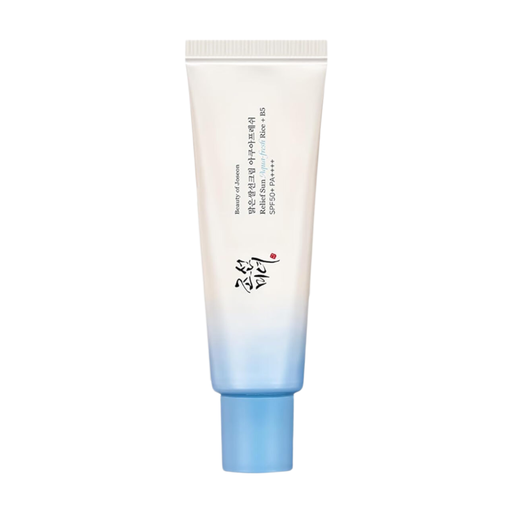
Why this product suits this profile: Its watery texture with rice germ water and panthenol is aimed at people who prefer a lightweight Korean sunscreen that leaves no white cast and feels fresh on the skin.
The description says it leaves no white cast or oily residue and layers well. These features can make it easier to wear under make-up.
SPF 50+ PA++++, panthenol, rice germ water and a lotion-like texture described as leaving no white cast.
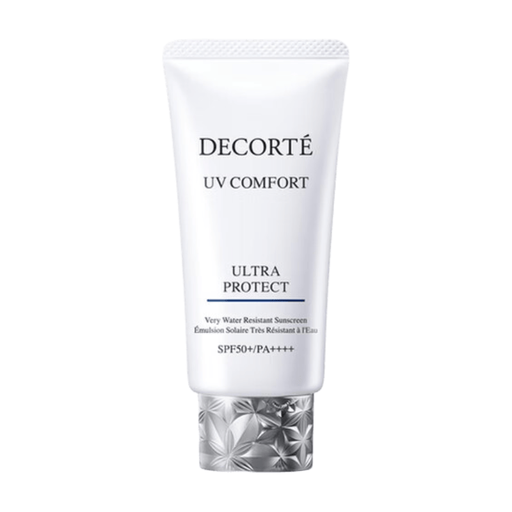
Why this product suits this profile: Its stated water resistance and suitability for the face, neck, hands and body make it a useful option for active days and longer periods outdoors.
The product is explicitly labelled as water-resistant. Even so, reapply after swimming, sweating or towel-drying; water-resistant formulas don’t last indefinitely.
SPF 50+ PA++++, labelled as water-resistant and suitable for several areas of the body.
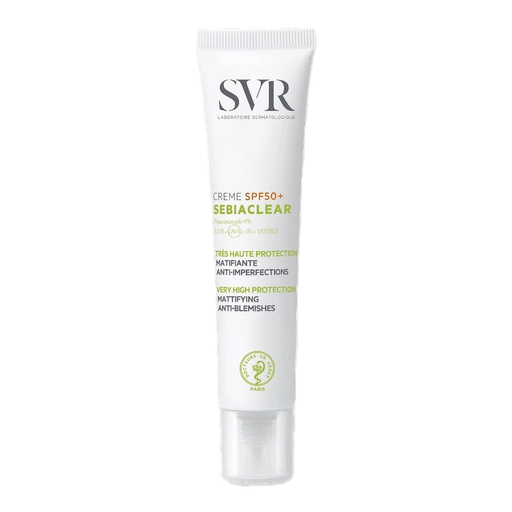
Why this product suits this profile: The product information describes a non-comedogenic, mattifying and water-resistant formula for oily and blemish-prone skin.
Its mattifying, non-comedogenic and water-resistant claims are aimed at people who want to avoid shiny or hard-to-remove textures. Note that the product contains fragrance.
SPF 50+, mattifying finish, stated water resistance, plus niacinamide and azelaic acid in the ingredients list.
We’ve put together a complete, regularly updated list of products that meet these strict selection criteria and fully comply with the safety regulations in force in the EU.
As a practical guide, use the two-finger method for your face and neck. The important thing is to cover all exposed areas evenly. If you use considerably less, the protection you actually get won’t match the rating on the packaging.
Yes. Lightweight formulas that absorb quickly are particularly suitable. Wait a little after applying and, when trying a new product, check that your skincare, sunscreen and make-up work well together. A watery or lotion-like formula may be easier to layer than a very rich cream.
Check the period-after-opening symbol and the best-before or expiry date shown on the packaging. Store the product somewhere cool and dry, away from direct sunlight. If its smell, colour or consistency changes noticeably, don’t continue using it.