
Lieferung heute & morgen

Qualitätsgarantie

Willkommens-Angebote freischalten: KOSTENLOSE Lieferung | Bis zu 80 % RABATT | Kostenlose 30-Tage-JoyPlus-Testphase
App herunterladen
SPF 50 face sunscreen should offer reliable protection, feel comfortable to apply and suit your skincare routine. Yet eye-catching packaging, vague product claims and misjudged textures can often lead to disappointing purchases. If you have sensitive, dry or blemish-prone skin, it’s especially worth checking the protection claims, ingredients and directions for use.
The sun protection factor (SPF) mainly describes protection against UVB rays, which are associated with sunburn. For everyday sun protection on your face, you should also look for a stated UVA protection rating. Terms such as ‘Broad Spectrum’ and ‘UVA/UVB’, or ‘PA++++’ on Korean products, can offer further guidance. However, labelling isn’t identical in every market, so check the packaging.
A lightweight sunscreen or non-greasy sunscreen can feel comfortable under make-up. However, if you have dry skin, a very matte formula, one containing alcohol or one with a high silicone content may leave your skin feeling tight. Conversely, rich creams can feel heavy on oily or blemish-prone skin. You can’t judge how well your skin will tolerate a product based on terms such as ‘clean’, ‘natural’ or ‘for all skin types’ alone.
‘Water-resistant’ doesn’t mean the protection remains unchanged after swimming, sweating or towel-drying. You should reapply water-resistant sunscreen afterwards, too. For your face, it’s also important to check whether the product is specifically intended for that area. Body sunscreens may have a different texture, fragrance or larger pack size.
For longer periods outdoors, SPF 50 or SPF 50+ is a sensible choice. Also check:
Using enough sunscreen is essential. As a practical guide, apply a generous, even layer to your face. Applying too little significantly reduces the level of protection you actually get.
If you have sensitive skin, read the full INCI list and any warnings. Fragrance, alcohol or certain filters may feel uncomfortable for some people. If you have dry skin, ingredients such as glycerin, panthenol, aloe or hyaluronic acid can complement your skincare routine. This is a cosmetic benefit, not a medical claim, and it doesn’t replace treatment for irritated skin.
For oily or blemish-prone skin, fluid, gel-like or fast-absorbing textures may fit more easily into your daily routine. A patch test on a small area of skin can help you spot an individual intolerance early.
Apply face sunscreen as the last step in your morning skincare routine. Many products recommend applying them 15 to 30 minutes before sun exposure. Reapply when outdoors, and after swimming, sweating or towel-drying.
Also check the expiry date, batch number and storage instructions on the packaging. Direct heat and strong sunlight can affect a product’s properties. Sunscreen isn’t a licence to spend long periods in the sun; clothing, shade and avoiding the strongest midday sun remain important parts of sun protection.
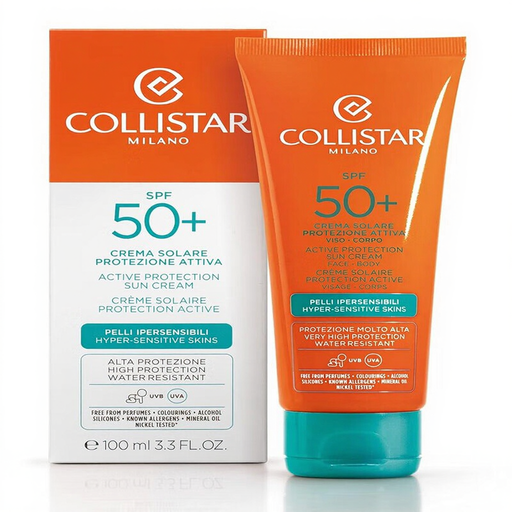
Why it suits this profile: The 100 ml size is handy if you’d like to use one product for your face and body and prefer to keep your routine simple.
The product is clearly labelled for the face and body. The directions advise reapplying after swimming, sweating or towel-drying.
SPF50+, 100 ml and a formula containing glycerin and several stated UV filters.
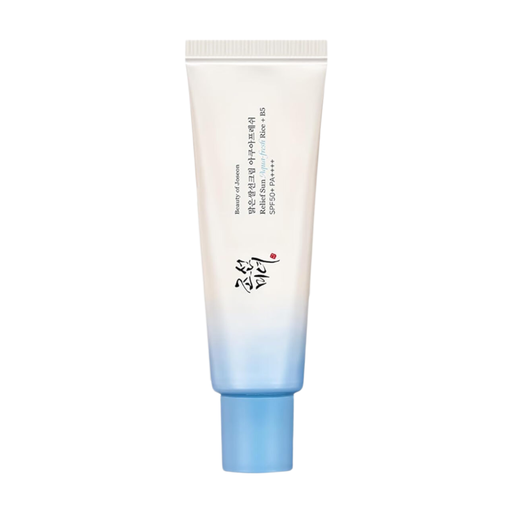
Why it suits this profile: Its lightweight, lotion-like texture is designed for anyone looking to combine Korean skincare with daily sun protection.
The product description says it absorbs quickly and leaves no white cast. How well it suits your skin will still depend on the individual.
SPF50+ PA++++, panthenol, rice bran water and a lightweight texture designed to be layered.
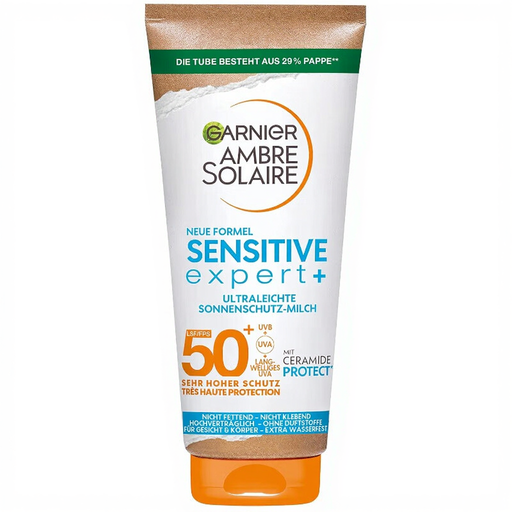
Why it suits this profile: The larger size is useful for regular application to several areas of the body, such as on day trips or during longer periods outdoors.
The spray lotion is described as fast-absorbing and non-greasy. Check the packaging to make sure it’s suitable for your face, as the product description focuses mainly on use on the body.
SPF50+, 175 ml, a spray format and instructions to reapply after swimming, sweating or towel-drying.
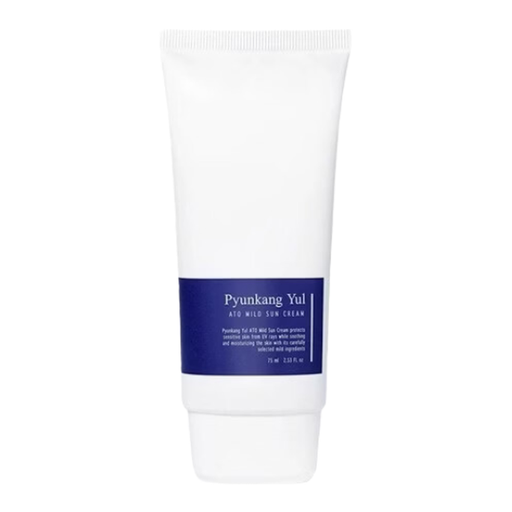
Why it suits this profile: The product is described as suitable for sensitive, dry or atopy-prone skin, and is intended for everyday use on the face.
The description highlights a lightweight, non-greasy texture while also noting that sensitive skin can react differently from person to person.
SPF50 PA++++, 75 ml and a stated focus on sensitive and dry skin.
We’ve put together a complete, regularly updated list of products that meet these strict selection criteria and fully comply with the safety regulations in force in the EU.
If your eyes sting, your skin becomes red or you experience any other reaction, wash the product off and stop using it. If symptoms persist, seek medical advice.
Apply enough to come close to the level of protection stated on the packaging. A layer that’s too thin can significantly reduce how well it protects you. Spread the cream evenly and include your neck if it will also be exposed to the sun.
In everyday use, how often you need to reapply depends on sun exposure, sweat, water and towel-drying. If you’re spending a long time outdoors, reapply regularly and always after swimming, heavy sweating or towel-drying.
Yes, as long as the texture works with your skincare and make-up. Lightweight fluids and fast-absorbing lotions are often more comfortable to wear. Let the sunscreen absorb first, and if you have sensitive skin, test the combination on a small area.