
Lieferung heute & morgen

Qualitätsgarantie

Willkommens-Angebote freischalten: KOSTENLOSE Lieferung | Bis zu 80 % RABATT | Kostenlose 30-Tage-JoyPlus-Testphase
App herunterladen
A face sunscreen with SPF 50 should offer reliable everyday protection, feel comfortable to apply and work well with your skincare or make-up. In practice, though, choosing one often comes down not to the SPF rating, but to the texture, how you apply it and unclear product claims.
The SPF rating primarily describes protection against UVB rays, which can cause sunburn. UVA protection is also important for everyday sun protection. So look for a clear UVA mark or claims such as PA++++ sun protection. PA++++ comes from an Asian rating system and indicates a high level of UVA protection, although these systems are not entirely equivalent to European labelling.
A non-greasy sunscreen feels comfortable, but people often apply too little. A thin layer significantly reduces the actual protection. A transparent finish, an “invisible” film or a Korean sunscreen does not make up for applying the recommended amount.
Apply the sunscreen evenly and generously to your face, ears, neck and décolletage. If you’re spending a long time outdoors, reapply regularly, especially after sweating, swimming or drying yourself.
Claims such as “moisturising”, “glow” or “tone-up” don’t tell you on their own whether a product will work for everyday use. Dry skin may benefit from glycerin, hyaluronic acid or panthenol, while a light lotion with a powdery finish may be more practical for oily or shiny skin. Sensitive skin may react to alcohol, fragrance, essential oils or cooling menthol.
SPF 50 indicates a very high level of UVB protection. SPF 50+ is used when the measured protection is above the SPF 50 range. For everyday use in Germany, the key is to apply the product correctly and in sufficient quantity. SPF 50+ is a sensible choice in strong sunshine, for fair skin or during longer outdoor activities.
Look for a combination of UVA and UVB protection in the product description. PA++++ is another useful guide for many Japanese and Korean products. The ingredients list can offer some clues, but it doesn’t replace official labelling on the packaging and product page.
Use these points to help you choose:
A Korean or Japanese sunscreen may appeal thanks to its lightweight texture and PA++++ rating. But where a product comes from is not, on its own, proof of quality. Labelling, ingredients, how it feels on your skin and correct application all matter.
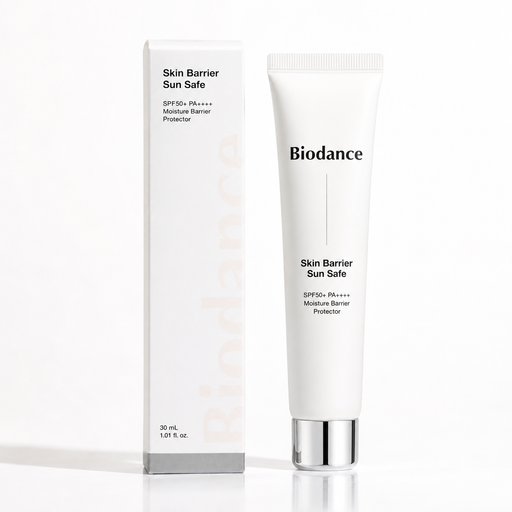
Why this product suits this profile: The compact 30ml size is handy for your daily routine, handbag or when you’re out and about. SPF50+ and PA++++ are listed on the product page.
The description mentions a lightweight, non-greasy texture and recommends applying generously and reapplying regularly. That puts practical use, as well as the SPF rating, centre stage.
According to the product information, it contains glycerin, panthenol, ceramide NP and hyaluronic acid, among other ingredients. The finish is described as smooth and non-sticky.
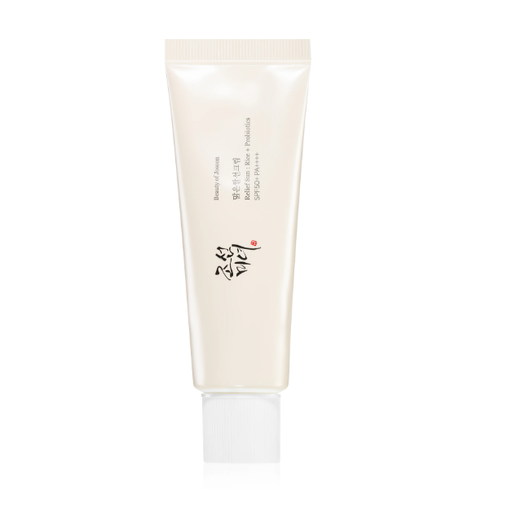
Why this product suits this profile: According to the product description, its creamy yet lightweight texture can be applied in multiple layers, making it a good fit for a considered morning routine.
Rather than relying on a vague marketing claim, the product lists SPF50+ and PA++++ and gives practical advice on applying generously and reapplying.
According to the product information, the formula contains rice germ extract, niacinamide and fermented ingredients, among other things. It is described as lightweight and non-sticky.
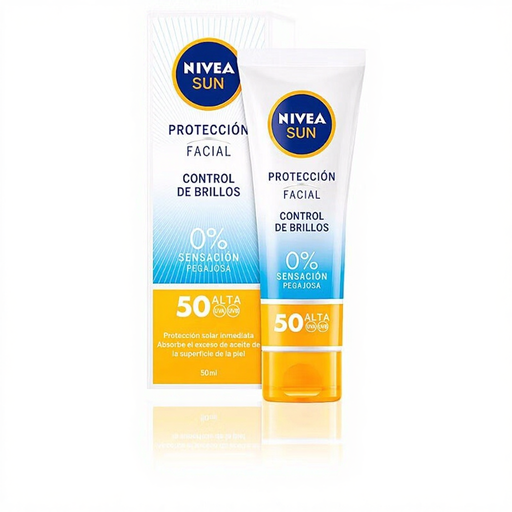
Why this product suits this profile: The “Shine Control” name is aimed at people who prefer a less shiny finish day to day, for example under make-up or at the office.
The product guidance is a reminder to apply enough and reapply after contact with water or sweat. That way, a matte finish isn’t mistaken for lasting protection.
SPF50, silica and starch derivatives are listed in the stated ingredients; those with sensitive skin should consider fragrance and alcohol on an individual basis.
We’ve put together a complete, regularly updated list of products that meet these strict selection criteria and fully comply with the safety regulations in force in the EU.
If you have sensitive skin, it’s a good idea to do a small patch test before applying the product over a larger area for the first time. Stop using it if you experience redness, stinging or itching.
SPF 50 offers a very high level of UVB protection when you apply enough sunscreen. You should also look for a clear UVA protection claim. In strong sunshine, it’s still sensible to add protection from clothing and shade.
There isn’t a set time that applies to every situation. Reapply if you’re spending a long time outdoors, sweating, swimming or drying yourself. Reapplying won’t restore the original protection indefinitely, but it will help maintain the protection you’ve applied.
Yes, as long as the texture works with your skin and make-up. A lightweight, quick-absorbing sunscreen can be the final step in your skincare routine before make-up. Wait briefly for the film on your skin to set, then apply your make-up without rubbing too firmly.