
Lieferung heute & morgen

Qualitätsgarantie

Willkommens-Angebote freischalten: KOSTENLOSE Lieferung | Bis zu 80 % RABATT | Kostenlose 30-Tage-JoyPlus-Testphase
App herunterladen
SPF 50 face sunscreen should reliably protect you from UV rays day to day, feel comfortable on your skin and work well with the rest of your skincare routine. Yet eye-catching claims such as “glow”, “tone-up” or “invisible finish” don’t automatically mean a product is right for you. What matters most is the verified information on the packaging, the texture and how you plan to use it.
The SPF rating mainly describes protection against UVB rays, which are associated with sunburn, among other things. For everyday protection for your face, it’s also important to look for clearly stated UVA protection. Check for symbols and claims such as UVA in a circle, “broad spectrum” or, on Asian products, PA++++.
However, these labels aren’t exactly the same. PA++++ comes from the Japanese or Korean rating system, while products sold in the EU must also carry the relevant EU labelling. So if you’re looking for UVA and UVB protection, check the specific information for each product.
Water-resistant sun protection can lose effectiveness through swimming, sweating, towel-drying and friction. Water resistance doesn’t mean one application is enough for the whole day. If you’re spending a long time outdoors, reapply your sunscreen regularly.
Check the specific claims about water resistance. For example, the Biore UV Light Up Essence is described as water-resistant for 80 minutes. This kind of information can help you choose, but it doesn’t replace reapplying your sunscreen.
A tinted sunscreen, SPF 50 sun essence or mattifying sun fluid can change the appearance of your skin. However, colour pigments, shimmer particles or tone-up pigments may be visible on darker skin, settle into dry patches or interact with make-up.
If you’re looking for sunscreen that doesn’t leave a white cast, test the texture on a small area first. If you have sensitive skin, fragrance, alcohol and certain plant extracts are also important to consider when checking how well a product suits you.
For everyday use on your face, SPF 50 or SPF 50+ is a sensible choice, particularly in strong sunshine, if you have fair skin or if you spend long periods outdoors. However, the level of protection depends greatly on how much you apply. Applying too thin a layer reduces the protection you actually get.
Also check:
If you have oily or combination skin, a mattifying sunscreen with a gel, fluid or essence texture may feel more comfortable. Creamier or moisturising sun protection products may be a better fit for dry skin. If you have sensitive skin, read the full INCI list and any warnings.
A lightweight texture is especially practical under make-up. It should spread evenly, shouldn’t pill and needs enough time to absorb after application.
A tinted sunscreen can help even out the appearance of redness or uneven skin tone. A glow finish reflects light, while a tone-up product can temporarily make your skin tone look brighter or more even. These are cosmetic effects and shouldn’t be confused with medical benefits.
Korean and Japanese sunscreens often feature lightweight, watery formulas, PA++++ ratings and products designed to combine skincare with UV protection. What matters most is whether the texture suits your skin and fits your daily routine.
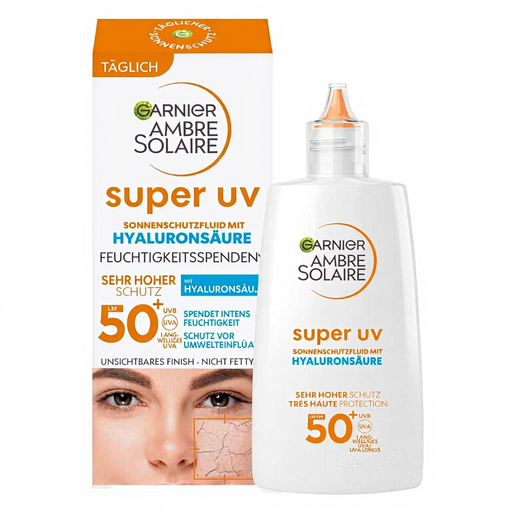
Why it suits this profile: This fluid is designed for everyday facial sun protection under make-up, combining SPF 50+ with a lightweight texture described as mattifying.
The product description lists protection against UVA, UVB and long-wave UVA rays, as well as a fast-absorbing texture.
SPF 50+, 40 ml and guidance on use before and after sweating, contact with water or towel-drying.
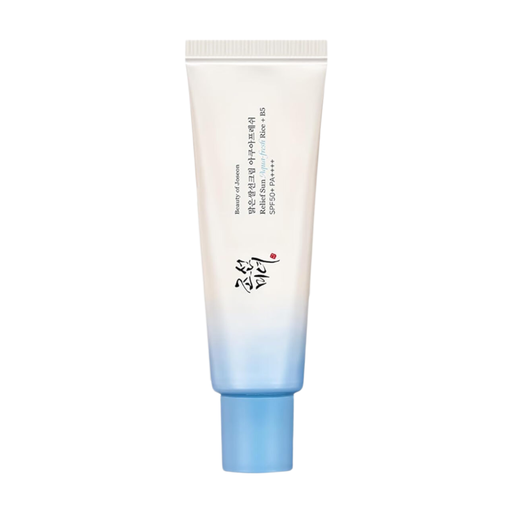
Why it suits this profile: Its watery lotion texture is designed for everyday use and reapplication, leaving skin feeling lightweight.
The product information describes a finish with no white cast or sticky residue, even when applied in several layers.
SPF50+ PA++++, rice water and panthenol according to the product description, plus a lightweight texture for dry, combination or sensitive skin.
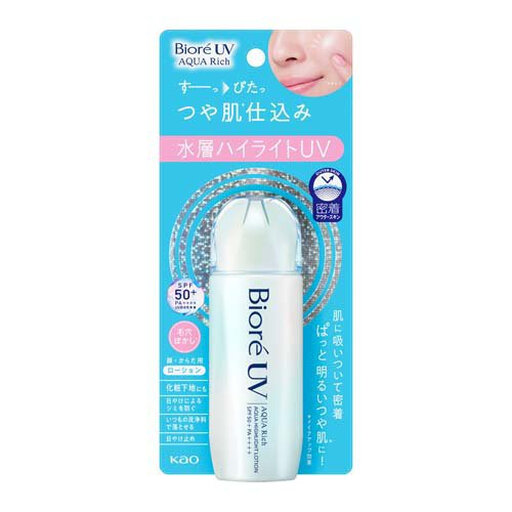
Why it suits this profile: Its stated water resistance makes it a relevant choice for outdoor activities, sport and anyone looking for one product to use on both face and body.
The product information states 80 minutes of water resistance in testing, and gives clear advice on reapplying after sweating or towel-drying.
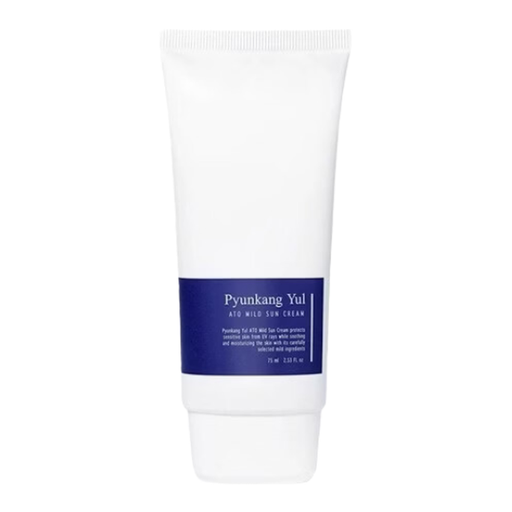
Why it suits this profile: According to the product description, the ATO range is designed for sensitive, dry and atopy-prone skin.
The description highlights a lightweight, non-greasy texture and fewer visible white traces.
SPF 50 PA++++, 75 ml and guidance on daily use, with reapplication after sweating, swimming or towel-drying.
We’ve put together a complete, regularly updated list of products that meet these strict selection criteria and the safety regulations in force in the EU.
Don’t use the product on irritated, broken or inflamed skin. Stop using it if you experience any discomfort.
A commonly used guide is around two finger lengths for your face and neck. More important than sticking to an exact measurement is applying an even, sufficiently thick layer. Using too little product significantly reduces the protection you get.
Check the PAO symbol, the best-before date and the information on the packaging. Heat, direct sunlight and leaving the product open for long periods can affect its quality. Store your sunscreen in a cool, dry place and keep it tightly closed.
Many fluids, sun essences and lightweight gel creams are described as suitable for use under make-up. Even so, test how they work with your skincare and foundation. A mattifying sunscreen often suits oily skin better, while creamier or moisturising formulas may feel more comfortable on dry skin.