
Lieferung heute & morgen

Qualitätsgarantie

Willkommens-Angebote freischalten: KOSTENLOSE Lieferung | Bis zu 80 % RABATT | Kostenlose 30-Tage-JoyPlus-Testphase
App herunterladen
SPF 50 facial sunscreen should provide reliable protection, feel comfortable on your skin and work well with your skincare routine and make-up. There’s plenty of choice, from lightweight textures and glow finishes to ‘invisible’ formulas and water-resistant products, each designed to suit different needs. So it’s not just the SPF rating that matters: UV protection, skin compatibility, texture and application all play a part.
The SPF rating mainly indicates protection against UVB rays, which can cause sunburn. UVA protection is also important for everyday sun protection on your face. Look for information such as PA++++, a UVA symbol in a circle, or an explicit broad-spectrum or UVA/UVB claim.
SPF 50+ facial sunscreen with PA++++ is a useful guide for many everyday situations. However, the level of protection you get still depends on how much you apply, how evenly you spread it and whether you reapply regularly.
A lightweight sunscreen that doesn’t leave a white cast may still contain alcohol, fragrance or certain filters that not everyone’s skin tolerates equally well. If your skin is sensitive or prone to redness, check the full INCI list. Even a product described as ‘hypoallergenic’ can’t rule out individual reactions entirely.
If you have dry skin, a moisturising sunscreen with glycerin, panthenol, hyaluronic acid or nourishing extracts may feel more comfortable. Oily or blemish-prone skin often benefits from a non-greasy sunscreen with a lightweight, non-sticky texture. Claims such as ‘non-comedogenic’ are a useful guide, but they’re no guarantee that a product will suit everyone.
‘Water-resistant’ doesn’t mean that protection stays the same after swimming, heavy sweating or towel-drying. The claim refers to specific testing conditions. Reapply sunscreen after contact with water or towel-drying. For the beach, sports and longer periods outdoors, it’s also a good idea to wear protective clothing and sunglasses, seek shade and avoid the strongest midday sun.
For your face, apply enough to cover your face and neck. Applying too thin a layer can significantly reduce the protection you actually get. Use sunscreen as the last step in your morning skincare routine. If you’ll be exposed to UV for a long time, reapply regularly.
PA++++ is the highest PA category for UVA protection ratings on many Korean and Japanese beauty products. Always check the packaging and product description for the exact claim. When choosing SPF 50 facial sunscreen, it’s also worth checking the production batch, expiry date and current ingredients list.
If you use several skincare products, give each layer a little time to absorb. This can help prevent pilling under make-up.
If you have sensitive skin, it’s worth checking for fragrance, alcohol and essential oils. For blemish-prone skin, lightweight formulas with niacinamide, silica or a watery texture may be worth considering. These ingredients aren’t a substitute for dermatological treatment and shouldn’t be considered to have a medical effect.
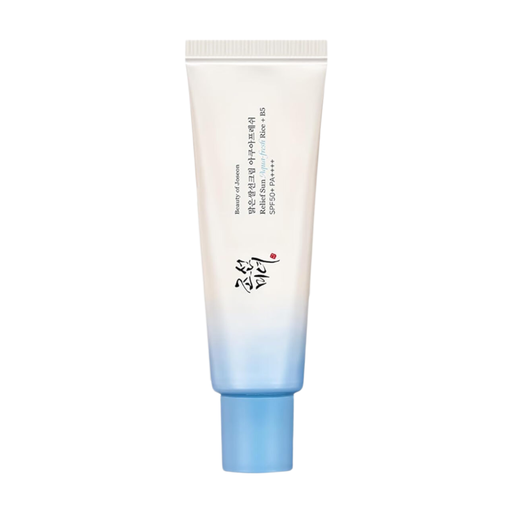
Why this product suits this profile: Its lotion-like formula combines SPF50+ and PA++++ with rice water and panthenol for lightweight, hydrating everyday care.
The product information clearly distinguishes UV protection from skincare benefits. It also describes a texture that feels non-sticky and leaves no white cast.
SPF50+ and PA++++; the ingredients list includes rice seed water, panthenol, Ceramide NP and beta-glucan.
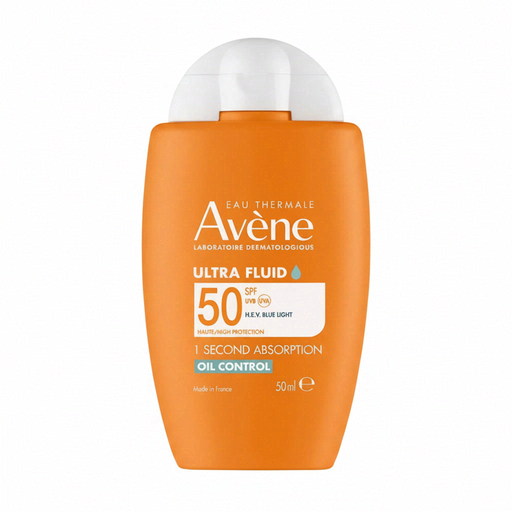
Why this product suits this profile: According to the product description, its ultra-fluid, fragrance-free and water-resistant formula is designed for oily, sensitive skin and can be used as a make-up base.
The product information specifically highlights oil control and a non-sticky texture. However, water resistance is no substitute for reapplication.
Ultra-fluid texture; fragrance-free and water-resistant formula according to the product description.
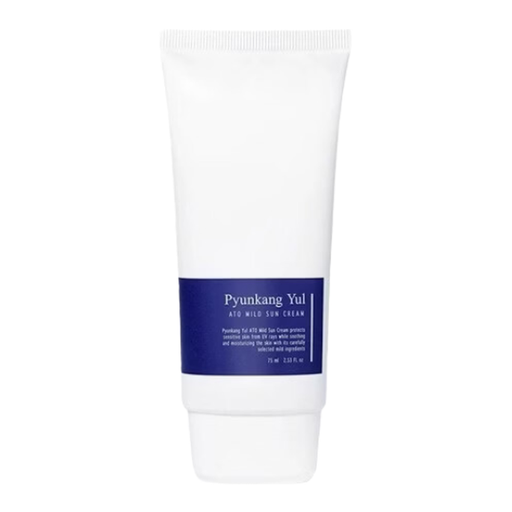
Why this product suits this profile: The ATO range is described as suitable for sensitive, dry or atopic-prone skin, and combines SPF50 with PA++++.
The product description mentions a lightweight, non-greasy texture that doesn’t leave a strong white cast. Even so, it’s best to test how your skin responds on a small area first.
SPF50 and PA++++; designed for daily use as the final step in your morning skincare routine.
Apply SPF 50 facial sunscreen generously to your face, ears, neck and, if needed, décolletage. If you’re trying a new product, it’s a good idea to test it on a small area of skin first. Avoid contact with your eyes. Stop using the product if you experience burning, itching or redness.
Fluid formulas are often practical under make-up. Wait for the sunscreen to absorb, then apply foundation using a gentle patting motion where possible. For sport or swimming, choose a sunscreen labelled water-resistant and reapply after towel-drying.
As a practical guide, apply a generous amount to your face and neck — often around two finger lengths for a fluid formula. The key is to apply an even layer that isn’t too thin. If you’ll be in the sun for a long time, reapply regularly.
Yes, as long as the texture and finish work with your routine. A lightweight, fast-absorbing sunscreen is often a better choice than a very rich formula. Give it a little time to absorb, then try it with your foundation to help prevent pilling.
Check the printed best-before date and the symbol showing how long the product lasts after opening. Heat, direct sunlight and frequently opening the container can affect product quality. Store your sunscreen in a cool, dry place and replace it if its smell, colour or consistency changes significantly.