
Lieferung heute & morgen

Qualitätsgarantie

Willkommens-Angebote freischalten: KOSTENLOSE Lieferung | Bis zu 80 % RABATT | Kostenlose 30-Tage-JoyPlus-Testphase
App herunterladen
SPF 50 sun cream is a good choice for many adults who want to protect their face and body from UV rays every day. But with so many options, choosing the right one can be tricky. Sun milk, fluid, gel, spray, and Korean or Japanese SPF 50 sun creams can differ considerably in texture, filter technology, feel on the skin and how they’re applied.
Three common misconceptions often lead to the wrong choice:
SPF 50 or SPF 50+ mainly indicates protection against UVB rays, which can cause sunburn. For everyday sun protection, choose a product that also states its UVA protection. Look for markings such as UVA in a circle, “broad-spectrum protection” or, on Asian products, PA++++. These labels come from different rating systems and are not directly comparable.
If you’re prone to pigmentation or spend a lot of time outdoors, don’t focus only on the SPF number. Look for clear wording that the product provides protection against both UVA and UVB rays. Sun cream is no substitute for clothing, a hat, sunglasses or shade.
For your body, SPF 50 sun milk in a larger bottle is often a good choice. It’s easy to spread over your arms, legs and chest, and can be more economical if you reapply regularly. For your face, fluids, gels or compact creams are often more practical.
SPF 50 face cream should spread evenly and work well with your daily skincare or make-up. If you want a lightweight finish without a white cast, try a transparent or tinted formula. Mineral filters such as zinc oxide or titanium dioxide can leave visible residue, depending on the formula. Modern textures can reduce this effect, but may not eliminate it for every skin tone.
If you have sensitive skin, claims such as “fragrance-free” or “for sensitive skin” are a useful starting point, but they don’t guarantee that a product will suit you. Try new products on a small area of skin first, and stop using them if you experience stinging, redness or itching.
The so-called two-finger rule is often used as a practical guide for how much to apply to your face. You’ll need a generous amount for your body. Applying too little is one of the most common reasons why you may not get the level of protection stated on the packaging.
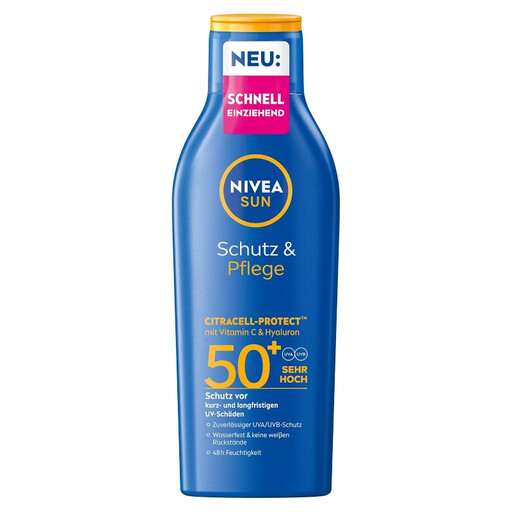
Why it suits this profile: The 200ml bottle is designed for regular use on the body, making it a good choice for family days out, holidays or everyday time outdoors.
The product information describes a fast-absorbing sun cream that leaves no white cast. Let it absorb fully after applying to help avoid marks on clothing.
SPF 50+, UVA/UVB protection according to the product description, 200ml and up to 48 hours of hydration according to the manufacturer.

Why it suits this profile: This lightweight, creamy face formula is designed for daily use and can be applied in several thin layers.
The product description highlights a non-sticky finish and application without a white cast. Even so, applying enough product remains essential.
SPF 50+ PA++++, rice extract and fermented ingredients according to the product information, with a texture designed for the face.
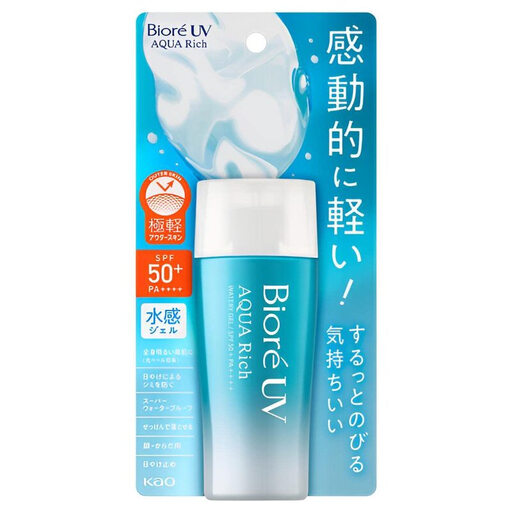
Why it suits this profile: According to the product information, the water-like gel texture is suitable for the face and body, making it a good option if you prefer a lightweight feel on your skin.
The formula is described as fast-absorbing and leaving no white cast. If you have sensitive skin, check the INCI list for its alcohol content.
SPF 50+ PA++++, 70 ml, fragrance-free according to the product description, and presented as a gel for the face and body.
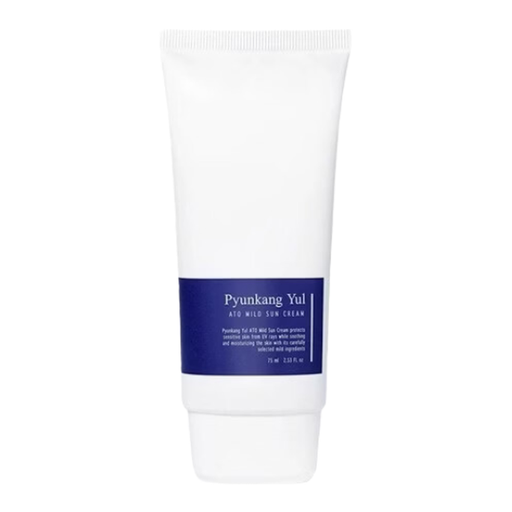
Why it suits this profile: According to the product information, its ATO positioning and lightweight face cream are aimed at dry or sensitive skin types.
The product description mentions a lightweight texture that doesn’t leave a strong white cast. If your skin is already sensitive, it’s still worth doing a patch test.
SPF 50 PA++++, 75 ml and, according to the supplier, intended for sensitive, dry or atopy-prone skin.
Apply sun cream generously before going outdoors. The face, ears, neck, hands and lips are often missed. Reapply regularly during extended time outdoors, and after swimming, sweating or drying yourself. Sun protection under make-up works best when the cream has fully absorbed. For sport or the beach, a product labelled water-resistant can be a good choice; you’ll still need to reapply it.
We’ve put together a complete, regularly updated list of products that meet these strict selection criteria and fully comply with the safety regulations in force in the EU.
It depends on how much you apply, how you use it and how it’s stored. Check the period-after-opening symbol on the packaging and the stated best-before date. Don’t use opened products beyond the recommended period after opening. Heat and direct sunlight can affect the formula.
Yes, provided the product is specifically intended for the face. Face formulas can differ from body lotions in texture, fragrance, alcohol content or finish. If you have sensitive or blemish-prone skin, it’s worth checking the full INCI list.
Reapply regularly during prolonged sun exposure, and always after swimming, heavy sweating or drying yourself. A high SPF doesn’t extend the safe time you can spend in the sun indefinitely. It’s still a good idea to use extra protection, such as clothing and shade.