
Lieferung heute & morgen

Qualitätsgarantie

Willkommens-Angebote freischalten: KOSTENLOSE Lieferung | Bis zu 80 % RABATT | Kostenlose 30-Tage-JoyPlus-Testphase
App herunterladen
SPF 50 sun cream is part of many adults’ daily skincare routine – particularly when spending longer periods outdoors, having fair skin or being exposed to intense sunlight. The choice ranges from SPF 50 face sun cream and SPF 50 sun fluid to SPF 50 sun lotion for the body. However, the number on the packaging is not the only factor that matters.
Many unsuitable purchases are caused by three common marketing traps:
The sun protection factor SPF primarily describes protection against UVB radiation, which is a major cause of sunburn. SPF 50 or SPF 50+ indicates high or very high protection. However, sun cream does not provide complete protection against UV radiation.
You should also look for clearly stated UVA protection. For daily UVA and UVB protection, markings such as “UVA” in a circle, “Broad Spectrum” or, on Asian products, “PA+++” or “PA++++” are relevant. The specific labelling may vary depending on the market and product.
For oily or blemish-prone skin, mattifying sun protection, silica or a lightweight fluid texture is often more practical than a rich sun lotion. If you want to wear sun protection under make-up, look for the following claims:
Dry skin may benefit from glycerine, hyaluronic acid or a lotion-like texture. For sensitive skin, it is worth checking the fragrance and alcohol content, as well as your individual tolerance. A product description is not a substitute for dermatological advice.
SPF 50 face sun cream is generally smaller and formulated to feel lighter. For arms, legs, shoulders and back, sun lotion, gel-cream or spray in a larger size is more practical. A visible, generous amount is often recommended for the face and neck; the two-finger rule is sometimes used as a guide. The manufacturer’s instructions on the packaging are what matter most.
Apply sun protection before spending time outdoors and reapply regularly. Reapplication is necessary after swimming, heavy sweating or drying yourself – even for products labelled as water-resistant.
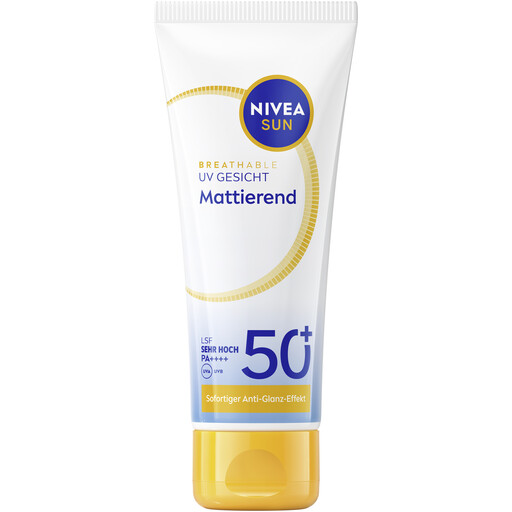
Why this product suits this profile: This face fluid is aimed at shoppers looking for lightweight, mattifying UV protection for everyday use and under make-up.
The product details state that it absorbs quickly, feels non-greasy and has a non-comedogenic formulation. This helps to reduce common problems associated with shiny facial products.
SPF 50+, a mattifying finish and a 40 ml size for daily facial use.
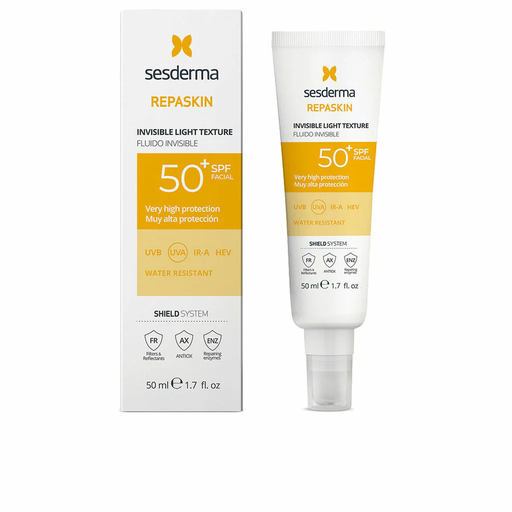
Why this product suits this profile: This fluid is appealing to shoppers who value a lightweight facial formula with an invisible, matte finish and water resistance.
The product details mention quick absorption, a non-greasy finish and no visible white residue. Regular reapplication is still required.
SPF 50, UVA and UVB protection, a matte appearance and a water-resistant formulation according to the product description.
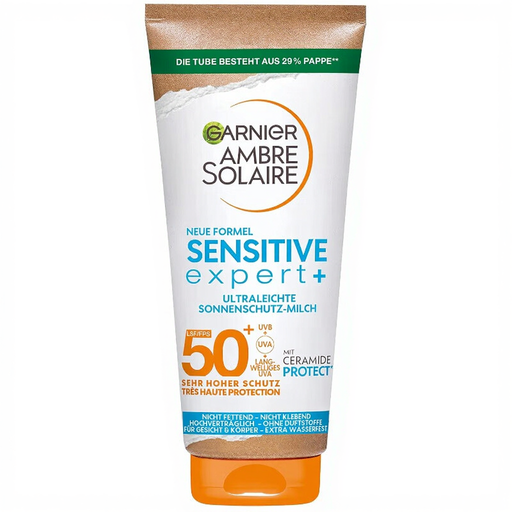
Why this product suits this profile: This 175 ml sun lotion is suitable for adults who want to apply a lightweight, fast-absorbing body formula regularly to their face and body.
The larger size makes it easier to apply a sufficient amount when using it frequently. The product details describe a non-sticky lotion that absorbs quickly.
SPF 50+, a 175 ml body-size format and, according to the description, a moisturising, non-greasy texture.
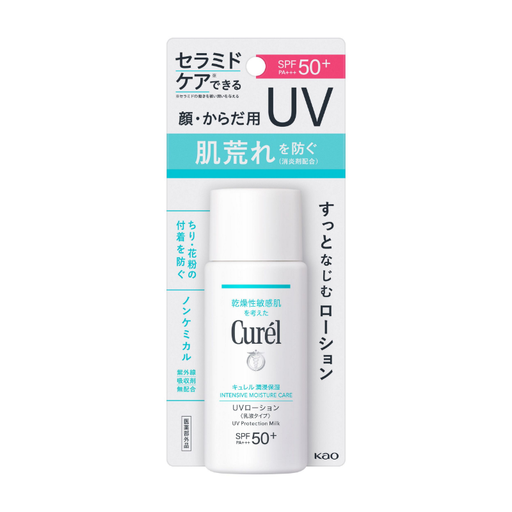
Why this product suits this profile: This lotion is intended for the face and body, combining SPF 50+ with a lightweight, moisturising texture.
The product description mentions a lightweight, non-sticky consistency and guidance for use on sensitive skin. Stop using it if a reaction occurs.
SPF 50+, PA+++ and suitability for the face and body according to the supplier’s information.
Apply SPF 50 sun cream generously to all uncovered areas. The ears, nape of the neck, hairline, hands and tops of the feet are often forgotten. SPF 50 sun fluid for the face should be applied as the final step in your morning skincare routine and before make-up. Allow the product to absorb briefly before applying further layers.
Sun cream should be stored somewhere cool and protected from direct sunlight. Check the best-before date, batch number and the symbol indicating the period of use after opening. If you have sensitive skin, it is advisable to carry out a patch test on a small area. Products with damaged packaging or a noticeably changed colour, consistency or smell should not be used any further.
We have put together a complete, regularly updated list of products that fully meet these strict selection criteria and the safety regulations applicable in the EU.
Sun protection should be renewed regularly when spending longer periods outdoors. Reapplying after swimming, sweating or drying yourself is particularly important. However, reapplication does not automatically extend the permitted time you can spend in the sun.
Yes, many face fluids and mattifying formulations are intended for use under make-up according to the product details. Look for a fast-absorbing formula and allow the sun cream to spread and settle fully on the skin before applying make-up.
The printed best-before date and the jar symbol showing the period of use after opening are the key references. Heat and direct sunlight can affect the formulation. You should therefore avoid leaving sun cream permanently in a hot car or in direct sunlight.