
Lieferung heute & morgen

Qualitätsgarantie

Willkommens-Angebote freischalten: KOSTENLOSE Lieferung | Bis zu 80 % RABATT | Kostenlose 30-Tage-JoyPlus-Testphase
App herunterladen
For many people, SPF 50 sunscreen is a suitable choice for regularly protecting the face and body from UV rays. However, a high SPF alone doesn’t guarantee you’ll find the right product. Texture, the amount applied, UVA labelling and how well your skin tolerates it all play a part in whether you’ll use a sunscreen consistently day to day.
SPF mainly indicates protection against UVB rays, which are associated with sunburn. For everyday use, a clearly stated UVA protection level is also important. Products sold in Germany may display the UVA symbol in a circle, which indicates a standardised minimum level of UVA protection.
Labels such as SPF 50+, PA++++ and ‘Broad Spectrum’ come from different labelling systems, so you shouldn’t compare them directly without checking what they mean. If you’re looking for an SPF 50 facial sunscreen, check the packaging and the full INCI list.
A sunscreen that doesn’t leave a white cast can feel comfortable to apply. But that doesn’t tell you whether it’ll also feel comfortable on dry, sensitive or blemish-prone skin. Alcohol, fragrance, certain filters or essential oil ingredients may not suit everyone.
If you have sensitive skin, check for:
Even water-resistant sunscreen needs to be reapplied after swimming, sweating or towel-drying. Water resistance doesn’t mean the protection lasts indefinitely. It’s also common to use too little sunscreen day to day. Applying a thin layer reduces the actual level of protection, whatever the stated SPF.
For fair skin, longer periods outdoors or intense sunshine, SPF 50 or SPF 50+ can be a sensible product category to consider. However, the stated protection only applies when you use enough. The two-finger rule is often used as a practical guide for the face and neck, but always follow the specific instructions on the packaging.
A lightweight sunscreen or sun gel is often a good choice for everyday facial skincare and as sun protection under make-up. Richer formulas may feel more comfortable on dry skin. Larger bottles or sprays are more practical for the arms, legs and torso.
Also consider the differences between:
Niacinamide, aloe, centella, rice extract, panthenol and hyaluronic acid can have skincare benefits as part of a formula. However, they don’t replace a skincare routine tailored to your needs, nor do they prove that a product has a medical effect. If you’re choosing sunscreen with niacinamide, UV protection should still be your main consideration.
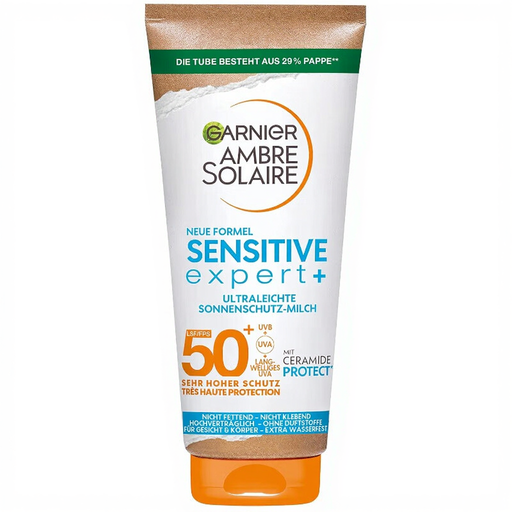
Why this product suits you: The 175 ml spray is designed for use on larger areas of the body, making it suitable for regular application to the arms, legs and torso.
The larger size makes it less likely you’ll run out of a small facial sunscreen when using it on your body. The product description says it has a lightweight, fast-absorbing lotion texture that doesn’t feel sticky.
SPF 50+, 175 ml and a body-lotion texture. Positioned for sensitive and fair skin.

Why this product suits you: The light, creamy facial formula is designed for anyone looking to combine hydration, a clear finish and a Korean sunscreen for everyday use.
The product description highlights a non-sticky texture that should feel light, even when applied in several layers. The directions emphasise using enough product and reapplying regularly.
SPF 50+ PA++++, 30% rice extract according to the product information, and niacinamide in the INCI list. 50 ml for everyday use on the face.
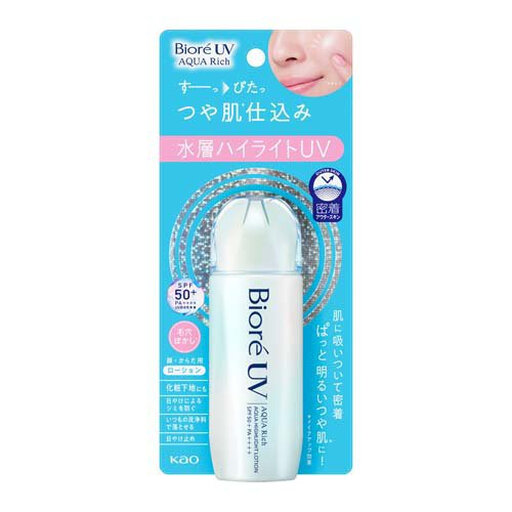
Why this product suits you: This product is listed for use on the face and body, with 80 minutes of water resistance confirmed by the manufacturer. That makes it worth considering for outdoor activities, but it doesn’t replace reapplication.
The stated water resistance helps tackle the common misconception that water-resistant sunscreen doesn’t need to be reapplied. You still need to reapply after sweating, swimming or towel-drying.
SPF 50+ PA++++, suitable for the face and body, and 80 minutes of water resistance according to the product information.
We’ve put together a complete, regularly updated list of products that meet these strict selection criteria and fully comply with the safety regulations in force in the EU.
Apply sunscreen as the final step in your morning skincare routine. If you’re using SPF 50 facial sunscreen, remember to cover your ears, neck and hairline too. Apply it well before spending an extended period in the sun. Reapply regularly when outdoors, especially after swimming, heavy sweating or towel-drying.
Sunscreen doesn’t protect you from unlimited exposure to the sun. Other measures, such as seeking shade, wearing clothing and a sun hat, and avoiding the strongest midday sun, are still important.
A practical guide is to use about two finger-lengths for your face and neck. The key is to apply an even, generous layer. If you use significantly less, you may not get the full level of protection stated on the packaging.
It depends on how long you’re outdoors, as well as sweating, water and rubbing. When you’re outside, reapply regularly, and always after swimming, exercising or towel-drying. Even water-resistant sunscreen won’t stay effective indefinitely.
Yes, as long as the texture and finish suit your skin and the foundation you use. A lightweight sunscreen that doesn’t leave a white cast is often easier to work into your routine. Let the sunscreen absorb briefly before applying make-up. Stop using it if you experience irritation or a reaction.