
Lieferung heute & morgen

Qualitätsgarantie

Willkommens-Angebote freischalten: KOSTENLOSE Lieferung | Bis zu 80 % RABATT | Kostenlose 30-Tage-JoyPlus-Testphase
App herunterladen
SPF 50 sunscreen is a practical choice for many adults in Germany: it offers a high level of UVB protection and, depending on the formula, can be used on your face and body, on holiday or for outdoor activities. There’s plenty of choice, from lightweight facial sunscreens to large bottles of SPF 50 sun lotion for the body.
However, bold marketing claims don’t automatically mean a product is right for you. Three common shopping habits are particularly likely to lead to the wrong choice:
SPF 50 or SPF 50+ indicates a high level of UVB protection. UVB rays are mainly associated with sunburn. UVA rays penetrate deeper into the skin and are also relevant in everyday life. So if you’re looking for comprehensive UVA and UVB protection, don’t focus on the SPF number alone.
Korean and Japanese sunscreens often carry the additional PA++++ rating. In Europe, UVA protection claims or the UVA symbol on the packaging are useful guides. Sunscreen with a high SPF also doesn’t replace taking breaks in the shade, wearing clothing or avoiding the midday sun when it’s strongest.
For facial sunscreen, a lightweight, fast-absorbing texture is often more comfortable for everyday use than a rich body lotion. If you have oily or blemish-prone skin, look for non-greasy sunscreen or a matte finish. Dry skin is more likely to benefit from moisturising ingredients such as glycerin or hyaluronic acid.
If you have sensitive skin, it’s worth checking the full INCI list. Fragrance, alcohol or certain UV filters may not suit everyone. Testing a small amount on a limited area of skin isn’t a substitute for dermatological advice, but it can be a sensible step before applying the product more widely.
A common mistake is not applying enough sunscreen. The so-called two-finger rule is often used for the face; you’ll need considerably more product for the body. Always follow the application instructions on the packaging.
Apply sunscreen before going outdoors and reapply regularly. It’s particularly important to reapply after contact with water, sweat or a towel. Also check the best-before date or the period-after-opening symbol on the jar. Heat and direct sunlight can affect product quality.
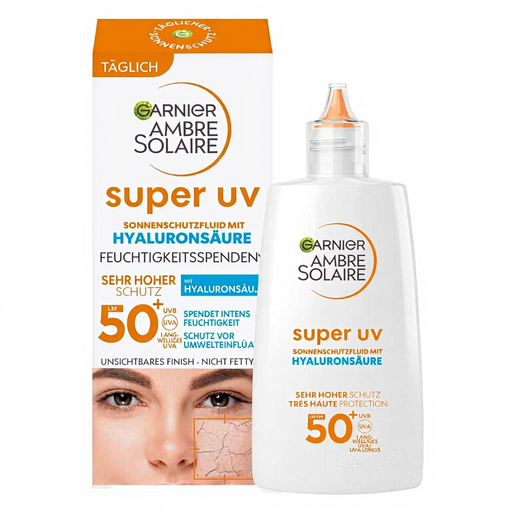
Why this product suits this profile: This compact facial fluid is designed for everyday use and can be worn under make-up. The product description promises a matte, invisible finish and includes hyaluronic acid.
The fluid texture addresses the problem of heavy, sticky face creams. Even so, it’s important to apply the recommended amount.
SPF 50+, a 40-ml size, hyaluronic acid and a non-greasy finish according to the product information.
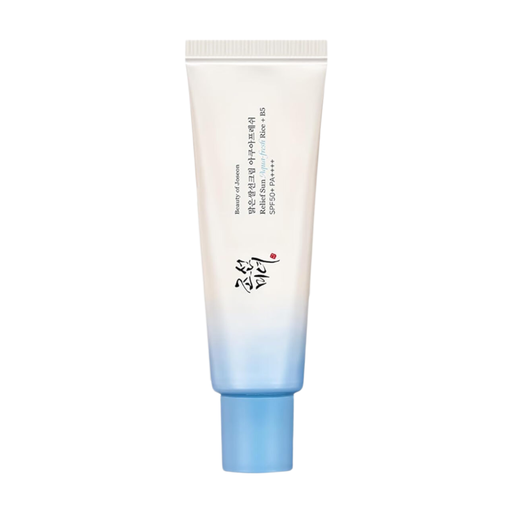
Why this product suits this profile: This lotion-like formula is for anyone who wants everyday facial sun protection with a lightweight, fast-absorbing texture.
The product information says it leaves no white cast or greasy, sticky residue, even when applied in multiple layers. Check the INCI list before buying.
SPF 50+ and PA++++, 50 ml, rice water and panthenol according to the product description.
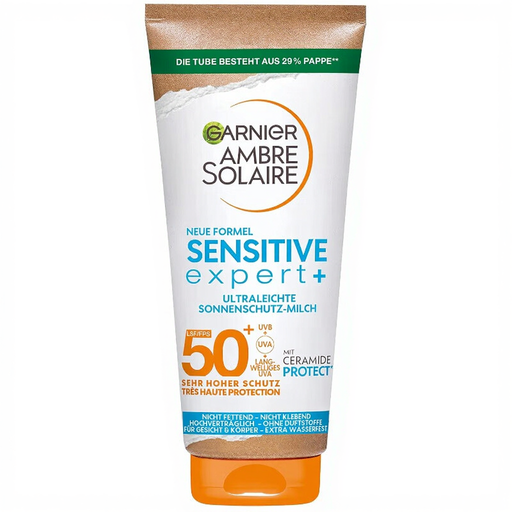
Why this product suits this profile: This 175-ml bottle of sun lotion is designed for the arms, legs and torso, whether you’re on holiday or spending longer periods outdoors.
The spray format makes it easier to apply evenly over larger areas of the body. Reapply after swimming, sweating or towelling off.
SPF 50+, 175 ml, a lightweight sun lotion and, according to the product description, no sticky feel on the skin.
We’ve put together a complete, regularly updated list of products that meet these strict selection criteria and fully comply with the safety regulations in force in the EU.
Check the best-before date printed on the product and the period-after-opening symbol. Store your sunscreen in a cool, dry place away from direct sunlight. A change in colour, smell or consistency may be a sign that it’s no longer suitable for use.
Yes, a facial formula with SPF 50 or SPF 50+ can be used every day, as long as the texture and ingredients suit your skin. If you have sensitive skin, pay particular attention to the INCI list and how your skin reacts to the product.
SPF 50 sun lotion is often designed for larger areas of the body and comes in a bigger pack. Facial sunscreen usually comes in smaller packaging and has a texture that’s easier to layer with skincare or make-up. Always follow the information on the product packaging.