
Lieferung heute & morgen

Qualitätsgarantie

Willkommens-Angebote freischalten: KOSTENLOSE Lieferung | Bis zu 80 % RABATT | Kostenlose 30-Tage-JoyPlus-Testphase
App herunterladen
SPF 50+ sunscreen should provide reliable protection, feel comfortable on your skin and be easy to use regularly. This is where buying decisions can often go wrong: a formula may look highly effective on paper, but leave your face shiny, pill under make-up or transfer onto clothing. Claims such as “water-resistant”, “anti-ageing” or “no white cast” should also be considered in context.
SPF primarily measures protection against UVB rays, which are associated with sunburn. For balanced UVA and UVB protection, check the product’s UVA coverage too. Many Korean and Japanese products, for example, display PA++++. This is a UVA protection rating under the PA system, and should be considered alongside the information on the packaging.
SPF 50+ does not mean you can stay in the sun indefinitely. Seeking shade, wearing clothing and avoiding the midday sun when it is at its strongest are still sensible precautions.
Larger bottles of easy-to-spread SPF 50+ sun lotion are practical for your arms, legs and torso. Richer textures, however, can leave your face shiny or interact with skincare and make-up. If you’re looking for a lightweight sunscreen for everyday use, choose a formula designed specifically for the face.
Water-resistant sun protection is useful for swimming, sport and heavy sweating. However, water, friction and towels can all reduce its effectiveness. Reapply after swimming, drying off and spending extended periods outdoors. The claim also doesn’t tell you whether the texture will feel comfortable on dry or oily skin.
SPF 50+ sunscreen is a natural choice for fair skin, extended periods outdoors and families. Also look for:
For the face, it’s often recommended that you apply a generous, even layer. Follow the directions on the product packaging.
Dry skin may benefit from a moisturising sunscreen containing glycerin, hyaluronic acid or other conditioning ingredients. Lightweight, non-comedogenic sunscreens and mattifying formulas are often more comfortable for oily or blemish-prone skin. However, “non-comedogenic” doesn’t guarantee that every skin type will tolerate the product.
If you have sensitive skin, check the full INCI list. Fragrance, alcohol or certain UV filters may not suit everyone. If you know you have a sensitivity, test the product on a small area first. Stop using it if irritation occurs.
Depending on the formula, mineral filters can leave a visible cast. Modern lightweight formulas may blend in more transparently, but the result depends on your skin tone, how much you apply and what other products you use. If you’re looking for sunscreen with no white cast, use product images and the manufacturer’s guidance as a guide, while bearing in mind how your own skin responds.
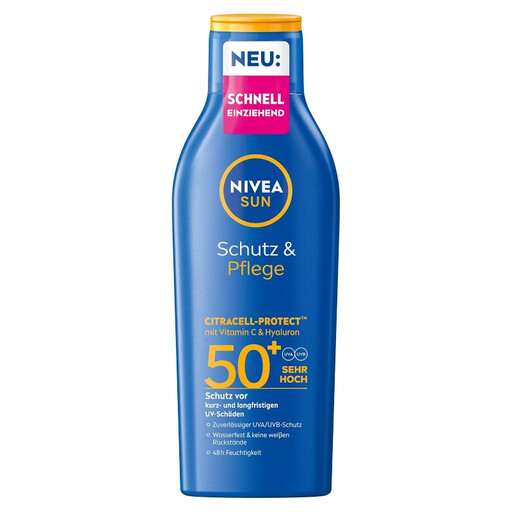
Why it suits this profile: The 200 ml size is designed for families and regular use over larger areas of the body. According to the product description, the sun milk absorbs quickly and is intended for everyday body care.
The larger size helps it go further when you’re applying sunscreen over a wide area. The product description says it leaves no white residue and recommends reapplying regularly.
SPF 50+, 200 ml and, according to the supplier, a moisturising milk formula that absorbs quickly.

Why it suits this profile: According to the product description, this Korean sunscreen combines SPF 50+ PA++++ with a light, creamy texture for the face. It’s a good option if you want to add sun protection to your skincare routine.
The formula is specifically described as suitable for layering and leaving a non-sticky feel on the skin. That makes it easier to fit into your morning routine.
SPF 50+ PA++++, 30% rice extract according to the product information, and a lightweight texture described as leaving no white cast.
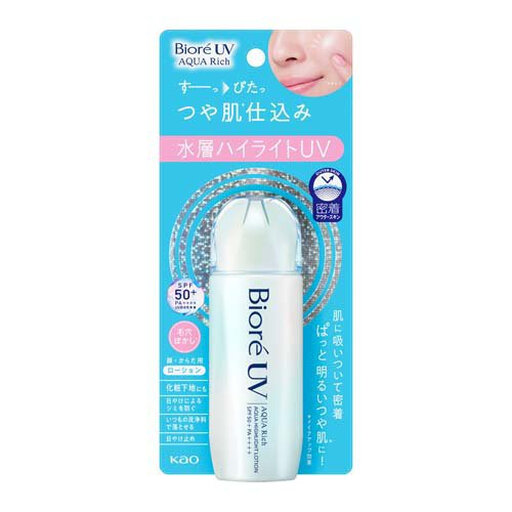
Why it suits this profile: For outdoor activities and use on the body, the product description specifies SPF 50+ PA++++ and confirmed water resistance for 80 minutes.
The water-resistance claim comes with a specific time rating. Even so, you’ll still need to reapply after friction, swimming and drying off.
Designed for the face and body, with SPF 50+ PA++++ and a water-resistant formula.
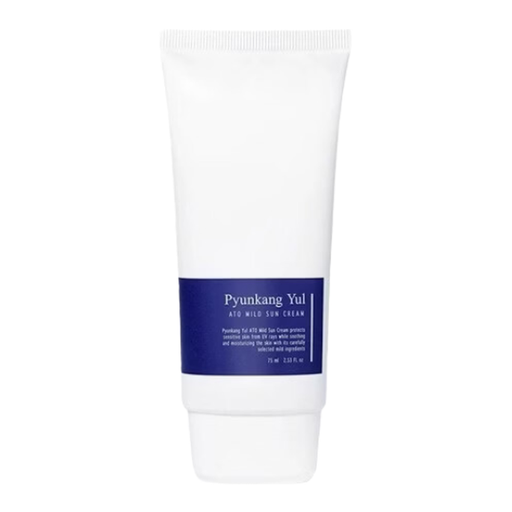
Why it suits this profile: According to the product description, the ATO range is designed for dry, sensitive or atopy-prone skin, and offers SPF 50 PA++++ for everyday use on the face.
The product description highlights a lightweight, non-greasy texture and reduced visible residue. If you have sensitive skin, it’s still worth checking how your skin responds.
SPF 50 PA++++, 75 ml and a product range designed for sensitive and dry skin.
We’ve put together a complete, regularly updated list of products that meet these strict selection criteria and the safety requirements in force in the EU.
Apply SPF 50+ sunscreen evenly before going out in the sun. For your face and neck, using enough product is essential; applying too little reduces the level of protection you actually get. Reapply especially after swimming, sweating, drying off or spending a long time outdoors.
Also check:
For children, sunscreen is no substitute for protective clothing or staying in the shade. Don’t apply products to broken or already irritated skin.
For many adults, daily sun protection on the face and any uncovered areas of the body is a good idea. The key is choosing a comfortable texture, applying enough and finding a formula your skin tolerates. If you have sensitive skin, check the formula before you buy.
Reapply after swimming, sweating or drying off. If you’re spending a long time outdoors, you’ll need to top up regularly. A water-resistant formula doesn’t automatically extend the overall period of protection.
Check the expiry date and the open-jar symbol on the packaging. If the sunscreen has been stored somewhere hot or its consistency has changed, stop using it, even if it’s still within its stated expiry date.