
Lieferung heute & morgen

Qualitätsgarantie

Willkommens-Angebote freischalten: KOSTENLOSE Lieferung | Bis zu 80 % RABATT | Kostenlose 30-Tage-JoyPlus-Testphase
App herunterladen
For many people in Germany, SPF 50 sunscreen is part of their daily skincare routine. Even so, it’s easy to choose the wrong product: a formula may feel too greasy on your face, leave a visible film or be mistaken for offering lasting protection simply because it’s labelled water-resistant.
This guide explains which details on the packaging really matter, and which formulas may suit your face, body, sensitive skin or make-up routine.
The SPF rating mainly indicates protection against UVB rays, which can contribute to sunburn. For everyday sun protection, you should also look for a stated level of UVA protection. Korean and Japanese products often carry the PA++++ rating. For products sold in Europe, the UVA symbol inside a circle is a useful guide.
A high rating is no substitute for applying sunscreen correctly. Using too little can significantly reduce the protection you get.
A lightweight sunscreen may sit comfortably under make-up, while dry skin may prefer a more moisturising formula. Alcohol, fragrance or certain UV filters may feel uncomfortable on sensitive or irritated skin. That’s why the full INCI list on the packaging is more useful than marketing claims such as “Glow”, “Aqua” or “Invisible”.
For blemish-prone skin, claims such as “tested to be non-comedogenic” can be a useful guide, but they’re no guarantee that a product will suit everyone.
Even water-resistant sunscreen loses some of its protection through swimming, sweating, towelling off and rubbing. Claims such as “80 minutes water resistance tested” refer to specific test conditions, not a whole day at the lake. Apply another generous layer after contact with water or towelling off.
SPF 50 and SPF 50+ indicate very high UVB protection, based on standardised testing methods. The difference between the two ratings shouldn’t be considered in isolation. What matters is a good balance of UVB and UVA protection.
When comparing products, look for:
If you’re looking for a sunscreen that doesn’t leave a white cast, look for transparent, gel-like or fluid formulas. Mineral filters can leave visible residue, depending on the formula, while modern organic filters often feel lighter and look more transparent. The result also depends on your skin tone and how much you apply.
For everyday use on your face, these features may be worth considering:
Try new products on a small area of skin first. Stop using the product if you experience stinging, redness or itching. Sunscreen is for external use only and is no substitute for protective clothing, a hat or avoiding the strongest midday sun.
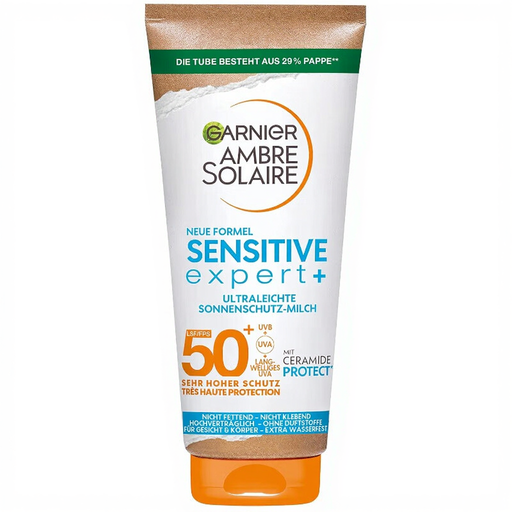
Why it suits this profile: This 175 ml sun lotion is designed for areas of the body such as the arms, legs and torso. It’s a good option if you regularly want to protect larger areas of skin.
According to the product description, the lightweight lotion absorbs quickly and shouldn’t leave skin feeling sticky. Reapply after swimming or towelling off.
SPF 50+, 175 ml and a spray bottle for use on the body. According to the product information, the packaging contains 48 per cent less plastic.
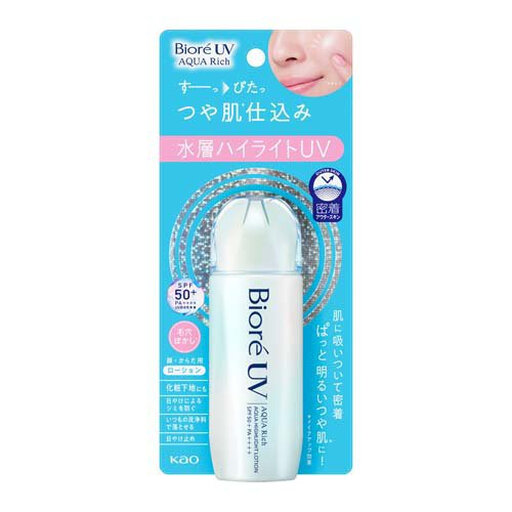
Why it suits this profile: This Japanese sunscreen is designed for the face and body. According to the product description, it is water-resistant and gives skin a radiant finish.
The product description states that it passed an 80-minute water-resistance test. That doesn’t mean you can swim indefinitely without reapplying; topping up your protection is still essential.
SPF 50+, PA++++, 70 ml and water resistance, according to the product information. The finish contains reflective particles for a visible glow.
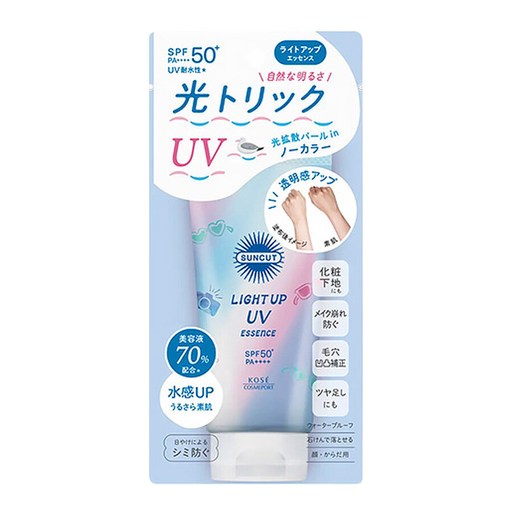
Why it suits this profile: This Japanese formula is designed to work as both sunscreen and a radiant make-up base. It can be used on the face, neck and décolletage.
The product information describes a transparent, smoothing effect. However, its glossy finish isn’t the same as a matte one, so make sure it suits your make-up style.
80 g, glycerin to moisturise the skin and mica for a described glow effect.
Check the PAO symbol on the packaging, for example “12M”, as well as the best-before date or batch information. Heat and direct sunlight can affect product quality. Store opened sunscreen in a cool, dry place with the lid firmly closed.
It depends on your skin type, the time of year, where you are and the level of UV exposure. High protection is a good choice if you’re spending a long time outdoors, UV levels are high, or you have sensitive, fair skin. SPF 50 facial sunscreen can be used as the final step in your daily skincare routine.
Yes, as long as the formula works well with your skincare and foundation. Give it a moment to spread and absorb. Products with a glow or tone-up effect may change the finish of your foundation. The important thing is to apply enough and reapply if you’re spending a long time outdoors.