
Lieferung heute & morgen

Qualitätsgarantie

Willkommens-Angebote freischalten: KOSTENLOSE Lieferung | Bis zu 80 % RABATT | Kostenlose 30-Tage-JoyPlus-Testphase
App herunterladen
An SPF 50 sunscreen spray can make everyday application easier: the texture spreads quickly, hard-to-reach areas of the body are more accessible and many formulas absorb rapidly. However, not every spray offers the same level of protection in every situation. If you focus only on the number “50” or terms such as “transparent” and “water-resistant”, you may overlook important details.
The sun protection factor (SPF) mainly describes protection against UVB radiation, which is primarily associated with sunburn. For everyday use, clearly stated UVA protection is also important. Look for indications such as “UVA/UVB”, the UVA symbol in a circle or a comparable marking on the packaging.
A high sun protection factor does not replace shade, clothing, a sun hat or sunglasses. Prolonged direct sunlight should be avoided, especially by children.
A transparent sun spray often leaves fewer visible residues than a lotion. However, this can make it harder to see whether all areas are adequately covered. Do not simply spray briefly over the skin; spread the product evenly with your hands. The shoulders, ears, back of the neck, tops of the feet and hairline are particularly often missed.
For aerosols, the rule is: do not spray directly onto the face, into the eyes or onto mucous membranes. For sun spray for face and body, it is better to spray the product into your palms first and then apply it to your face.
A water-resistant sun spray may be more resistant to water under the conditions stated on the packaging. Swimming, sweating, drying yourself with a towel and friction can still reduce protection. Reapplication is necessary after these activities. Even without exposure to water, sunscreen should be reapplied regularly.
Sprays containing propellant gas are subject to additional safety rules: keep them away from flames, hot surfaces and direct sunlight, and use them only in well-ventilated areas.
For longer periods at the beach, while hiking or at an outdoor swimming pool, SPF 50 or SPF 50+ is an obvious choice. For less intense or shorter periods outdoors, SPF 30 sunscreen may also be sufficient, depending on your skin type. However, using a sufficiently generous amount of product is always essential.
Refer to the specific product labelling and check:
Sensitive skin does not automatically benefit from every spray. Fragrances, alcohol, certain UV filters or plant extracts may be unsuitable for some people. It is therefore worth checking the full INCI list. If you have known allergies or particularly reactive skin, test a new product on a small area first.
Pump bottles, such as a classic sun lotion spray, allow for targeted application. Aerosols, on the other hand, often reach hard-to-access areas and are practical when you are out and about, but require particular care to avoid inhalation and when used in enclosed spaces.
For children, a clear age recommendation, high water resistance and easy reapplication are important. Sun spray for children should not be regarded as the only protective measure: UV-protective clothing, headwear and shade remain important.
A sun spray over make-up is primarily intended for topping up facial protection. It does not necessarily replace the generous initial application before applying make-up. Products containing moisturising ingredients such as glycerine, hyaluronic acid or oils may feel more comfortable on the skin; however, this does not indicate any therapeutic effect.
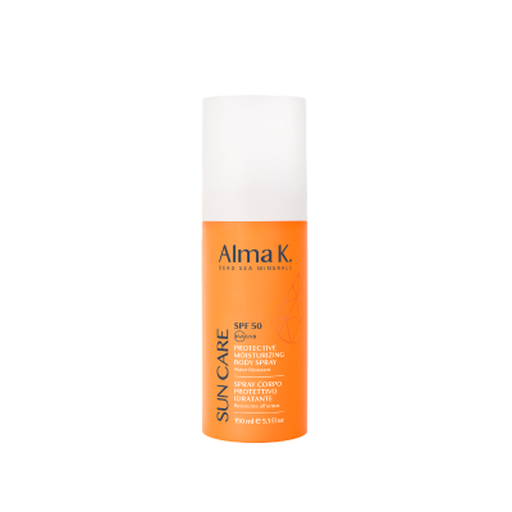
Why this product suits this profile: The 150 ml pump bottle is designed for applying sunscreen over large areas of the body and combines SPF 50 with a lightweight spray texture.
Its body-specific positioning makes it clear that the spray should not be mistaken for an invisible facial product. For the face, application via the hands is recommended.
SPF 50, UVA/UVB protection, 150 ml capacity and, according to the product description, a fast-absorbing, non-sticky texture.
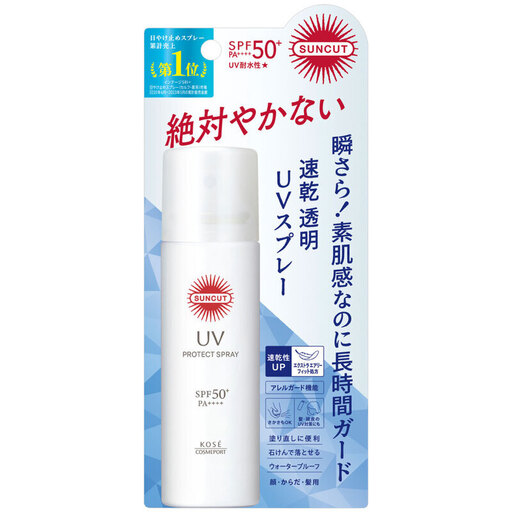
Why this product suits this profile: The product details state SPF 50+, PA++++, water resistance and suitability for the face and body.
The instructions call for shaking the product, spreading it evenly and reapplying after contact with water or a towel. This reduces the risk of interpreting “water-resistant” as meaning permanent protection.
Compact format, PA++++ rating, described as suitable for use over make-up and, according to the supplier, washable with soap.
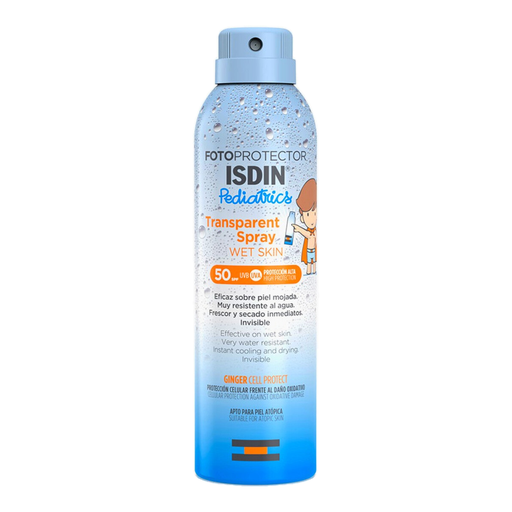
Why this product suits this profile: According to the listing, the product is intended for children aged three and over and is described as suitable for dry and wet skin – practical for active children swimming and playing.
The age recommendation defines the appropriate use. Despite its stated high water resistance, reapplication after drying yourself remains necessary.
SPF 50+, 200 ml, transparent application and, according to the product description, suitability for wet and dry skin.
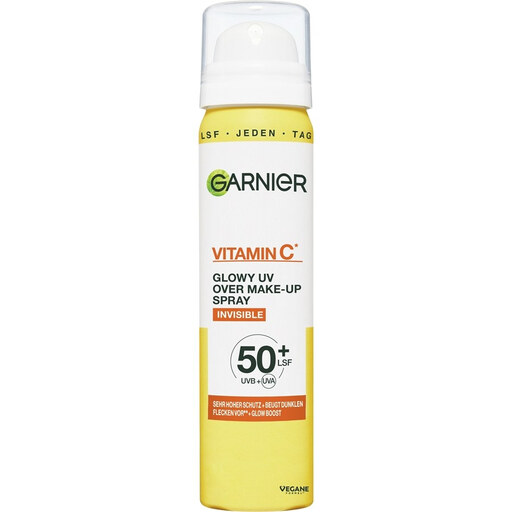
Why this product suits this profile: According to the product description, the compact facial spray is intended for use over make-up and contains ingredients including glycerin, Sodium Hyaluronate and Ascorbyl Glucoside.
Its clearly stated purpose prevents the small 75 ml format from accidentally being treated as the sole body protection for a day at the beach.
SPF 50+, facial format, intended use over make-up and a glowy finish according to the product description.
We have put together a complete, regularly updated list of products that fully meet these strict selection criteria and the safety regulations applicable in the EU.
Reapplication is particularly necessary after swimming, sweating and drying yourself. The exact frequency depends on the product, your activity and the intensity of the sunlight. After applying sunscreen, your skin should continue to be protected with clothing, shade and headwear.
According to the product description, some facial sprays are intended for use over make-up. However, they should be applied evenly and carefully. For the initial application before applying make-up, it is usually easier to control a sufficiently generous amount of a suitable facial sunscreen.
The printed expiry date and the open-jar symbol indicating how long the product can be used after opening are the key points to follow. Store the product in a cool, dry place away from direct sunlight. For pressurised containers, do not exceed the maximum storage temperature stated on the packaging.