
Lieferung heute & morgen

Qualitätsgarantie

Willkommens-Angebote freischalten: KOSTENLOSE Lieferung | Bis zu 80 % RABATT | Kostenlose 30-Tage-JoyPlus-Testphase
App herunterladen
Spicy instant noodles from Korea, China, Japan or Indonesia differ significantly in seasoning, preparation and portion size. If you buy based only on eye-catching packaging or a well-known brand name, you can easily overlook important details. With spicy Asian instant noodles in particular, three common buying pitfalls can arise: the heat level is misjudged, allergens are hidden in the small print, and a seemingly good-value multipack doesn't match your actual consumption.
Labels such as 'Hot', 'Spicy' or 'Red Oil' are not standardised measurements. Korean instant noodles like Buldak Ramen or Shin Ramyun can differ significantly in spiciness despite using similar terms. With some products, the chilli oil can be added separately; with others, the entire seasoning powder goes into the broth.
A single serving of 80 to 120 g can't be compared with a 5-pack or 20-pack without calculating the price per 100 g or per portion. When buying instant noodles in a multipack, you should also consider the best-before date, storage space and your actual consumption. A bulk carton is only worthwhile if several people eat them regularly.
Many products contain wheat or gluten, soya, sesame or peanuts. Seafood ramen may also include fish, prawns, mussels or squid. Salt content also varies widely: for the products listed, values range from 2.0 g to 5.6 g of salt per 100 g. Always refer to the current ingredients list on the packaging.
The country of origin gives you a rough guide, but it doesn't replace checking the ingredients. Korean instant noodles are often known for robust broths or concentrated sauces. Chinese instant noodles frequently offer dry variants with sesame paste, chilli oil or Sichuan pepper. Japanese ramen is usually characterised more by broth, dashi or soy sauce notes.
If you prefer a dry preparation, look for Mi Goreng, sesame noodles or red oil noodles. For a soupy meal, spicy ramen, seafood ramen or beef-flavoured varieties are good options.
Check whether the chilli oil, seasoning powder and sauces come separately. With products like Indomie Mi Goreng Rendang, the oil and chilli powder can be added to your taste. This makes it easier to adjust the heat to your preference. For dry noodles, the water is usually drained after cooking; for soups, it stays in the dish as broth.
Fried noodle blocks are quick to prepare and are often springy. Non-fried varieties, such as some Hankow or A-Kuan products, are boiled, soaked or steamed. Pay attention to the recommended water quantity and time. For the products mentioned, values range from around three minutes in a pan to six minutes when soaking.
Bowls and cups are practical for the office, university or small kitchens. For stocking up, 5-packs, 8-packs or 20-packs are a good choice. The net weight per serving remains the key figure for comparison.
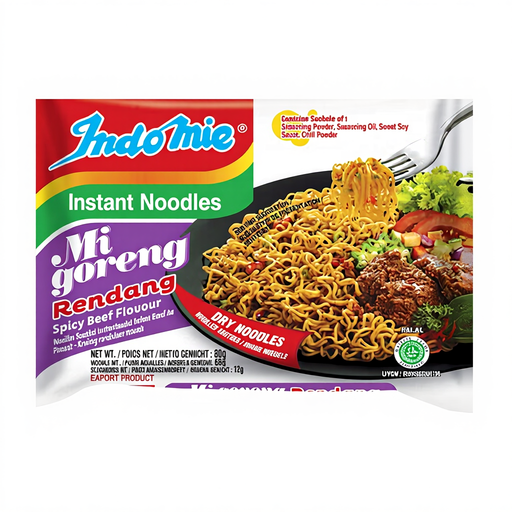
Why this product fits the profile: The single 80 g pack is ideal for trying Mi Goreng and Rendang seasoning without committing to a large quantity. The oil and chilli powder can be added separately.
The portion size and separate seasoning components make selection and dosage clearer than with a combined sauce.
Indonesian seasoning, 80 g portion and prepared as dry noodles.
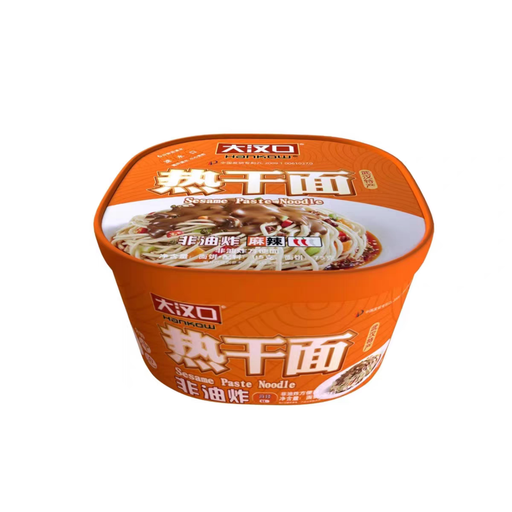
Why this product fits the profile: The combination of sesame paste, peanut paste and Sichuan pepper appeals to shoppers looking for more than a simple broth.
The ingredients and allergens are clearly listed, so you can check the sauce against your specific requirements.
115 g bowl, six-minute steeping time, plus sesame, peanut and chilli components.
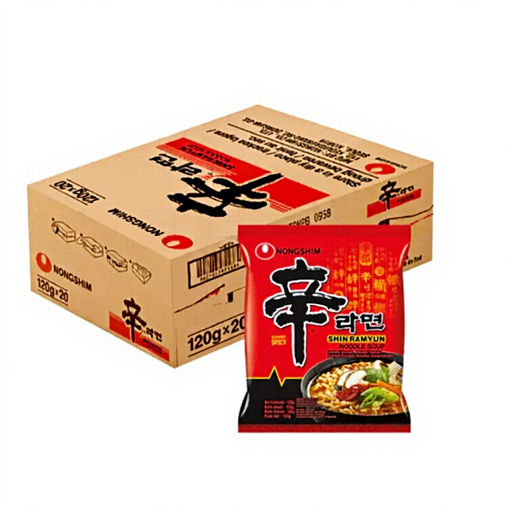
Why this product fits the profile: The carton of 20 portions is designed for regular consumption in shared houses, households or offices.
The large pack makes the cost per portion clear; check your storage space and consumption before buying.
20 individual portions of 120 g each, prepared in a pan with around 500 ml of water.

Why this product fits the profile: The combination of chilli sauce and cheese powder brings together bold seasoning with creamy notes, making it ideal for K-food fans.
The pack lists wheat, soya, milk and celery as allergens. This makes it easier to assess the recipe before buying.
Five portions of 130 g each, separate sauce and cheese powder, prepared by boiling then mixing.
We've put together a full, regularly updated list of products that fully meet these strict selection criteria and the safety regulations in force in the EU.
Read the instructions on each pack, as water quantities and cooking times vary. For dry noodles, the water is usually drained before sauces and seasonings are stirred in. For broths, some of the cooking water stays in the dish. Bowls should only be used in the microwave if this is explicitly stated.
Unopened products should be stored in a cool, dry place, away from direct sunlight. Once opened, seasoning sachets and noodles should be used promptly. The best-before date is on the packaging. If you have allergies or intolerances, always refer to the current labelling on the specific product.
A single portion with a separate sachet of chilli oil or chilli powder gives you more control. With strongly seasoned products, you can start by using only part of the sauce. Adding egg, vegetables or extra broth also changes the intensity of the flavour, without replacing the product information.
The specific shelf life is printed on each pack. Unopened dry products are usually suitable for storing as cupboard staples, but they must be kept dry and away from heat. Once opened or prepared, they should be eaten promptly.
A multipack can be cost-effective if you eat them regularly, especially with 5-packs, 8-packs or 20-packs. Compare the price per 100 g and also check the allergens, salt content, best-before date and your available storage space. For occasional consumption, a single pack is often the better choice.