
Lieferung heute & morgen

Qualitätsgarantie

Willkommens-Angebote freischalten: KOSTENLOSE Lieferung | Bis zu 80 % RABATT | Kostenlose 30-Tage-JoyPlus-Testphase
App herunterladen
Spicy rice crackers are a handy choice for film nights, your office snack stash or a snack to share. But there are clear differences between Chinese snacks, Thai rice crisps and seasoned rice crackers. Terms such as “extra hot”, “traditional” or “light” don’t always make it clear what’s actually inside the pack.
If you’re looking to buy spicy rice crackers, don’t just go by the packaging. The ingredients, allergens, pack size, production method and type of seasoning are what really matter.
“Spicy”, “hot” and “explosively hot” aren’t standardised heat levels. A product with chilli can taste very different from a rice cracker with Sichuan pepper. The latter often creates an extra tingling or numbing sensation in the mouth, which doesn’t necessarily mean it’s hotter from the chilli.
It’s worth checking the ingredients list when choosing:
The base may be made from rice, glutinous rice, millet, cornflour, wheat flour or a blend of grains. For example, Wo Long Rice Crackers (Spicy & 麻) contain at least 65% millet, according to the stated product information. Other products are made mainly with glutinous rice or contain a considerable amount of wheat and corn ingredients.
So if you’re after a particular texture, check the stated proportions of the ingredients. Rice or millet content affects the flavour and bite, while starch often gives the crackers a light, airy texture.
A 60 g pack is ideal for a single snack break, while 200 to 300 g packs are better for stocking up and sharing. Once opened, crunchy rice crisps lose their texture as they absorb moisture. A large bag is only a good choice if you’ll finish it soon or seal it carefully after opening.
Ingredients and any allergens that must be declared should be listed on the packaging. Asian rice crackers may contain soy, wheat, sesame, milk, eggs, fish or crustaceans.
Examples from the range:
If you have an allergy or intolerance, always refer to the full ingredients list on the packaging of the product you receive.
Rice crackers are snacks, so it’s best to treat them as such. The per-100-gram figures make it easier to compare energy, fat, saturates, carbohydrates and salt.
For example, the energy values shown for the products in this selection range from around 397 kcal for WANT WANT Spicy Snow Crispy to around 571 kcal for WANT WANT Mini Fried Rice Crackers. Salt content varies too: Laiyifen Glutinous Rice Crisps list 2.5 g of salt per 100 g, while Wo Long Rice Crackers (Spicy & 麻) list 1.1 g.
Some products are fried, while others are baked or made using a method described as “non-fried”. The production method alone doesn’t tell you whether a product is better quality, but it does offer a useful guide to its texture and overall profile.
Whichever type you choose, follow these tips to keep them crunchy:
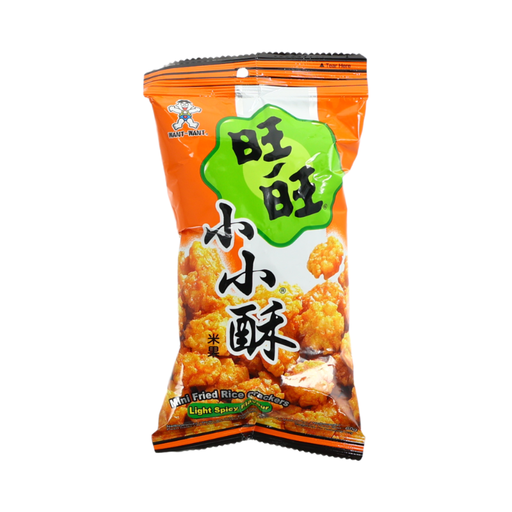
Why this product suits this profile: The 60 g pack is a manageable introduction to mildly seasoned rice crackers and is ideal for a single snack break.
The seasoning is described as “light spicy”, so the pack doesn’t make vague claims about extra heat. The ingredients and allergens are clearly listed.
A small pack with a crunchy rice texture; ready to eat straight from the pack.
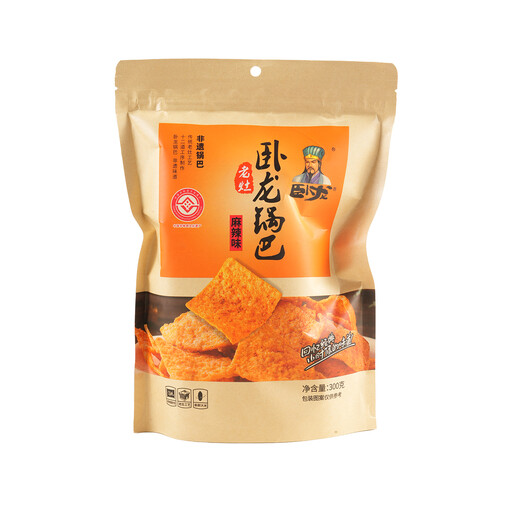
Why this product suits this profile: The pack states that it contains at least 65% millet and is made using a non-fried, low-temperature baking process.
The stated grain content makes it easier to compare with other products. The description distinguishes the spicy seasoning from the longer-lasting Sichuan pepper flavour.
300 g pack; 472 kcal and 1.1 g of salt per 100 g, according to the product information.
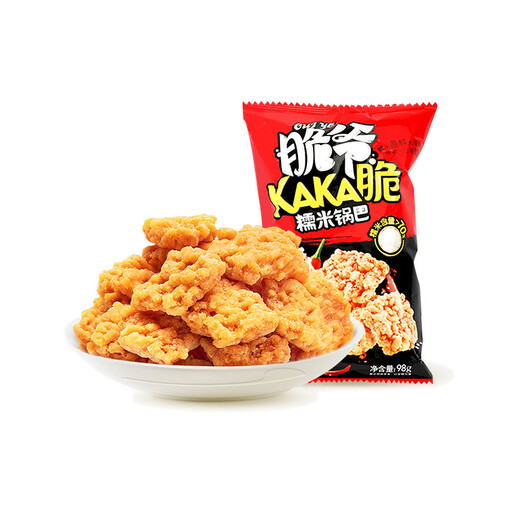
Why this product suits this profile: The handy 98 g pack is ideal for the office, when you’re out and about or for a single portion while watching TV.
Sichuan pepper and chilli powder are specifically named. This gives you a clearer idea of the flavour profile than a simple “hot” label would.
Compact size; 494 kcal and 2.5 g of salt per 100 g, according to the product information; soy and wheat are listed as allergens.
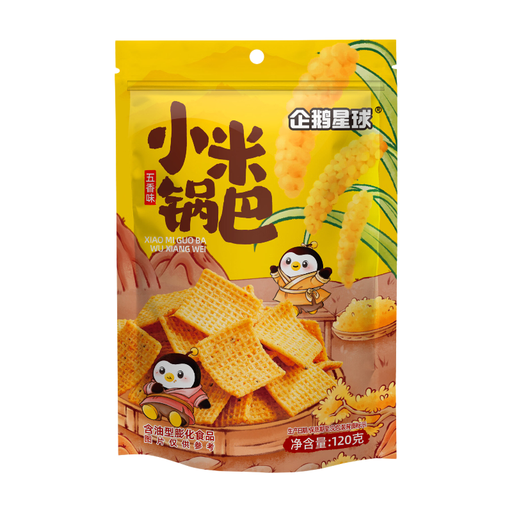
Why this product suits this profile: The five-spice blend of Sichuan pepper, star anise, cumin and fennel offers a flavourful alternative to rice crackers seasoned purely with chilli.
The spices are listed by name, so it’s easier to see that “seasoned” doesn’t necessarily mean only hot or only salty.
120 g pack; 62% millet according to the product information; 0.88 g of salt per 100 g.
We’ve put together a complete, regularly updated list of products that meet these strict selection criteria and fully comply with the safety regulations in force in the EU.
If you’re not looking for chilli alone, you can choose from a range of spicy Asian snacks by seasoning:
Seal the opened pack as tightly as possible and store it somewhere dry. Moisture softens the surface. For larger packs, it may be worth dividing the contents between several airtight containers once opened.
Mildly seasoned options such as WANT WANT Mini Fried Rice Crackers with “Light Spicy Flavor” are a good place to start if you prefer a gentler heat. If you like more complex flavours, try a five-spice variety. How hot a product tastes will still depend on its recipe and your personal preference.
The specific best-before date is shown on the packaging. Once opened, the product should be eaten soon and stored in a tightly sealed pack to help prevent it losing its crunch. Don’t eat the snack if it has an unusual smell, a changed flavour or a damp texture.