Spontaneous coastal walkers
If you want to be ready for changeable weather and capture accessible details without changing lenses, a compact camera with a dedicated close-up mode could be a practical choice.


If you want to get close to accessible spider webs on a coastal walk without changing lenses, a rugged compact camera with a dedicated close-up mode is a natural starting point. For more control over framing and focus, consider an interchangeable-lens camera with a suitable macro lens. Just make sure the lens and camera body are compatible, and remember that weather sealing on the body alone does not automatically protect the whole system from salt water.
If you want to be ready for changeable weather and capture accessible details without changing lenses, a compact camera with a dedicated close-up mode could be a practical choice.
If you want to capture individual strands and the three-dimensional structure of a web, choose a compatible camera body and a suitable macro lens.
A good fit if: You want to carry less kit and get close to an accessible web without changing lenses.
The trade-off: You cannot swap a fixed lens for a different macro lens later. Also check that you can get the camera into the position you want without touching the web.
A good fit if: You want more control over framing and focus, and are happy to choose a camera body and compatible macro lens as a system.
The trade-off: The camera body alone will not meet your macro needs. Check the lens, mount and protection offered by the specific combination you plan to use.
| Buying priority | What to check before buying | Who is this particularly important to? |
|---|---|---|
| Capturing fine strands at a suitable size | Check the close-up mode and the camera positions you can achieve. With a macro lens, also look at its stated maximum magnification. | If you want individual strands to stand out clearly in the frame, the size of the details is the priority. Around 36% of consumers value this most for this subject. |
| Protection in coastal weather | Check the protection ratings for the camera body and attached lens separately. Splash resistance is not a guarantee of protection against any kind of water exposure. | If you take photos where you may encounter moisture or sand, you will want to know how well your full kit is protected. Around 29% of consumers prioritise protection from coastal conditions. |
| Controlling focus | Check whether the camera supports Focus Stacking and whether the feature works with the lens you intend to use. Your subject and camera position will need to stay still enough for a series of shots. | If you want several layers of the web to appear sharp, control over focus is key. Around 21% of consumers prioritise precise control over focus. |
| Carrying less and keeping things simple | Compare a built-in lens with the weight and what’s included with the specific camera-body-and-lens system. Remember that you may need to buy a macro lens separately. | If you want to travel light on your walk and avoid having to put a system together, the overall effort involved matters. Around 14% of consumers prioritise easy portability and a straightforward set-up. |
A lens’s minimum focusing distance and maximum magnification describe different things. So a close-up specification alone will not tell you how large the web will appear in the frame.
Compare the stated magnification of an interchangeable lens or look at sample photos. With a compact camera, check that you can get into the position needed for your subject without touching it.
Camera bodies and lenses have their own protection ratings. Canon notes that the dust- and splash-resistant design of the RF 100mm F2.8 L Macro IS USM does not completely prevent dust or water droplets from getting inside.
Check the specifications for the actual combination of equipment you will be using, and do not treat splash resistance as approval for use in contact with salt water.
The M.Zuiko 60mm’s documented macro capabilities belong to the lens and do not automatically come with every OM-5 Mark II offer.
Before comparing options, check what is included and whether the lens is compatible with the camera body.
The TG-7 offers a compact solution with a built-in close-up mode. The OM-5 Mark II is an interchangeable-lens camera, for which you can choose a macro lens separately.
The WG-8, offered by Ricoh Imaging, is a rugged compact camera with a built-in zoom lens and dedicated macro modes.
The RF 100mm F2.8 L Macro IS USM is a macro option for a compatible Canon RF camera body.
The NIKKOR Z MC 105 mm 1:2.8 VR S is a macro option for a compatible Nikon Z camera body.
The Joybuy products below include action cameras and vlogging cameras for outdoor use. Their stated features do not confirm that they are suitable for capturing fine spider webs in macro. Check the close-focusing capability and framing available with each model.
 No image available
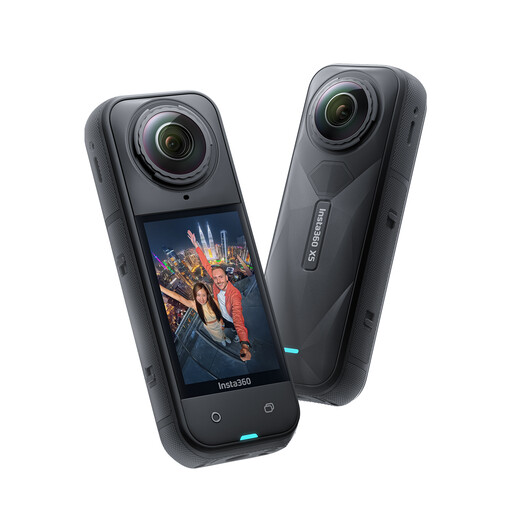
Its description as a 360° action camera may make it relevant for outdoor use, but does not confirm that it is suitable for macro photography of spider webs.
The product description specifies waterproofing to 15 m. Before taking close-ups, check that the focusing distance and framing suit your subject.
According to the product information, rinse with fresh water and dry thoroughly after use in salt water. Make sure the battery compartment and card slot are securely closed to keep water out.
 No image available
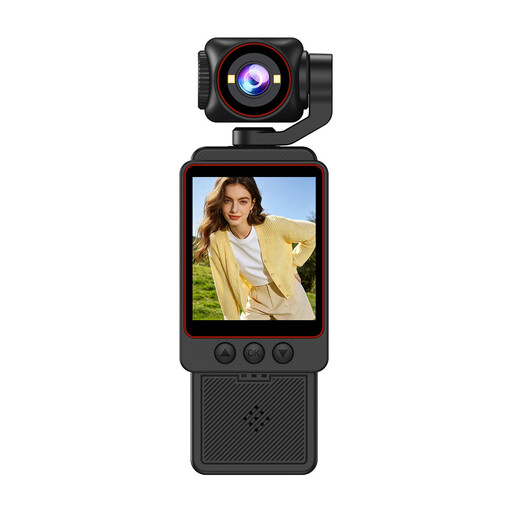
The product name describes a portable POV and vlogging camera for everyday videos and outdoor activities; it does not confirm that the camera is suitable for photographing spider webs in macro.
Features include 2K resolution and a lens that rotates through 360 degrees. For close-ups, check that the focusing distance and framing meet your needs.
 No image available
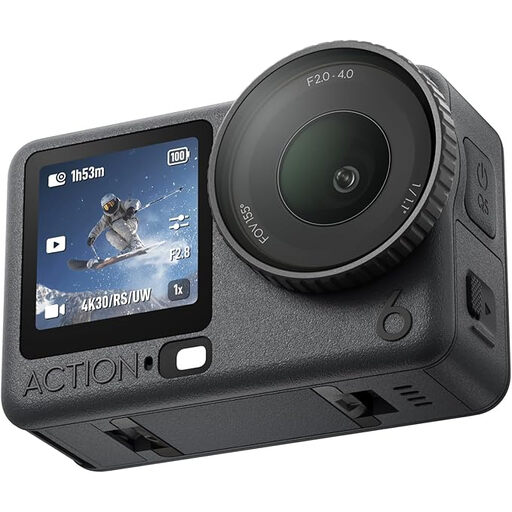
The product name identifies this model as an action camera. For spider webs, check separately whether its close-focusing capability and framing suit your subject.
Features include a 1/1.1″ sensor, variable aperture and a battery life of 4 hours. The product description also specifies waterproofing to 20 m without a housing.
According to the safety information, rinse with fresh water and dry thoroughly after use in salt water. Make sure the ports are securely closed to keep water out.
 No image available
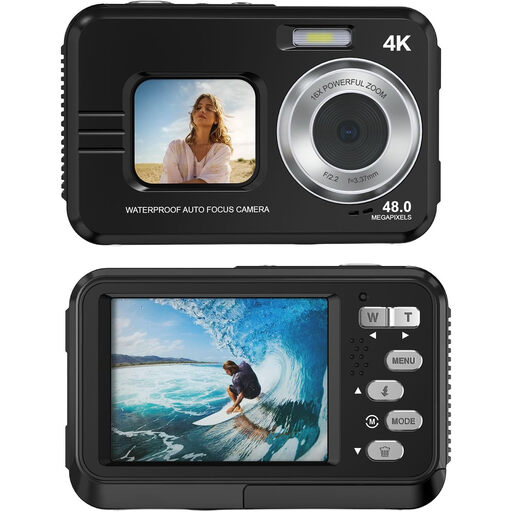
The product description presents this model as a portable digital camera. For spider webs, check whether its close-focusing capability and framing will capture the level of detail you want.
Features include a 2.8-inch IPS display, dual screens, 16x zoom and waterproofing to 3.5 m for one hour.
No. This specification describes how close the OM SYSTEM TG-7 or Ricoh Imaging WG-8 can focus in a dedicated mode. Whether you can get into position and how large the web will appear in the frame depends on your location and composition. Do not touch or move the web to get the shot.
It can help if you want several layers of a web to appear sharp and both the subject and camera can remain still enough for a series of shots. Nikon describes Focus Stacking as a technique that combines close-ups taken at different focus points. If the web is moving in the wind, a single carefully focused shot may be the more practical option.
For the dedicated macro photography described here, check that the lens is compatible with the camera body and confirm what is actually included. The OM-5 Mark II is a camera body; the M.Zuiko 60mm F2.8 Macro documented by OM SYSTEM is a separate lens.
According to the national park authorities, visitors to protected areas in the Wadden Sea National Parks may only enter designated, marked areas or follow designated paths. For other stretches of coast, check the local rules; this restriction does not automatically apply to every part of the German coast.