
Lieferung heute & morgen

Qualitätsgarantie

Willkommens-Angebote freischalten: KOSTENLOSE Lieferung | Bis zu 80 % RABATT | Kostenlose 30-Tage-JoyPlus-Testphase
App herunterladen
The right toys for children aged 3 and over should do more than look appealing: they should suit your child’s stage of development, the space available and how they’ll be used. Parents, grandparents and other family members often face similar challenges: overlooking the age recommendation, finding that accessories are missing, or discovering that a product needs more space and supervision than expected.
‘Aged 3 and over’ doesn’t automatically mean every child can use the product without help. Small parts, moving components or complicated rules may require extra guidance. As well as checking the age recommendation, look at warnings about small parts, the child’s height, the maximum weight limit and how the toy is operated.
Lights, music, remote controls or lots of accessories can push up the price. What matters is whether these features suit your everyday needs. For a children’s electric car, for example, check the remote control, seat belt, starting behaviour and charging port. With a children’s board game, clear rules, the number of players and storage are more important than the number of cards.
A children’s car park, wooden play kitchen or large ride-on toy needs enough floor space. Compact toys that are easy to store are often more practical in flats. Outdoor toys such as a children’s go-kart or tractor should be safe to use on the surface they’re intended for. These toys are generally not designed for use on public roads.
Look for the CE marking and check the manufacturer’s information. For toys, relevant requirements include those in the European toy safety standards in the EN 71 series. However, the marking doesn’t replace your own checks: make sure no parts are loose, edges are rounded and the toy is suitable for your child.
For a remote-controlled dinosaur toy, also check the charging method, battery type, range and remote control. A 2.4 GHz system can be useful if several vehicles are being used at the same time. For toys with a spray function, check whether they can be filled with water and how to clean them afterwards.
A wooden play kitchen should be stable and come with clear assembly instructions. For plastic ride-on toys, check the material information, moving parts and weight limit. Don’t take claims such as ‘robust’ at face value: assess them using clear details such as material, product weight, dimensions and maximum load capacity.
For electric toys, check the charging time, battery and replacement options. The 12-volt children’s car in the selection below has a stated top speed of 5 km/h and features soft start, a seat belt and parental remote control. For battery-powered accessories, check whether batteries are included. A role-play set that doesn’t need batteries means less to keep on top of day to day.
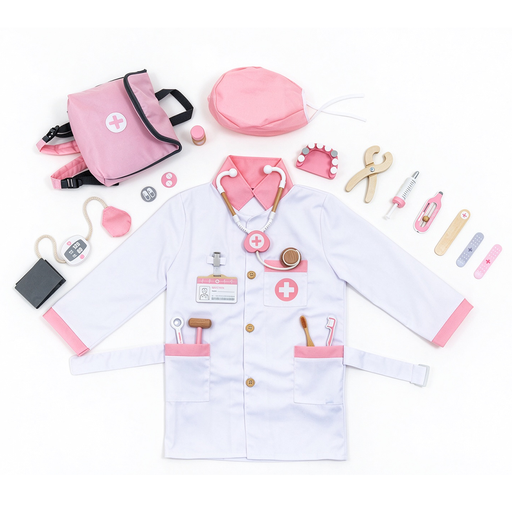
Why this product suits this need: This role-play set for children aged 3 and over doesn’t need a battery and can be used indoors with dolls, siblings or parents.
The product description lists the 20 items included and flags the small parts and need for supervision.
Includes a coat, hat, stethoscope and wooden instruments, among other items; all the accessories are designed for role play.
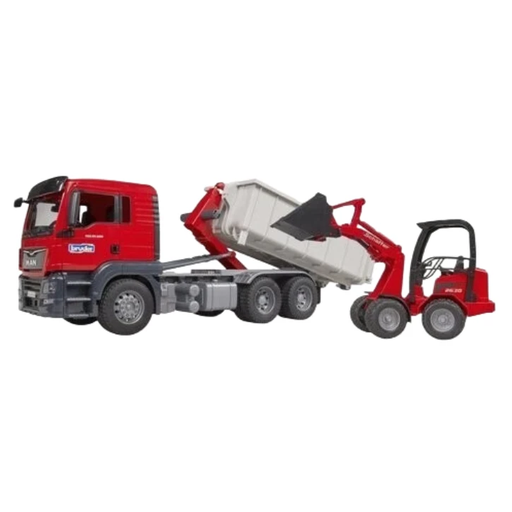
Why this product suits this need: Designed for children aged 4 and over, this construction vehicle has several mechanical features for detailed play scenarios.
The description gives the 1:16 scale, material, age recommendation and details of specific moving parts, rather than relying on general claims about quality.
The hook-lift container, crane arm, rotating driver’s cab and removable shovel offer plenty of ways to play at loading and transporting.
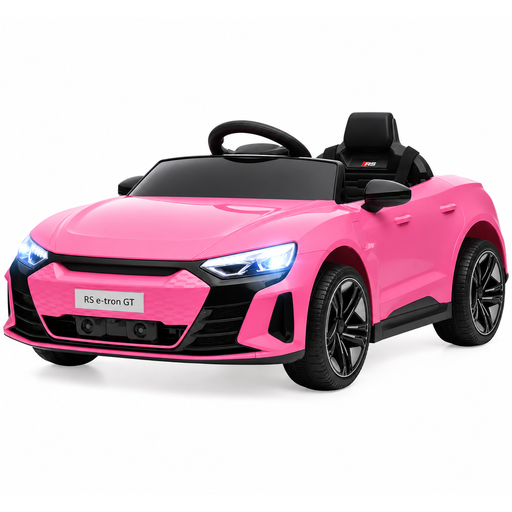
Why this product suits this need: For families with a suitable outdoor space, this ride-on lets children steer themselves or be driven by a parent.
Soft start, a seat belt, wide tyres and a stated top speed of 5 km/h are all clearly specified.
The stated features include LED headlights, music, USB and AUX ports, and a maximum load of 25 kg.

Why this product suits this need: Designed for children aged 3 to 8, this pedal go-kart suits families looking for an active pastime on suitable private land.
The two-position adjustable seat, forward and reverse gears, and stated 30 kg load capacity make it easier to check whether it’s the right fit.
The metal frame, four wheels, pedal operation and limited steering angle are all specified for the intended use.
We’ve put together a comprehensive, regularly updated list of products that meet these strict selection criteria and the safety regulations in force in the EU.
Depending on your child’s interests and your living situation, different categories may be worth considering:
Look for products with a clear age recommendation, straightforward controls and suitable safety information. Role-play toys such as a doctor’s kit or play kitchen are great for playing together. Ride-on toys also need a suitable area and supervision.
How long a toy lasts depends on its material, the load it carries, how it’s cared for and how often it’s used. For ride-on toys, check the load capacity, storage instructions and moving parts regularly. Wooden and plastic toys should be stored somewhere dry and clean, in line with the manufacturer’s instructions.
As well as the purchase price, you may need to factor in electricity, batteries or replacement rechargeable batteries. Check whether a charger or batteries are included and how long the toy can be used between charges. Toys that don’t need batteries, such as board games, doctor’s kits and many wooden toys, have no ongoing energy costs.