
Lieferung heute & morgen

Qualitätsgarantie

Willkommens-Angebote freischalten: KOSTENLOSE Lieferung | Bis zu 80 % RABATT | Kostenlose 30-Tage-JoyPlus-Testphase
App herunterladen
Choosing the right spin fishing line is crucial for your success on the water. However, the market is flooded with marketing promises that often create more confusion than clarity. An unsuitable line not only leads to fewer bites but, in the worst-case scenario, to losing the fish of a lifetime. Before you make a decision, it's important to understand the most common pitfalls that can lead to a poor purchase.
Common Pitfalls When Buying Fishing Line:
To make an informed purchasing decision, you should focus on the objective properties of a line. Two factors are of central importance: the material and the ratio of diameter to breaking strength.
The choice of material is the foundation of your decision. Both types have specific advantages and disadvantages that qualify them for different applications.
Braided Fishing Line (PE Line): These lines consist of multiple polyethylene (PE) fibres braided together. Their biggest advantage is virtually zero stretch. This allows for very direct lure control and sensitive bite detection, even at long distances. They also offer a very high breaking strength relative to their diameter. The main distinction is between 4-strand and 8-strand braided lines. An 8-strand braid is typically rounder, smoother, and quieter through the guides, which results in better casting distance. It is the standard choice for most modern spin fishing techniques for pike, zander, and perch.
Fluorocarbon Line: This material has a refractive index similar to water, making it nearly invisible to fish underwater. Another key advantage is its high abrasion resistance. Therefore, it is very frequently used as a fluorocarbon leader material tied to a braided main line, especially when fishing for wary fish or in snag-heavy waters. As a main line, fluorocarbon is suitable for certain finesse techniques where invisibility and a degree of residual stretch (as a buffer) are desired.
A high-quality fishing line is characterised by an optimal ratio of breaking strength to diameter. A thinner line offers less resistance to wind and current, enables longer casts, and allows for a more natural lure presentation.
Look for realistic and consistent specifications. A good predator fishing line doesn't need to have the absolute highest breaking strength on paper, but one that you can rely on when it counts.
Guidelines for Diameter in Spin Fishing:
These values are intended as a guide and should be adjusted depending on the body of water, lure size, and the expected size of the fish.
Based on the quality criteria mentioned, we have identified some products that are suitable for specific types of anglers and their requirements.
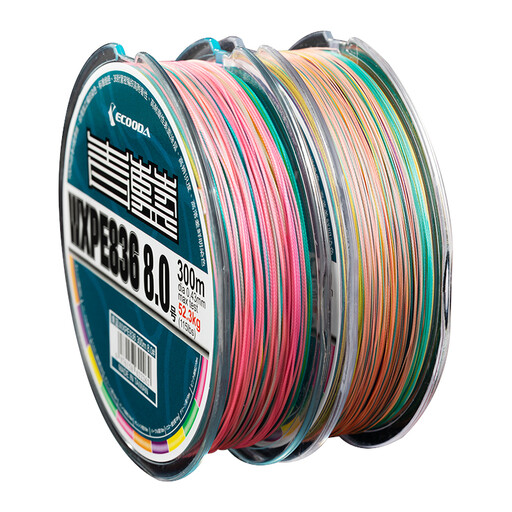
Why This Fits Their Persona: Ideal for anglers who want one versatile line for zander, pike, and larger perch. The smooth surface and round profile are suitable for a wide variety of artificial lures, from soft plastics to crankbaits.
It offers a balanced ratio of diameter to true breaking strength and good abrasion resistance for a PE line, making it a reliable choice.
The 8-strand braid creates a smooth surface, enabling long casts and quiet travel through the rod guides.
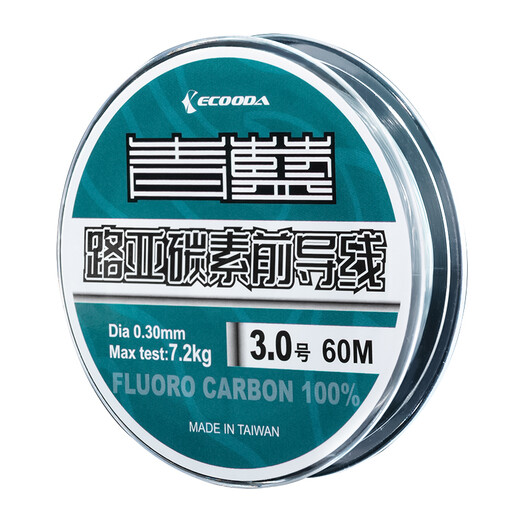
Why This Fits Their Persona: Perfect as a leader material or main line for fishing in clear water for wary perch and zander. Its invisibility and abrasion resistance are the key factors here.
This material exhibits low memory, which reduces the formation of 'bird's nests' and ensures clean line lay on the spool.
High abrasion resistance for use in snag-heavy areas and very low visibility underwater.
We have compiled a complete, up-to-date list of products that meet these strict selection criteria.
The lifespan of a braided fishing line heavily depends on the frequency of use and the conditions. With regular use (e.g., once a week), it is advisable to inspect the line annually and replace it if necessary. Above all, check the first few metres of the line for visible fraying, colour loss, or a rough surface. A simple test is to run the line through your fingers; if it no longer feels smooth, it is losing strength.
As a general recommendation for a braided PE line:
These values can vary depending on the water structure (more snags require a stronger line) and the weight of the lures used. For pike fishing, a pike-proof leader (e.g., steel or thick fluorocarbon) is also always essential.
Yes, for certain applications, fluorocarbon line is an excellent choice as a main line. Especially for finesse fishing with light rigs in very clear water, its low visibility can provide the decisive advantage. Compared to braided line, however, it is stiffer and has lower casting performance, which is why it is not ideal for all methods. Its most common and important role in modern predator fishing is as an abrasion-resistant and nearly invisible fluorocarbon leader material.