What should you look for when buying?
Compact smoothie maker with a blend-and-go cup
A good choice if: you want to make a fresh individual portion for each person just before they eat.
The trade-off: A cup means less pouring between containers, but limits the amount you can make at once. Check how many parts are included and how to clean them.
Blender with a large jug
A good choice if: several people will drink smoothies around the same time and you have room to portion and chill them.
The trade-off: A large jug makes it easier to prepare bigger batches, but you’ll still need suitable storage containers and refrigeration.
Blender with an additional on-the-go cup
A good choice if: you want the flexibility to switch between larger batches and freshly blended individual portions.
The trade-off: An extra container gives you more options, but also means more accessories and cleaning.
The BfR recommends using fresh ingredients with no signs of spoilage; refrigeration slows the growth of most bacteria. So, consider whether you can keep prepared portions chilled at all times.
| Priority |
What to check before buying |
Who is it most important for? |
| Freshness and refrigeration |
Decide whether you can prepare portions in advance and keep them chilled, or would rather blend just before drinking. |
If I’m preparing portions for different mealtimes, I need to be able to chill them safely. Around 36% of consumers put freshness and refrigeration first. |
| Spinach texture |
Look for meaningful tests of the specific model using vegetable smoothies; wattage alone won’t tell you what the texture will be like. |
If I want to avoid leafy bits or fibres, the result with my recipe matters most. Around 29% of consumers prioritise the texture of their spinach smoothie. |
| Portion and container size |
Compare the usable capacity, the number of portions you need and what’s included with the exact model variant. |
If several people eat at different times, I need the right portions and containers. Around 21% of consumers prioritise making the right amount per blending session. |
| Cleaning |
Check the instructions for each part, particularly the blade assembly, seals and lid. |
If I blend several times a day, I want to know which parts are easy to clean. Around 14% of consumers prioritise ease of cleaning. |
Joybuy products
Depending on the model, the blenders below are suited to freshly made individual portions or larger batches.
 No image available
3-in-1 multifunction blender with 600 ml drinking bottle
For larger batches and a separate individual portion in the drinking bottle.
800 W; 1,500 ml blending jug; 600 ml drinking bottle; 300 ml chopper cup; 24,000 rpm; six stainless steel blades.
Joybuy
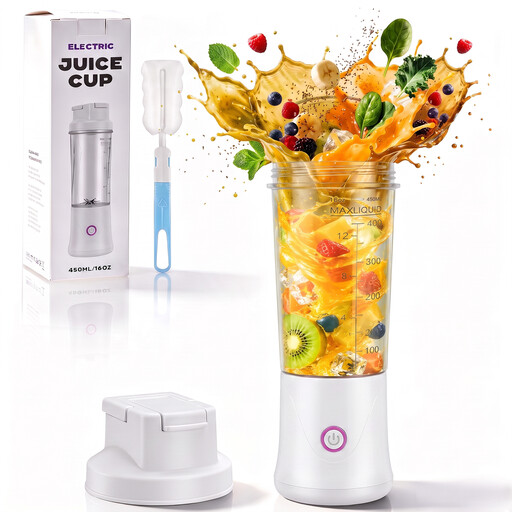 No image available
Portable personal blender for smoothies and shakes
For freshly blended individual portions when you want to drink straight from the blending cup.
Joybuy
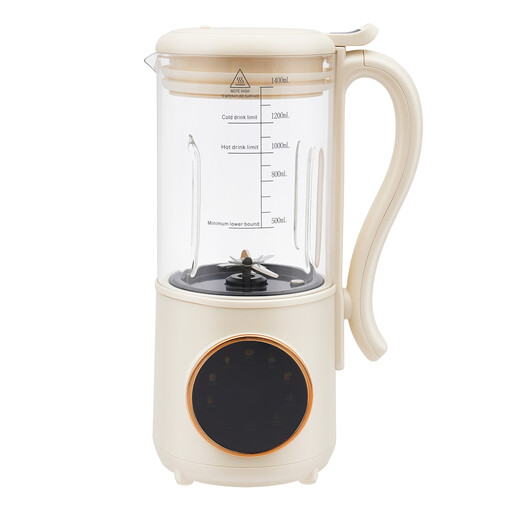 No image available
Borosilicate glass drink maker, 1,400 ml
For larger batches when you can portion them into separate containers and keep them chilled afterwards.
1,400 ml borosilicate glass container; 600 W heating power and 200 W blending power; 16 stainless steel blades.
Joybuy
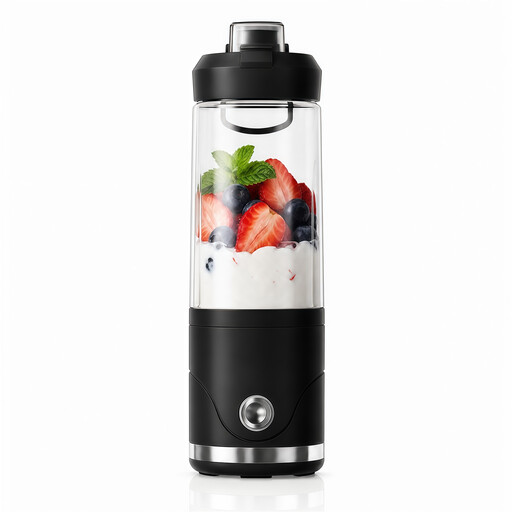 No image available
Portable USB-C blender, 650 ml
For freshly blended individual portions if a portable appliance suits your routine.
650 ml; six blades; 16,000 rpm; USB-C rechargeable battery.
Joybuy
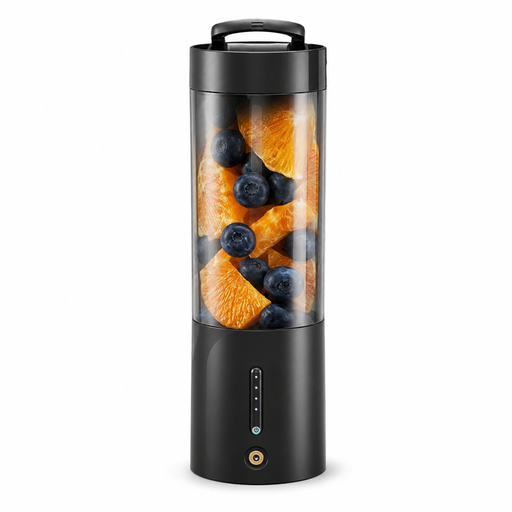 No image available
Portable smoothie maker, 450 ml
For freshly made vegetable smoothies in individual portions.
450 ml PCTG container; six stainless steel blades; 20,000 rpm; magnetic charging.
Joybuy
Frequently asked questions
Can I blend all my spinach smoothies in the morning and leave them out for later?
Don’t leave prepared smoothies unrefrigerated. The BfR recommends using fresh ingredients with no signs of spoilage; adequate refrigeration slows the growth of most bacteria. If you can’t keep them chilled at all times, it’s safer to blend them just before drinking. A leak-proof cup says nothing about the temperature at which a smoothie is stored.
Do all blender parts need to be dishwasher-safe?
No. What matters is which parts the instructions for your specific model say are dishwasher-safe. Braun lists the compatible parts individually for the JB7568BK; Philips identifies dishwasher-safe parts for the HR2672/00. This doesn’t mean that every component can go in the dishwasher.
Who should I contact if my blender is faulty?
Under the statutory warranty, the seller is generally responsible, not the manufacturer. The German consumer advice centre says that purchases in Germany are covered for up to two years; this is separate from a voluntary manufacturer’s guarantee. If you’re buying replacement cups, also check that they fit your exact model number.
Which EU rules apply to blenders?
EU rules apply to materials that come into contact with food, including parts of food-processing appliances. CE marking is only required when the relevant harmonised EU rules require it for that product. Your Europe explains that CE marking is not an independent quality mark for a smoothie.


