
Lieferung heute & morgen

Qualitätsgarantie

Willkommens-Angebote freischalten: KOSTENLOSE Lieferung | Bis zu 80 % RABATT | Kostenlose 30-Tage-JoyPlus-Testphase
App herunterladen
As an experienced angler, you know that choosing the right spinning rod can be the difference between a successful day on the water and a frustrating one. The market offers an overwhelming variety, and finding a model that is precisely tailored to your target fish and preferred technique can often be a challenge. This guide is designed to provide you with objective criteria to help you make an informed decision when you buy a new spinning rod.
Before you decide on a model, several technical features should be considered. These are crucial in determining the performance, handling, and durability of your new rod.
A rod's action describes how much and in which section the blank bends under load. A rod with fast action bends primarily in the tip section. This allows for very precise lure control and direct bite detection, which is ideal for techniques like jigging. A jigging rod must transmit contact with the bottom and subtle bites immediately.
In contrast, a rod with moderate action bends through to the middle of the blank. This is advantageous when casting lighter lures and during the fight, as it better absorbs the fish's headshakes. A light spinning rod, such as a specialised trout rod or perch rod, often benefits from a moderate to medium-fast action.
The casting weight indicates the optimal weight range of lures that can be cast with the rod. Matching the casting weight to your lures is critical for achieving maximum casting distance and a sensitive lure presentation.
The quality of the components is an often-underestimated but crucial feature. A fishing rod with Fuji guides is an indicator of high-quality construction. Fuji guides are known for their durability, smooth surfaces that minimise friction, and corrosion resistance. This protects the fishing line and enables longer casts.
Corrosion-resistant components are especially essential for a saltwater spinning rod. Saltwater aggressively attacks metals, which is why guides and reel seats should be made from materials like stainless steel or titanium with high-quality inserts (e.g., SiC - Silicon Carbide).
The requirements for a rod differ depending on the body of water. While more delicate models are often used in freshwater, a sea bass rod for the coast must be robust enough to control hard-fighting fish in currents and be saltwater-resistant. When making your selection, ensure the rod is explicitly designated for saltwater use to prevent material fatigue and corrosion.
Based on the criteria mentioned, we have compiled a selection of models that are of interest to specialised fishing methods and advanced anglers.
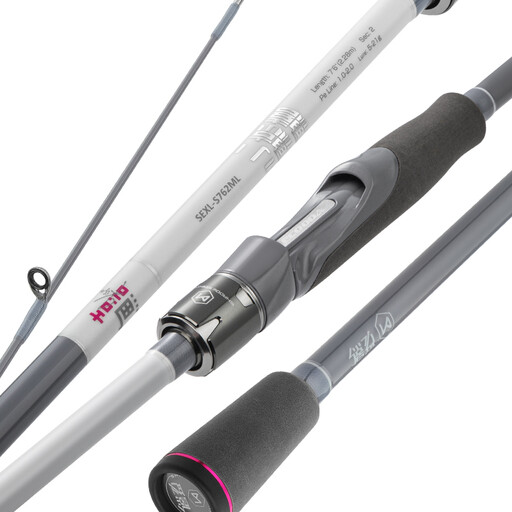
Why it stands out: This model is distinguished by its versatility and the use of high-quality components. The inclusion of Fuji SiC guides and a Fuji O-ring tip guide ensures optimised line management and high abrasion resistance, making it a reliable predator fishing rod.
Advantages:
Who it's for: Anglers looking for a versatile and robustly built spinning rod that can be used in freshwater for bass and trout, as well as for lighter applications in inshore saltwater environments.
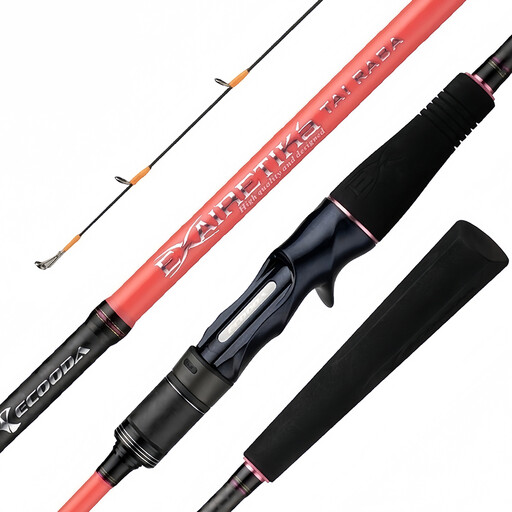
Why it stands out: The ECOODA EETB is a specialised jigging rod designed for techniques like fishing with rubber jigs (Tai Rubber) and Tenya. Its blank is optimised for sensitive bite detection and precise lure control at depth.
Advantages:
Who it's for: Specialised boat anglers who specifically target marine fish with techniques like Tai Rubber or Tenya and require a rod with maximum sensitivity and control.
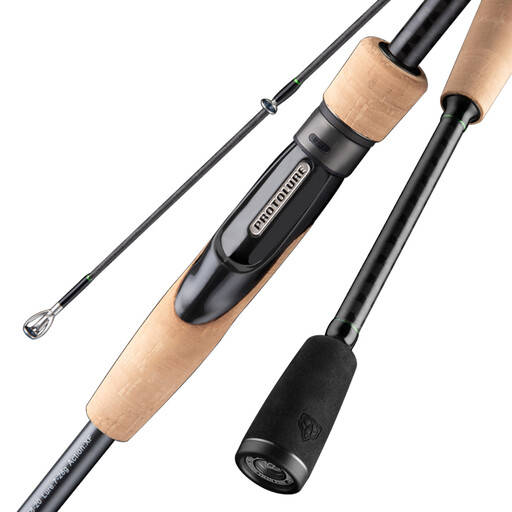
Why it stands out: This two-piece rod was explicitly developed as a sea bass rod and is suitable for use in both freshwater and saltwater. Its construction is aimed at long casting distances and effective lure control when spinning from the shore or a boat. The two-piece design also makes it easy to transport.
Advantages:
Who it's for: Anglers seeking a powerful yet portable rod for targeted spin fishing for sea bass and other marine predators.
If these recommendations don't include the perfect model for your specific needs, it's worth taking a look at the entire range. Every fishing method and target fish places its own demands on the equipment.
Discover our full range of fishing rods and find the perfect model for your next adventure on the water.
With a saltwater spinning rod, corrosion-resistant materials are crucial. Look for rod guides and a reel seat made of stainless steel or titanium, as well as a durable finish on the blank. Models with components from manufacturers like Fuji are often a good benchmark here.
The casting weight, often specified in grams (g), defines the weight range of lures for which the rod is optimised. Using lures within this range allows for maximum casting distance and optimal rod action. A lure that is too heavy can overload and damage the rod, while one that is too light cannot be cast efficiently.
Modern, multi-piece travel spinning rods offer performance that comes very close to that of two-piece rods. Thanks to advanced ferrule connections, the loss in action is minimal. For anglers who travel a lot or need a rod with a small pack size, they represent a very practical and high-performance alternative.