
Lieferung heute & morgen

Qualitätsgarantie

Willkommens-Angebote freischalten: KOSTENLOSE Lieferung | Bis zu 80 % RABATT | Kostenlose 30-Tage-JoyPlus-Testphase
App herunterladen
The search for the right spinning rod can quickly become overwhelming. The market is flooded with options, all promising durability and a successful catch. But not every rod lives up to its advertising. As a Joybuy Product Recommendation Officer, I see daily which features truly matter and where the most common pitfalls lie. Before you make a decision, you should know the typical mistakes that often lead to buyer's remorse.
The 3 Most Common Pitfalls When Buying a Rod:
To avoid a bad purchase, you should focus on objective, technical features. These three parameters are crucial for the performance and longevity of your new predator rod.
The casting weight (often abbreviated as CW) defines the lure weight the rod can cast optimally. If you fish with lures that are too light, the rod won't load properly, and casting distance suffers. Lures that are too heavy will overload the blank and can lead to rod breakage.
The rod length depends on your fishing spot. Shorter rods (approx. 1.90 m to 2.20 m) are advantageous as a boat rod or on heavily overgrown banks. Longer rods (2.40 m to 2.70 m) allow for greater casting distances from the shore.
The action describes how much the rod blank bends under load.
A modern spinning rod is usually made of carbon fibre. Pay attention to the craftsmanship and the installed components. High-quality components like Fuji guides are an indicator of quality. They are lightweight, robust, and their smooth inserts (e.g., from SiC or Alconite) minimise friction, which increases casting distance and the lifespan of your line.
Especially for a sea fishing rod, corrosion-resistant guide frames and a robust reel seat made of saltwater-proof material are essential to prevent rust and functional failure.
Based on these objective criteria, we have selected a few models from our range that are suited for specific requirement profiles.
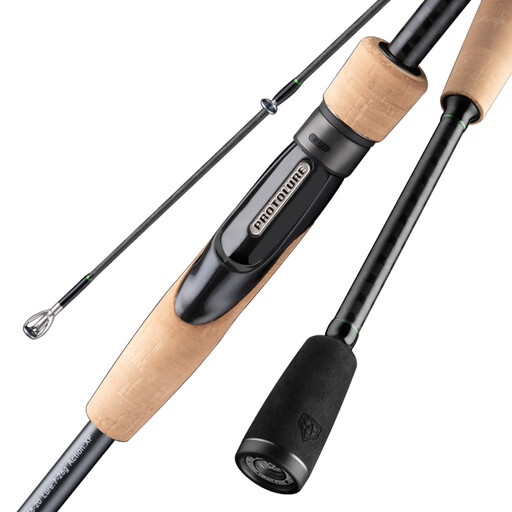
Why This Fits Their Persona: This model is designed for anglers who fish for zander in freshwater as well as sea bass on the coast. Its design as a sea bass rod ensures it has the necessary power and saltwater resistance, yet remains sensitive enough for zander fishing.
It avoids the "one-rod-fits-all" trap by being specifically developed for both freshwater and saltwater use, rather than being vague. The components are explicitly designed for use as a saltwater rod.
Specialised blank for casting distance and lure control; saltwater-proof components for a longer lifespan.
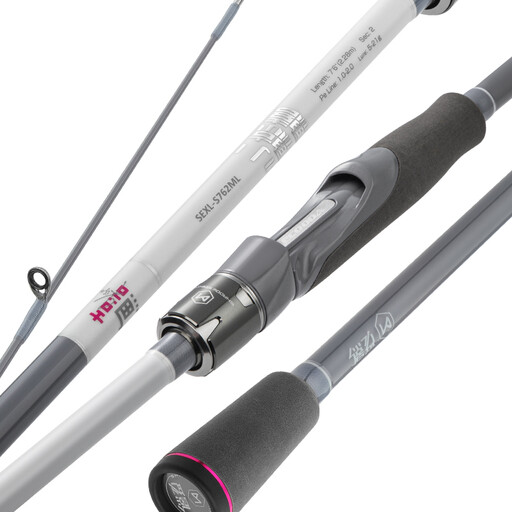
Why This Fits Their Persona: Perfect for anglers who specifically target perch and trout with light lures. Such a light spinning rod requires maximum sensitivity and low-friction line guidance to detect the finest bites and cast light lures with precision.
It avoids the trap of cheap components by using Fuji Sic guides. These are a recognised standard for high-quality rods and ensure long-term durability, even when using thin braided lines.
Equipped with Fuji guides for optimal sensitivity and line protection; lightweight, well-balanced blank.
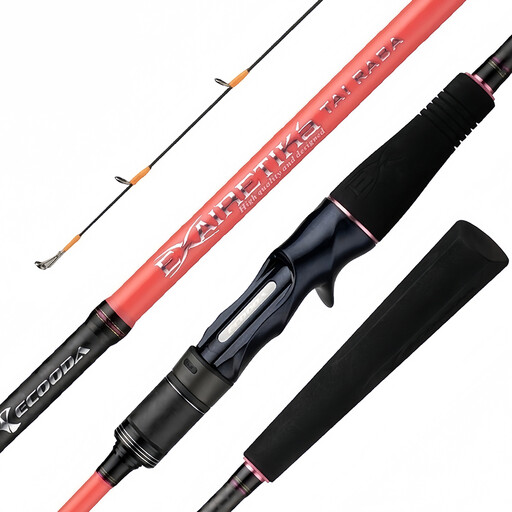
Why This Fits Their Persona: This rod is aimed at boat anglers who practice modern Japanese fishing techniques like Tai Rubber or Tenya. These methods require a special rod action to present the lure attractively and securely convert bites.
This is the opposite of a non-specific all-round rod. It is a highly specialised boat rod, whose blank and action are precisely tuned to the requirements of a Tenya rod or Tai Rubber rod.
Highly specialised blank for the unique lure action in Tai Rubber and Tenya fishing; robust construction for use from a boat.
We have compiled a complete, up-to-date list of products that fully meet these strict selection criteria and German safety regulations.
The casting weight should be based on the lures you use most often. Check the weight of your favourite soft plastics, wobblers, or spinners. The optimal casting weight of your rod should cover this range. A common mistake is buying a rod with too high a casting weight, which severely limits lure control and bite detection with lighter lures.
The action describes the bending curve of the blank. A rod with a fast action is stiff and bends only in the tip section. It is excellent for techniques that require direct feedback, like jigging with soft plastics. A rod with a slower, parabolic action bends more deeply, which is ideal for fishing with crankbaits and reduces the risk of fish throwing the hook during the fight.
This is not recommended. Saltwater is extremely corrosive. Components on freshwater rods, such as guide frames, reel seats, and screw threads, are often not made from rustproof materials. They can start to rust and lose their function after just a few trips. For use in the sea or on the coast, you should always choose a dedicated saltwater fishing rod whose components are explicitly labelled as saltwater-resistant.