
Lieferung heute & morgen

Qualitätsgarantie

Willkommens-Angebote freischalten: KOSTENLOSE Lieferung | Bis zu 80 % RABATT | Kostenlose 30-Tage-JoyPlus-Testphase
App herunterladen
By Joybuy Product Recommendation Officer, August 30, 2026
A spiralizer promises a quick and creative way to incorporate more vegetables into your diet. Whether for zoodles as a pasta alternative, colourful salads, or garnishes, the idea is compelling. In practice, however, many well-intentioned purchases end up as unused kitchen gadgets in a drawer. This is often due to avoidable product flaws and exaggerated marketing claims. This guide will show you what to look for to find a model that reliably gets the job done.
Many models on the market look similar at first glance, but their durability and functionality differ significantly. Watch out for these three typical weak points to avoid disappointment:
To avoid a bad purchase, you should focus on the technical details that ensure long-lasting performance. A good vegetable slicer is characterized by the following features:
The blades are the heart of any spiralizer. Look for models where the blades are explicitly declared as being made from high-quality stainless steel. A common and reliable specification is 304 stainless steel, as this material is food-safe, corrosion-resistant, and durable. Sharp, well-designed blades are essential for effortlessly creating uniform spirals from zucchini, cucumbers, or carrots and ensuring a clean cut. A good zucchini spiralizer should also be able to handle firmer vegetables.
A sturdy housing is essential for power transfer and safety. Models made from ABS (Acrylonitrile Butadiene Styrene) plastic offer a good balance of strength and durability. Also, look for the BPA-free label to ensure no harmful plasticizers can leach into your food. For a manual spiralizer, an ergonomic handle or crank is crucial for comfortable use without excessive effort. With countertop models, a strong suction base provides the necessary stability on your work surface.
Safe operation should be a top priority. An indispensable accessory is a finger guard or end cap. This component allows you to safely process the vegetable down to the very end without exposing your fingers to the sharp blades. At the same time, it minimizes waste. Also, check if the blade inserts can be changed easily and safely and if the device can be disassembled and cleaned without hassle after use. Dishwasher-safe parts are a clear advantage for daily use.
Instead of making a blanket recommendation, we have identified models that are tailored to specific needs and user profiles.

Why This Fits Their Persona: Ideal for those who want to try the concept of vegetable spaghetti without investing a lot of space or money. This compact handheld device is easy to store in a drawer and is perfect for preparing one or two servings of zoodles.
The BPA-free ABS plastic housing is sturdy enough for softer vegetables like zucchini and cucumbers. The blades are made of 304 stainless steel, which reduces the risk of dull, crushing blades. Furthermore, the device is dishwasher-safe, thus bypassing the cleaning problem.
Compact 4-in-1 design, includes a finger guard for safe handling, and is dishwasher-safe for easy cleaning.
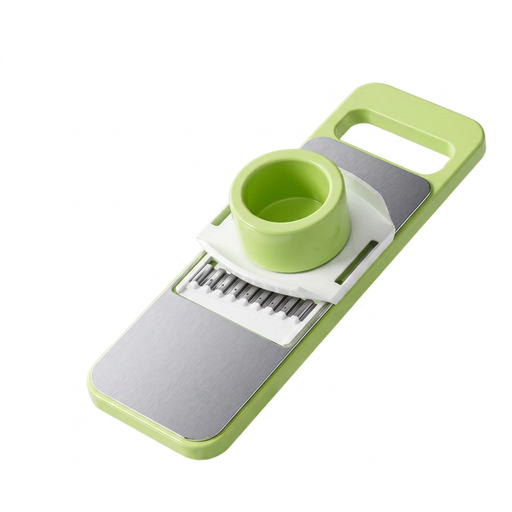
Why This Fits Their Persona: Suitable for home cooks looking for a multifunctional tool that does more than just spiralize. This mandoline slicer is also great for slicing and julienning, making it an all-rounder for salad preparation and general cooking.
Its stainless steel construction is inherently more robust than all-plastic models. The three interchangeable blades offer a defined function and sharpness for different types of cuts. The included hand guard directly addresses the safety risk associated with using mandolines and slicers.
Multifunctional with 3 blades for slicing, grating, and julienning. The robust stainless steel construction and hand guard offer durability and safety.
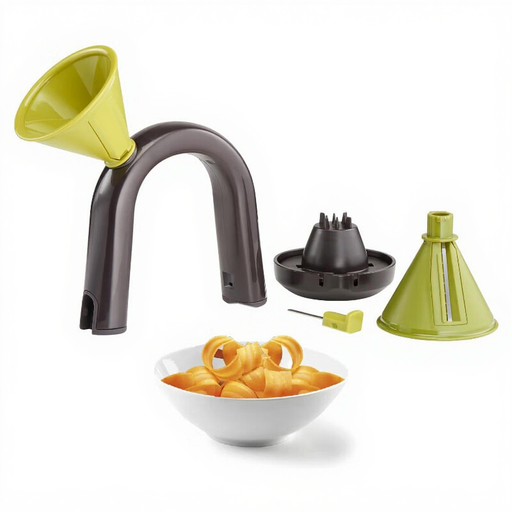
Why This Fits Their Persona: For users who value a thoughtful design and a well-known brand. The compact, enclosed system is designed for easy handling and space-saving storage, making it ideal for tidy kitchens.
Although made of plastic, the Tefal brand represents a certain standard of quality that minimizes the risk of immediate breakage. The design with curved blades is engineered for efficiency to prevent crushing the vegetables. The enclosed construction enhances safety during use.
Very compact and enclosed design for easy storage and safe use. The curved blades are designed for effortless cutting.
We have compiled a complete, up-to-date list of products that fully meet these strict selection criteria and safety standards.
Firm, straight vegetables with a diameter of at least 3-4 cm work best. This includes zucchini, cucumbers, carrots, sweet potatoes, daikon radish, and firm-fleshed apples or pears. Soft vegetables like tomatoes are unsuitable.
Rinse the device and blades under running water immediately after use to prevent vegetable residue from drying on. Many models have dishwasher-safe parts, which greatly simplifies cleaning. For stubborn bits stuck in the blades, a small cleaning brush can be helpful. Always check the manufacturer's cleaning instructions before purchasing.
Ease of use depends heavily on the model. Compact handheld spiralizers (similar to a pencil sharpener) require a bit more hand strength and are well-suited for softer vegetables like zucchini. Models with a hand crank and a suction base are generally easier to operate, as they offer more stability and better leverage, which is particularly advantageous for harder vegetables.