Listeners who like to multitask
You want to put on a spoken-word record while doing something else in the kitchen-diner, and would prefer the tonearm to operate automatically.


Start by checking the speed and material of your records, along with how your speakers connect. If you often listen while doing other things, a fully automatic turntable can make things easier, while built-in speakers may mean you don’t need a separate hi-fi system. Sony and Audio-Technica list 33⅓ and 45 rpm for certain models. Shellac records played at 78 rpm also need a suitable stylus, and your turntable should sit on a dry, level surface with as little vibration as possible.
You want to put on a spoken-word record while doing something else in the kitchen-diner, and would prefer the tonearm to operate automatically.
You want to keep using your speakers, so you’ll need to choose the right phono, line or Bluetooth connection.
You may own shellac spoken-word records, so you’ll need to check that the stylus is suitable as well as the speed.
Start by checking your record format, then look at the right audio connection and where the turntable will go. This will help you choose features and controls that suit your everyday routine.
| What you need | What to look for | Who is it important to? |
|---|---|---|
| Easy operation | Check for fully automatic start and tonearm return; auto-stop alone doesn’t necessarily mean a fully automatic turntable. | If I don’t want to keep operating the tonearm while cooking or eating, a simple process matters most. Around 36% of consumers put ease of use first. |
| The right audio connection | Check the inputs on your speakers or hi-fi system. For Bluetooth, find out whether the turntable sends audio from records or only receives it. | If you want to use your existing speakers, you’ll need a connection that actually sends the sound from the record to them. For around 29% of consumers, finding the right speaker connection is the main priority. |
| A suitable place to set it up | Choose a dry, level surface away from splashes, steam and strong vibrations, and make sure there’s room to open the dust cover. | If space in the kitchen-diner is limited, I want to be sure the turntable can sit level and safely out of harm’s way. Around 21% of consumers prioritise finding a suitable spot. |
| Older record formats | Check the speed and record material; shellac records need a suitable stylus as well as 78 rpm. | If you own older spoken-word records, you’ll first need to check that the speed and stylus are right for the specific record. For around 14% of consumers, playing older record formats is the top priority. |
A turntable may play Bluetooth audio from your mobile phone through its built-in speakers without sending the sound from a record to an external Bluetooth speaker. Lenco describes this receiving function on the LS-430BK; Sony lists Bluetooth output for the PS-LX310BT.
Check specifically whether the model sends audio from records or only receives Bluetooth audio.
If it doesn’t support the connection you want, you may need a wired connection or a different speaker set-up.
Choosing the wrong signal path can leave the sound very quiet or inaudible if there’s no suitable preamp.
Match your hi-fi system’s input to the turntable’s phono or line setting. Audio-Technica recommends checking this when connecting to equipment without an external preamp.
For shellac records, the stylus needs to fit the record groove as well as the turntable needing to support the right speed. Audio-Technica specifically distinguishes between the 78 rpm setting and a suitable 78 rpm stylus.
Check the record material and make sure the stylus is suitable for the cartridge before choosing a model.
You may also need a suitable SP stylus or cartridge.
Moisture, heat and strong vibrations can make a location unsuitable. For the AT-LP70XBT, Audio-Technica recommends a level surface and advises against these conditions.
Leave space between the turntable and the sink, steam and vibrating speakers, and check that you can open the dust cover where you plan to place it.
You may need to find another spot or reposition your speakers.
The Sony PS-LX310BT combines automatic playback with several connection options.
The AT-LP70XBT and AT-LP120XBT-USB differ in features including operation and speed range.
The LS-50WD has built-in speakers, while the LS-430BK combines speakers with a different Bluetooth function.
According to the manufacturer, the Dual DT 230 BT combines fully automatic operation with a Bluetooth transmitter and switchable phono preamp.
The Denon DP-29F is a wired, fully automatic turntable for listeners who don’t need Bluetooth output.
This selection includes turntables with built-in speakers for spoken-word records, with speeds that match the specifications for each model.
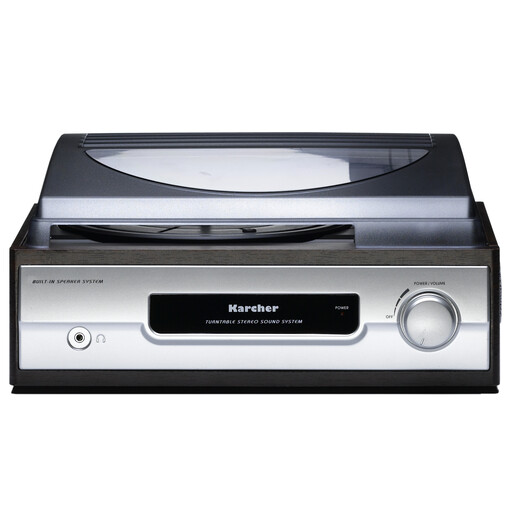 No image available
The built-in speakers are a handy option if you want to listen without separate speakers.
Features listed in the product name: 33/45 rpm, auto-stop, headphone socket and line output.
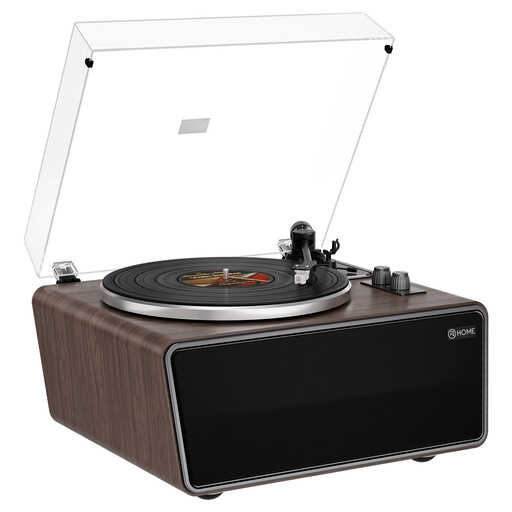 No image available
The built-in speakers are a good fit if you’re not planning to use a separate hi-fi system for playback.
Features listed in the product name: phono preamp and AT-3600L-MM cartridge.
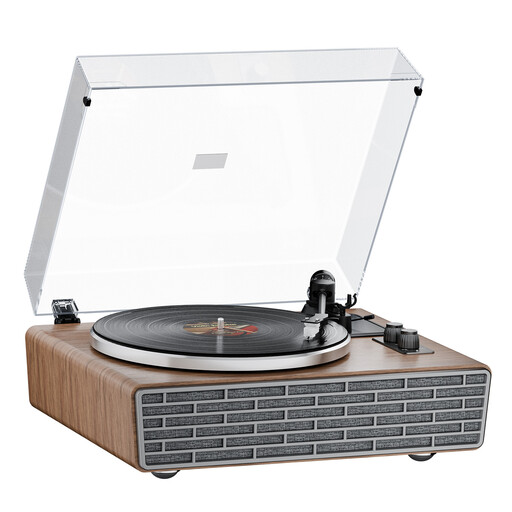 No image available
The built-in speakers let you listen without a separate speaker set-up.
Features listed in the product name: Bluetooth, belt drive, dust cover and AT cartridge. The Bluetooth specification alone doesn’t tell you which way the audio is transmitted.
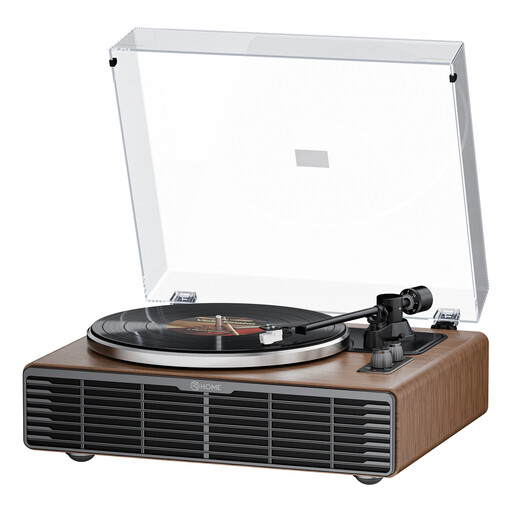 No image available
The four built-in speakers are a good option if you want to listen without separate speakers.
Features listed in the product name: belt drive, AT3600L cartridge, phono/line RCA output and transparent dust cover.
It depends on the turntable. The Lenco LS-50WD has built-in speakers, while many other models need an external audio set-up. Options include active speakers, a hi-fi system with an amplifier or, if the turntable supports it, a compatible Bluetooth speaker. Passive speakers need an amplifier.
Choose a level, dry surface away from splashes, steam and excessive heat. Audio-Technica also recommends keeping the AT-LP70XBT away from vibrating speakers. Check that you can open the dust cover where you plan to put your chosen model.
No. The speed and record material must be compatible with the turntable and stylus. According to Audio-Technica, shellac records also need a suitable 78 rpm stylus; the speed setting alone isn’t enough.
The replacement stylus must be compatible with the cartridge on your specific model. Dual lists a replacement stylus for the DT 230 BT; for other turntables, check the exact stylus name in the model’s manual. Shellac records need a suitable SP stylus, not just any vinyl stylus.
No. Section 10 of the German Electrical and Electronic Equipment Act (ElektroG) requires old electrical equipment to be collected separately from unsorted municipal waste. The German Environment Agency lists municipal recycling centres and suitable take-back options at retailers. Check locally to find out which collection point you can use.