
Lieferung heute & morgen

Qualitätsgarantie

Willkommens-Angebote freischalten: KOSTENLOSE Lieferung | Bis zu 80 % RABATT | Kostenlose 30-Tage-JoyPlus-Testphase
App herunterladen
Anyone looking to buy spoons will quickly find a wide range of shapes, materials and sizes. However, a wooden spoon for non-stick frying pans has different requirements from a soup ladle for a deep saucepan or a dessert spoon for setting the table. Even an inexpensive spoon set can prove impractical if its care instructions, temperature resistance or actual dimensions are not suitable for the intended use.
Stainless steel spoons are considered easy to care for and durable, but they can scratch non-stick cookware if they are dragged across the surface with pressure. For these pots and pans, kitchen utensils with nylon or silicone heads are often more suitable. Conversely, soft materials are not always suitable for vigorous stirring or portioning very heavy foods.
Bamboo spoons are not automatically suitable for every type of cleaning either. Depending on the product, they may need to be washed by hand and dried thoroughly afterwards. The specific care instructions are more important than general descriptions such as “sustainable” or “eco-friendly”.
A short serving spoon can be impractical when used with a deep saucepan. Conversely, a 32 cm spoon takes up a lot of space on a small dining table. With ladles and sauce spoons, the length also affects your distance from hot steam and liquids. You should therefore compare the measurement in centimetres with your existing cookware before buying.
“Easy to clean” does not necessarily mean dishwasher-safe. Depending on the finish, porcelain spoons may be more vulnerable to knocks, while wooden and bamboo models often require gentle hand washing. With plastic and nylon spoons, you must also observe the maximum temperature. One example is a heat-resistant nylon spoon with a stated limit of up to 160 °C – this limit should not be exceeded.
The shape of the spoon should suit both the food and the task:
For private households, a combination of tablespoons, serving spoons and one ladle may be sufficient. Hosts and catering businesses, on the other hand, often benefit from several identical pieces, such as a 6- or 18-piece set.
Stainless steel is resistant to many foods and is generally easy to clean. When choosing a product, details such as the grade of stainless steel, one-piece construction and rust resistance are relevant. For example, a 304 stainless steel spoon may be described as food-safe; the specific manufacturer’s information and correct use remain the deciding factors.
Bamboo is lightweight and has a natural grain. Spoons made from this material are well suited to picnics, buffets and rustic table settings. Before buying, you should check whether hand washing is required and whether the product is intended for hot foods.
Nylon, PBT and silicone are worth considering for non-stick cookware, provided the stated temperature limit is observed. A plastic head can help protect delicate surfaces, but it is not intended for use over naked flames or for prolonged contact with heating elements.
Porcelain offers a smooth, non-porous surface and is suitable for laying the table as well as for soups, rice dishes and desserts. When using it, take care to avoid drops and impacts, as it can be vulnerable to damage.
A good handle should sit securely in your hand and suit the intended serving motion. With longer models, a well-balanced weight is helpful. A hanging loop makes storage easier in small kitchens or professional work areas.
Before buying, check:
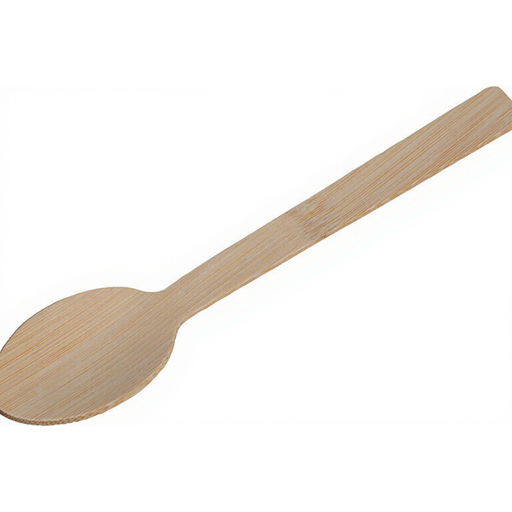
Why this product suits this profile: This 18-piece set includes several 17 cm bamboo spoons for breakfast, desserts, soups, rice dishes or picnics. Their light weight is practical when setting the table for larger groups.
The number of pieces is clearly stated. Before buying, you should still check the applicable hand-washing and drying instructions for bamboo.
18 pieces, 17 cm length, polished finish and bamboo construction.
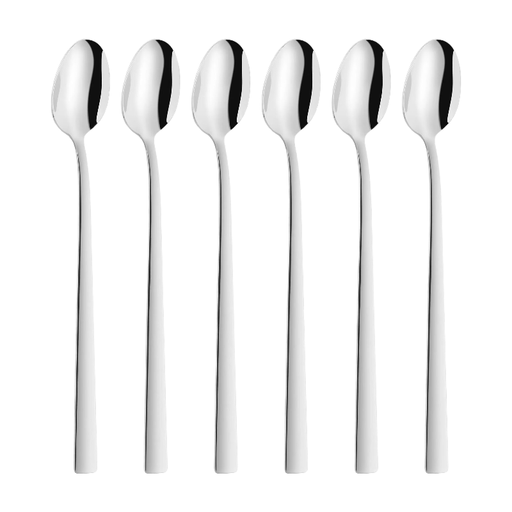
Why this product suits this profile: This 6-piece set made from 18/10 stainless steel is designed for cocktails, desserts and latte macchiato. Its coordinated design complements modern table settings.
The 18/10 material specification and 21 cm length make it easier to compare this set with other dessert and long-drink spoons.
6 pieces, 18/10 stainless steel, 21 cm length and dishwasher-safe according to the product details.
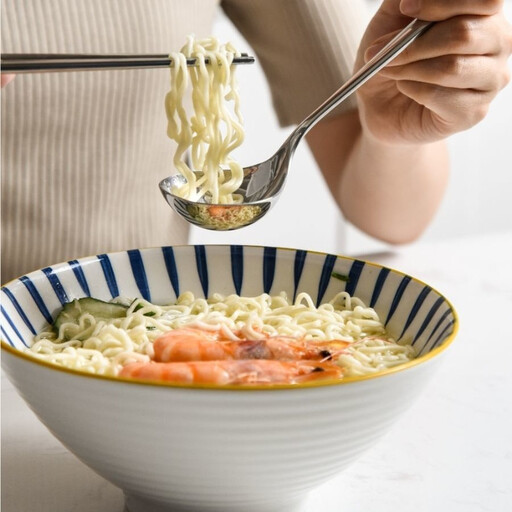
Why this product suits this profile: The long handle is designed for deep saucepans, soups, congee and hot-pot cooking. This makes the spoon suitable for households where cooking is a frequent activity, as well as for professional catering environments.
The stated long-handle design addresses the problem of spoons that are too short for deep vessels. However, care is still required when handling hot liquids.
Rust-resistant stainless steel, extended handle and generous bowl for serving.
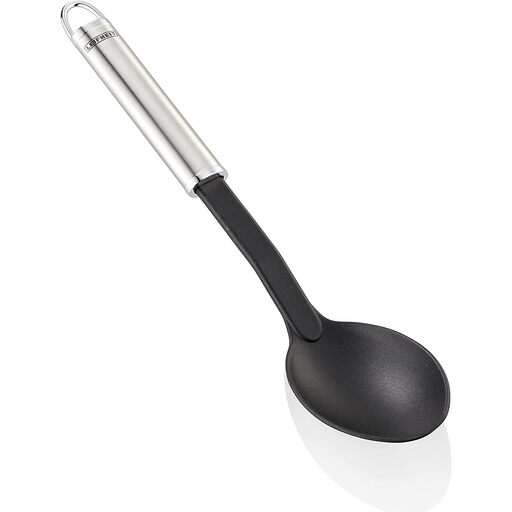
Why this product suits this profile: The nylon head is designed for serving vegetables and side dishes from non-stick pots and pans. Combining it with stainless steel provides a firm handle and a softer contact surface.
The temperature limit of up to 160 °C is clearly stated. According to the product information, this model is not dishwasher-safe and should be cleaned by hand.
Heat-resistant nylon head, stainless steel handle, hanging loop and dimensions of 16,5 × 7,6 cm.
We have put together a complete, regularly updated list of products that fully meet these strict selection criteria and the safety regulations applicable in the EU.
For many private households, a wooden spoon, a serving spoon, a soup spoon or ladle, and several tablespoons are sufficient. If you often serve desserts, Asian dishes or hot drinks, you can also add dessert spoons or Asian spoons. A spoon set makes sense if several people regularly eat together.
Stainless steel can damage non-stick surfaces when used with pressure or heavy scraping. Nylon, PBT or silicone heads are generally more suitable for non-stick frying pans. Check for a specific temperature rating and do not use the spoon above the stated limit.
Their lifespan depends on the material, construction, cleaning routine and level of use. With proper care, stainless steel spoons are suitable for regular use. Bamboo and wooden models require cleaning methods suited to their material. In catering environments, you should also consider the number of pieces, handle strength, cleaning procedures and the availability of identical replacement parts.