
Lieferung heute & morgen

Qualitätsgarantie

Willkommens-Angebote freischalten: KOSTENLOSE Lieferung | Bis zu 80 % RABATT | Kostenlose 30-Tage-JoyPlus-Testphase
App herunterladen
The transition to solid foods is a significant milestone for babies and parents alike. As your baby's interest in solid food grows, the question of the right tools arises: their very first baby cutlery. The choice can be overwhelming given the variety of materials, shapes, and features. This guide is designed to provide clarity and help you make an informed decision that supports your child's motor skill development and enjoyment of food. We will outline objective criteria and present a selection of products tailored to the needs of babies and toddlers.
Choosing the right cutlery can significantly ease the process of learning to self-feed. Three main criteria are particularly important: material and safety, ergonomics, and everyday practicality.
Safety is the top priority. Since the cutlery comes into direct contact with your baby's mouth, the choice of material is crucial.
Baby training cutlery should be specifically designed for a child's developing motor skills.
Family life is often fast-paced, making practical features an important factor.
Based on the criteria above, we have curated a selection of products that cater to different needs and age groups.
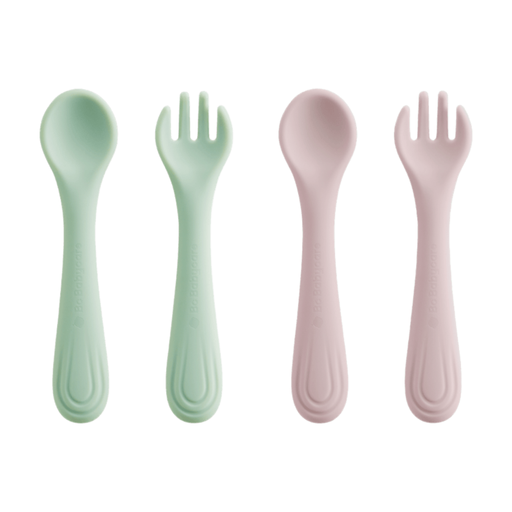
Why it stands out: This baby fork and spoon set combines thoughtful ergonomics with practical details for life on the move. The flexible fork head and included travel case make it a functional companion for the first attempts at self-feeding.
Pros:
Who it's for: This set is an excellent choice for parents looking for baby cutlery for 6 months and up that is easy to handle both at home and on the go. The safety features and practical case make it ideal from the very start of weaning.
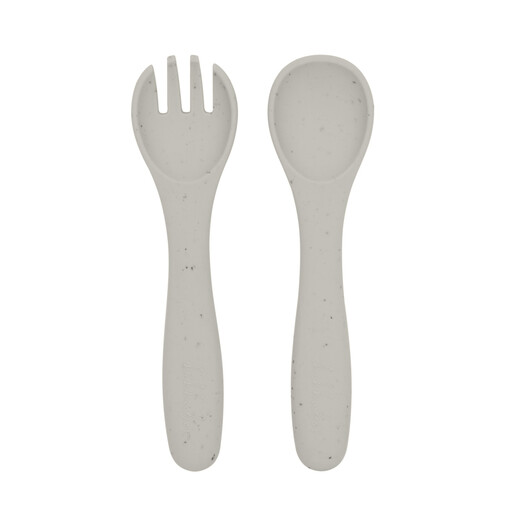
Why it stands out: The Kikka boo set is distinguished by its use of 100% platinum silicone. This premium material is exceptionally soft, flexible, and temperature-resistant, making it highly versatile.
Pros:
Who it's for: Ideal for parents who prefer a minimalist design and a uniformly soft material. Its high temperature resistance makes it a practical option for families who warm up meals or sterilise cutlery.
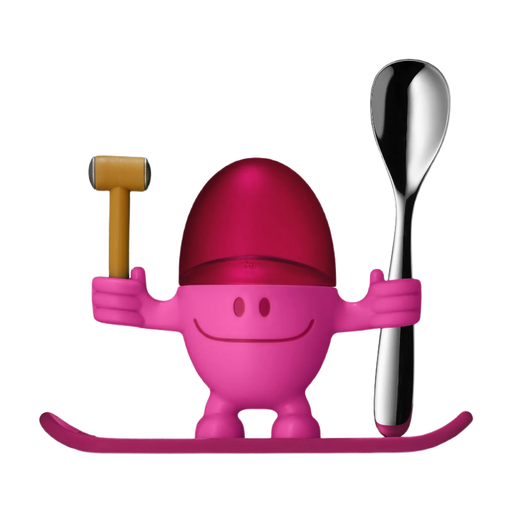
Why it stands out: The WMF McEgg is less of a classic baby training cutlery set and more of a fun mealtime accessory for toddlers. It combines functionality with a playful element that brings joy to the breakfast table.
Pros:
Who it's for: This product is aimed at parents of toddlers aged 3 and up. It's a great option for playfully encouraging independence at the table and making mealtimes more engaging.
Every child develops at their own pace and has individual preferences. If the products featured here don't perfectly match what you're looking for, you can find more designs and materials in our wider selection.
Explore more in our Kids' Spoons category.
Baby training cutlery is generally useful from the start of weaning, around 6 months of age. The right time is whenever your child shows interest in food, reaches for the spoon, and tries to bring it to their mouth. Special baby cutlery for 6 months and up is designed for this early stage of motor development.
For a baby's first cutlery, soft materials are particularly suitable. Silicone baby cutlery is very popular because it is gentle on the gums and flexible. Ensure it is labelled as food-grade and BPA-free. An alternative is spoons with a soft silicone tip and a firmer handle.
When choosing a baby fork and spoon set, several points are important: