
Lieferung heute & morgen

Qualitätsgarantie

Willkommens-Angebote freischalten: KOSTENLOSE Lieferung | Bis zu 80 % RABATT | Kostenlose 30-Tage-JoyPlus-Testphase
App herunterladen
A sports bottle needs to do more than simply hold water. Whether you’re training, commuting to the office or travelling, the lid, material and ease of cleaning all affect how practical the bottle will be in the long run. If you choose based only on colour, capacity or marketing claims, it’s easy to overlook important details.
Whether a leakproof water bottle lives up to its promise depends on more than just the bottle itself. The sealing ring, screw cap, flip-top mechanism and correct fit of individual parts all matter. Bottles with a straw or spout have additional openings that need to be cleaned regularly and closed properly.
So, check:
A 980 ml or 1,200 ml bottle means fewer trips to refill it, but it can be heavy when full. For short journeys, car cup holders or the office, 380 to 700 ml is often enough. For longer workouts, hikes or trips, a larger capacity may be more suitable.
The outside dimensions matter too: even if the capacity is right, a bottle may be too wide for a bike or car cup holder.
A stainless steel water bottle isn’t automatically insulated. Only terms such as “double-walled” or “vacuum insulation” describe that kind of construction. And a plastic bottle isn’t necessarily unsuitable: Tritan and other materials specifically labelled BPA-free can be a practical lightweight choice for the gym, commuting and the office.
Also check the diameter, height and weight. A reusable water bottle should fit in your bag, rucksack or cup holder without getting in the way of other items.
Plastic bottles should have clear details such as BPA-free, the material used and the permitted temperature range. For example, the 550 ml LocknLock Active Sports Bottle is rated for cold and room-temperature drinks from -20 °C to 60 °C. It isn’t suitable for boiling water and, according to the product information, shouldn’t be used for fizzy drinks.
Depending on their construction, stainless steel bottles can be suitable for robust everyday use. For vacuum-insulated bottles, check the insulation and cleaning details. Hot drinks can cause scalds, so follow the manufacturer’s guidance.
A one-handed lid or a sports bottle with a straw can be handy when cycling, walking or working out. For everyday use, though, seals that are easy to reach and a lid that can be taken apart are often more important than a complicated mechanism.
Before you buy, check:
For example, the Mepal Ellipse is listed as suitable for fizzy drinks, but shouldn’t be filled right to the brim. Other models explicitly exclude fizzy or fermenting drinks.
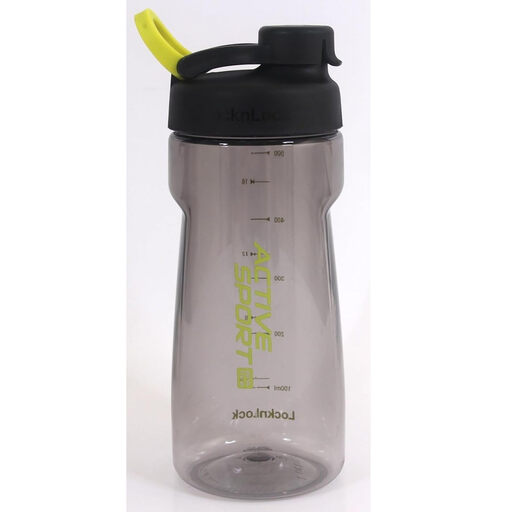
Why it suits this profile: This 550 ml bottle combines a moderate weight of around 145 g with a one-handed flip-top lid and a safety lock. It’s a good fit for the gym, office and daily commutes.
The product details specify a BPA-free Tritan body, a silicone sealing ring and a temperature range of -20 °C to 60 °C. Boiling, microwave use and fizzy drinks are not supported.
BPA-free Tritan, one-handed operation, safety clip and compact dimensions of 75 mm in diameter and 245 mm in height.
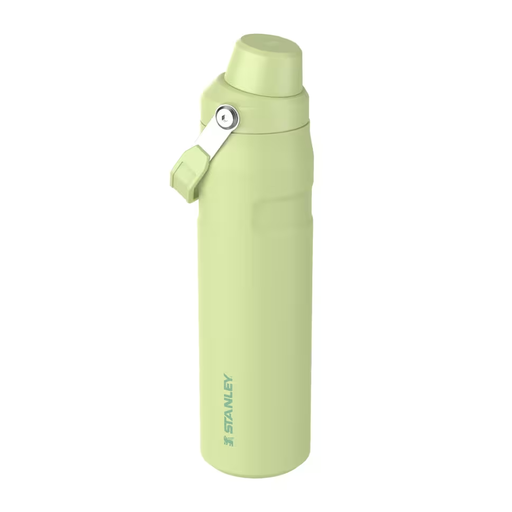
Why it suits this profile: Double-wall vacuum insulation and a wide drinking spout make this a good choice for anyone looking for an insulated water bottle for sport, the office and longer journeys.
The product details specify 18/8 stainless steel, 90% recycled stainless steel, vacuum insulation and a dishwasher-safe design. It isn’t intended for fizzy drinks.
600 ml capacity, vacuum insulation, wide drinking spout, carry handle and compatibility with standard cup holders.
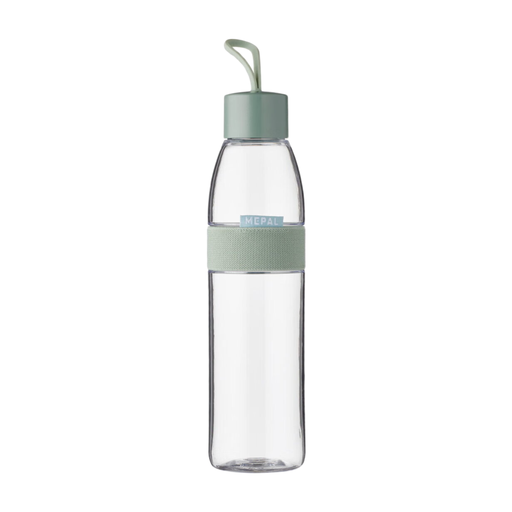
Why it suits this profile: This bottle is designed for everyday use, work, leisure and training. Its 700 ml capacity gives you more between refills than a compact model, without moving into the extra-large category.
The product description specifies BPA-free materials, a leakproof design and suitability for fizzy drinks. When using it for fizzy drinks, don’t fill the bottle right to the brim.
700 ml capacity, BPA-free materials, dishwasher-safe without the elastic band, and explicitly suitable for fizzy drinks.
We’ve put together a complete, regularly updated range of products that meet these strict selection criteria and fully comply with the safety regulations in force in the EU.
Even a sturdy water bottle for on the go needs regular care. Rinse the bottle and lid with warm water and a suitable cleaning product after every use. Check the sealing rings, mouthpieces and straws separately. Leave the bottle open to dry completely and prevent moisture from lingering inside.
Don’t use harsh or abrasive cleaners unless the manufacturer specifically says they’re safe to use. If the bottle is cracked or misshapen, the seal is damaged or the lid no longer closes securely, stop using it.
For short to medium-length workouts, 500 to 700 ml is usually practical. A BPA-free plastic bottle is lightweight, while a stainless steel water bottle can offer a sturdier design, depending on the model. In the office, a quiet screw cap may be more comfortable to use than a flip-top lid.
Its lifespan depends on the material, how often it’s used, how it’s cleaned and the condition of the seals. Check the bottle regularly for cracks, odours, misshaping and leaks. A replaceable or easy-to-access sealing ring can help extend its useful life.
Not necessarily. Many vacuum-insulated models aren’t suitable for fizzy drinks, as pressure can build up inside. Only use fizzy drinks if the product description specifically says they’re suitable, and follow the maximum fill level.