Reporters in echoey rooms
You’re recording sports commentary in a room with audible reflections and want to capture your voice more clearly by positioning the microphone appropriately.


If you can hear echo in the room, a microphone boom that can be positioned close to your mouth is a good starting point – no headset can eliminate room acoustics on its own. Then choose the connection to suit your recording device: for example, XLR with a separate headphone connection if you already have an interface, or USB for your computer. A test recording from the spot where you’ll be speaking will show you how your voice sounds.
You’re recording sports commentary in a room with audible reflections and want to capture your voice more clearly by positioning the microphone appropriately.
You want to connect your recording equipment and headphones to a PC or Mac without needing an existing XLR setup. The key is to check that the specific USB or headset socket is compatible with your device.
You have an interface or mixer and want to monitor your voice or audio playback through headphones while recording.
Shure explains that a microphone does not automatically distinguish the direct sound of your voice from unwanted echo. Position the microphone boom close to your voice and check the sound with a test recording from the spot where you plan to speak.
A good fit if: you use a compatible interface or mixer and want to connect the microphone and headphones separately. Audio-Technica specifies an XLR connection for the microphone and a 6.3 mm jack for the headphones on the BPHS2a.
Bear in mind: XLR is not the same as plug-and-play USB. With the beyerdynamic DT 290 MK II, you need to select the appropriate connection cable separately.
A good fit if: you want to record directly on a compatible computer without a separate XLR interface. Audio-Technica describes the ATH-M50xSTS-USB as connecting to a PC or Mac.
Bear in mind: Check the exact model variant and the USB connection you need. The connection type alone won’t tell you how much echo you’ll hear in your recording.
A good fit if: your recording device has a compatible headset microphone input and you prefer a detachable microphone. The RØDE NTH-100M uses its supplied TRRS cable for the microphone.
Bear in mind: A headphone socket alone doesn’t confirm that the microphone will work with your device.
A good fit if: freedom of movement while presenting matters to you, and your computer and recording software can use the wireless receiver. Audio-Technica describes the ATH-M50xSTS-WL as using a 2.4 GHz connection and USB transceiver.
Bear in mind: Remember to check the battery level and wireless connection. A wireless connection is no guarantee of reduced room echo.
| What matters when buying | What to check | Who is it most important to? |
|---|---|---|
| Clear speech despite room echo | Check that the microphone boom is adjustable, then make a short test recording from the actual recording location. | If I’m speaking in an echoey room, I want to position the microphone close to my voice and check the sound right where I’ll be recording. This is the main priority for around 36% of consumers. |
| Connection to the recording device | Check the model variant, microphone input, headphone connection and required cables together. | I want to be sure the microphone and headphones will work with my computer, interface or mixer. Around 29% of consumers prioritise connection compatibility above all else. |
| Monitoring while recording | Check the headphone connection and monitoring options on your recording device; try the fit and a comfortable listening level before your report. | If I want to monitor my voice or audio playback during a longer recording, I need a suitable headphone connection. Around 21% of consumers prioritise monitoring. |
| Freedom of movement while speaking | For wireless models, check receiver compatibility and battery level. For wired models, check the cable routing and reach from your recording position. | I want to be able to move around while presenting without an audio cable to my computer getting in the way. Around 14% of consumers say freedom of movement is their main priority. |
Noise reduction for listening, microphone processing for calls and echo in a voice recording are different things. An ANC feature for your ears does not prove that the echo in your voice recording will disappear.
First, check the microphone position and make a test recording from the place where you’ll be speaking. Only rely on claims about signal processing for the specific function they describe.
Broadcast XLR, USB and 3.5 mm TRRS are different connection types. With the beyerdynamic DT 290 MK II, you also need to select the appropriate connection cable separately.
Before buying, check the full model name, the microphone and headphone connections, and what’s included in the box.
Depending on the connection type, you may also need a compatible interface, an adapter or a connection cable sold separately.
Headphones can stop sound from speakers getting back into the microphone. They won’t, however, remove the reflections of your own voice around the room.
Listen to audio playback through headphones, then assess the remaining room sound with a test recording from the place where you’ll be speaking.
The BPHS2a and BPHS1 ranges are broadcast headsets. StreamSet variants differ in several ways, including their connections.
The DT 290 MK II is a closed-back, wired broadcast and intercom headset.
The NTH-100M is an analogue over-ear headset with a detachable microphone for media and voice applications.
The Evolve2 50 is a wired alternative for office and call use.
This selection features wired computer headsets with microphones for voice recording and monitoring. None of the features listed means that a headset will remove room echo on its own; use a test recording to check the microphone position.
 No image available
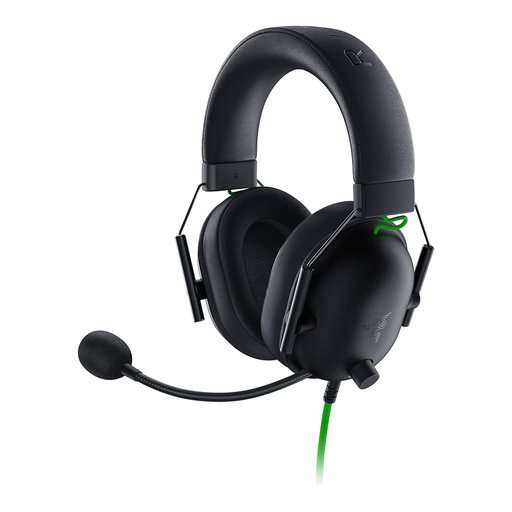
For voice recording on a computer, the adjustable microphone lets you position it for speaking; check the sound with a test recording.
The product name lists a USB-A connection, stereo headset, on-ear controls and a mute indicator.
 No image available
If you want to record on a computer and listen back through a stereo headset, the USB connection is one option to check.
The product name lists a 2.4 m cable and compatibility with PC, Mac and laptop; an adjustable microphone boom is also described.
 No image available
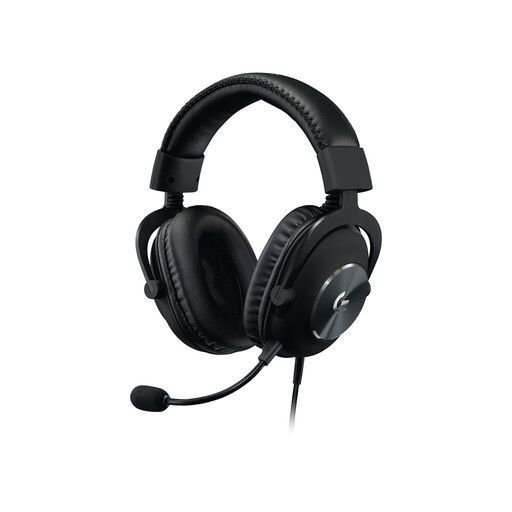
For a device with a compatible 3.5 mm connection, this wired headset offers an analogue option. Adjust the flexible microphone boom to suit your speaking position.
The product description lists a unidirectional cardioid microphone and a Y-splitter included for separate PC sockets.
 No image available
If you want to record on a PC, check whether the included USB sound card is compatible with your recording device and setup.
The microphone is detachable and described as cardioid; the product name also lists a 3.5 mm cable for mobile devices.
 No image available
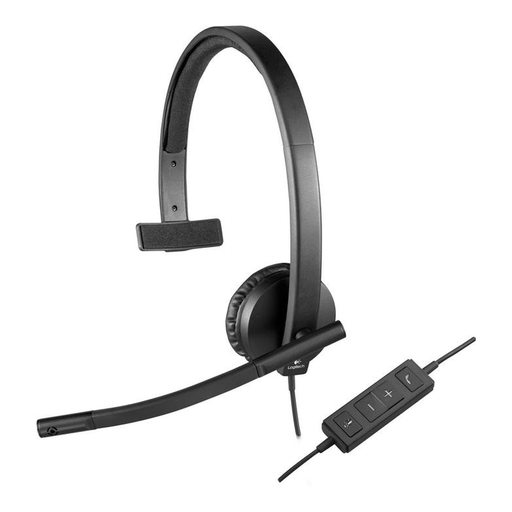
For voice recording on a computer, the USB-A connection is one option; you can adjust the microphone position using the boom.
The product name lists a mono headset with in-line volume and mute controls. The instructions recommend positioning the microphone around 2–3 cm from your mouth.
No, you shouldn’t rely on that. Room echo is caused by reflected speech, so microphone distance and position, as well as the room itself, remain important. A feature that reduces noise while you’re listening doesn’t prove that echo will be removed from your recording.
First, check that the microphone and headphone connections match your interface or mixer. Position the microphone boom close to your voice, then listen back to a recording made where you’ll actually be speaking. Audio-Technica lists separate XLR and 6.3 mm connections for the BPHS2a; even with a compatible setup, you should check how it sounds in the room.
Before buying, check what’s included and which cable version you need: according to beyerdynamic, the DT 290 MK II is supplied without a connection cable. For consumer purchases, statutory rights against the seller are separate from any voluntary guarantee. EU consumer information states that goods are generally covered by a statutory minimum period of two years.
Not in every case. Under § 201 StGB, recording another person’s private speech without authorisation may be a criminal offence. The specific circumstances matter, so don’t assume that being at a sporting event gives you blanket permission. Check what’s allowed before conducting interviews.