
Lieferung heute & morgen

Qualitätsgarantie

Willkommens-Angebote freischalten: KOSTENLOSE Lieferung | Bis zu 80 % RABATT | Kostenlose 30-Tage-JoyPlus-Testphase
App herunterladen
Sports socks need to suit not just your shoes, but the activity you’re doing too. So there’s more to consider when buying than colour and brand name. Whether you run, play basketball, work out or wear them every day, fit, material, sock length and care instructions all matter.
Three common marketing traps can lead to the wrong choice:
Cotton socks often feel soft and are suitable for everyday wear, leisure and moderate workouts. A high cotton content can absorb moisture, but depending on how the fabric is constructed, it may take longer to dry than some synthetic blends.
Polyester and polyamide are often used when a lightweight, shape-retaining and quick-drying construction is required. Bamboo viscose feels smooth and soft; according to the product details, the Resteröds Invisible Socks are made from a blend of 80 % bamboo viscose, 15 % polyester and 5 % elastane.
Elastane adds stretch and can help keep socks from slipping. However, a high elastane content isn’t automatically a sign of quality. What matters is whether the cuff, heel and toe area fit your foot well.
Longer socks aren’t automatically more comfortable. Check that the cuff is stretchy enough without digging in. Compression products have additional requirements; the models featured here are not medical devices.
Search terms such as men’s sports socks and women’s sports socks can help you narrow down your options, but they don’t replace proper measurements. Many styles are designed as unisex socks. Foot length and EU size are what matter.
For example, the listed sizes for the ASICS Quarter Unisex 3 Pack Socks range from EU 35–38 to EU 47–49. According to the product information, the ASICS Secret Socks even cover sizes up to EU 50–53. The Li-Ning basketball socks are designed for a foot length of 24–28 cm. If you’re between sizes, check the size chart for the specific product rather than relying on your usual shoe size alone.
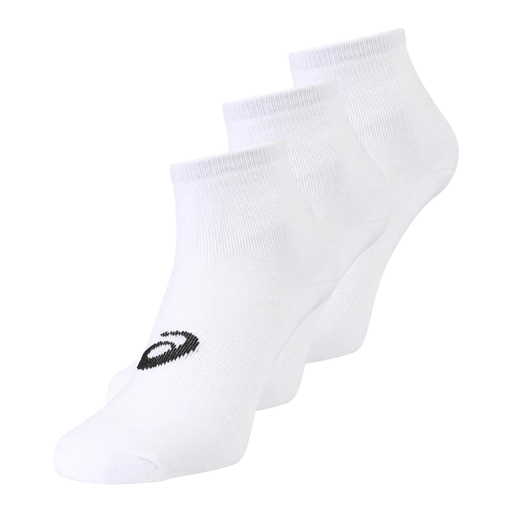
Why this product suits this profile: The three-pack gives you a handy rotation for training, fitness and everyday wear. The quarter length is versatile, and the sizes are listed in EU ranges.
The material, pack size and EU sizes are clearly listed. That makes it easier to check whether the socks meet your needs.
69 % cotton, polyester, polyamide and elastane; 3 pairs per pack; EU sizes 35–49.
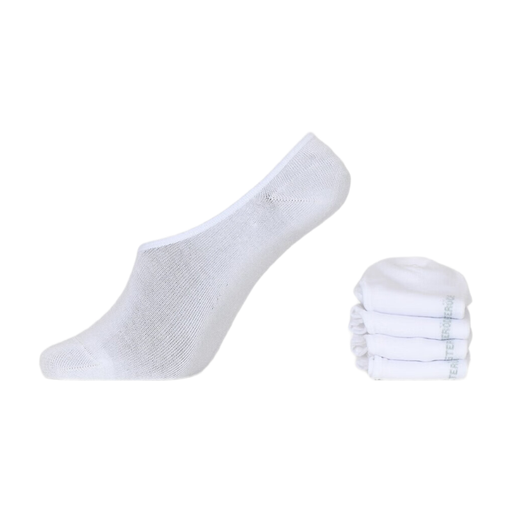
Why this product suits this profile: The no-show design is made to stay discreet in low-cut shoes. The bamboo viscose blend is a good option if you prefer a smooth feel.
The material percentages and size range of 40–45 are listed. This makes it easier to check whether the socks will work with the shape of your shoes.
80 % bamboo viscose, five-pack, machine washable up to 40 °C according to the product details.
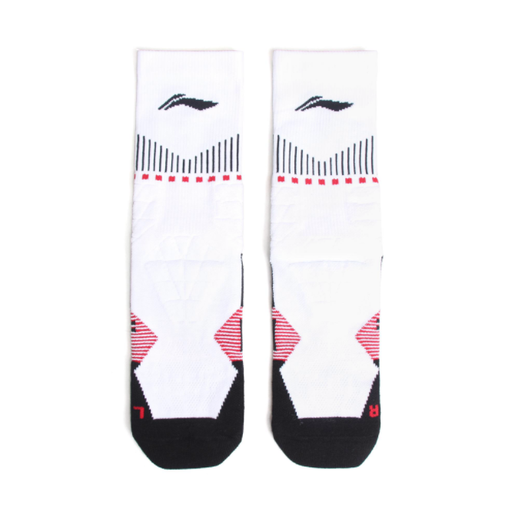
Why this product suits this profile: The mid-calf length and elasticated cuff are designed for basketball shoes and sporting activities. This style is listed as unisex.
The product details specify foot length, material blend, sock length and care instructions. However, ‘antibacterial’ shouldn’t be taken to mean that the socks have a medical effect.
Polyester-elastane blend, jacquard texture, mid-cut design and stated foot length of 24–28 cm.
We’ve put together a complete, regularly updated list of products that meet these strict selection criteria and fully comply with the safety regulations in force in the EU.
How long sports socks last depends largely on the washing temperature, drying method and level of wear. So check the care label and avoid unnecessarily high temperatures. Many styles are best air-dried, as excessive heat can put strain on the elastane and affect their shape.
Replace socks when the cuffs have permanently lost their stretch, the heel is wearing thin or the seams start to rub. A three-pack or five-pack makes it easier to rotate your socks and reduces how often each pair needs to be washed. For intense workouts, it’s also a good idea to keep separate rotations for everyday socks and running socks.
Quarter socks, trainer socks or specialist running socks with a secure heel fit are all suitable for running. Look for a smooth toe seam, the right size and a material that suits how much you sweat and how warm your feet get. Cotton-rich styles may be fine for shorter, moderate runs; for longer distances, lightweight synthetic blends are often preferred.
Sports socks should fit smoothly without creating pressure points. The heel should stay in the right position. Socks that are too big can slip around inside your shoes, while pairs that are too small can feel tight around the toes and cuff. Always check the EU size or stated foot length.
For regular training, it’s practical to have at least three to five pairs. That gives worn socks time to dry fully, so you don’t need to wash them straight away. If you run or play basketball several times a week, you could keep separate sock sets for sport and everyday wear.