
Lieferung heute & morgen

Qualitätsgarantie

Willkommens-Angebote freischalten: KOSTENLOSE Lieferung | Bis zu 80 % RABATT | Kostenlose 30-Tage-JoyPlus-Testphase
App herunterladen
Sweaty feet during training, cuffs that slip while hiking or thin patches after just a few washes: when it comes to sports socks, design isn’t the only factor that affects how well they perform. Many products are advertised as “breathable”, “antibacterial” or “compression” socks, without clearly explaining their fabric composition, fit or specific construction.
This buying guide explains which details really matter and which common shopping pitfalls to avoid.
Breathability depends on factors such as the fibres, knit density and construction. A marketing claim on its own tells you very little. Check whether the fabric composition is listed and whether the socks have mesh panels or a lighter knit. Polyester can wick moisture away from your feet, while cotton can absorb moisture but takes longer to dry.
A cuff should hold the sock securely without digging in uncomfortably. The fit is particularly important with basketball socks, running socks and hiking socks, as movement can make creasing and slipping worse. An elasticated construction won’t necessarily fit every calf or foot equally well.
Padded socks can provide extra cushioning and protection in high-impact areas. However, a thick sole can create pressure in shoes that already fit snugly. Thinner, moisture-wicking styles are often more suitable for running shoes, while extra padding may be a better choice for hiking or winter sports.
Descriptions such as moisture-wicking socks or “antibacterial” should always be considered alongside specific product details. According to the manufacturer’s product information, certain Li-Ning styles have a silver-ion treatment with stated reduction values for Staphylococcus aureus, Escherichia coli and Candida albicans. This information relates to the product description and is not a medical claim.
The size should refer to your EU shoe size or foot length, wherever possible. Conversion charts can help with international sizing. If you’re between sizes, follow the individual manufacturer’s guidance. Socks that are too small can feel very tight, while socks that are too large may crease.
Available lengths include:
Reinforced heels and toes can help improve durability in high-wear areas. An arch support is usually an elasticated or more densely knitted section around the midfoot. It is not a substitute for medical care and may not feel the same on every foot.
Check the compression level, size and intended use of compression socks carefully. Stronger compression is not automatically better. If you have health concerns or are unsure, seek medical advice.
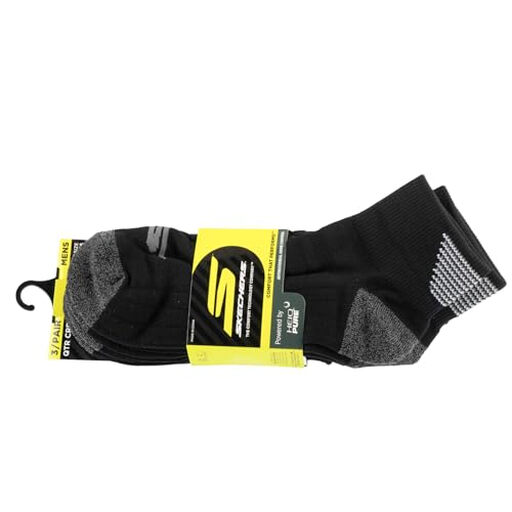
Why this product suits this profile: This 3-pack is designed for anyone looking for an easy everyday essential for casual wear, training and leisure.
The pack size makes it easier to rotate socks between washes. The fabric composition is listed as 100% polyester, rather than being vaguely described as a blend.
3 pairs, quarter-crew length and a stated size of 41–46; follow the manufacturer’s care instructions.
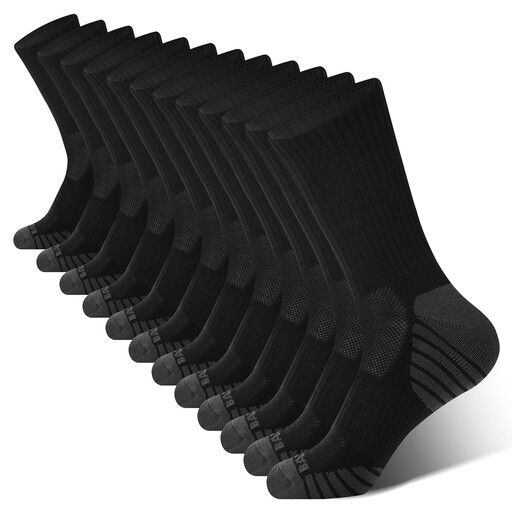
Why this product suits this profile: This style combines a crew length with mesh fabric, moisture-wicking construction and reinforced areas for regular wear.
The product description specifies the material type, reinforced heel and toes, and a cushioned sole, rather than relying on vague claims about comfort.
6-pack, arch support, reinforced high-wear zones and stated uses including running, hiking, training, the office and everyday wear.
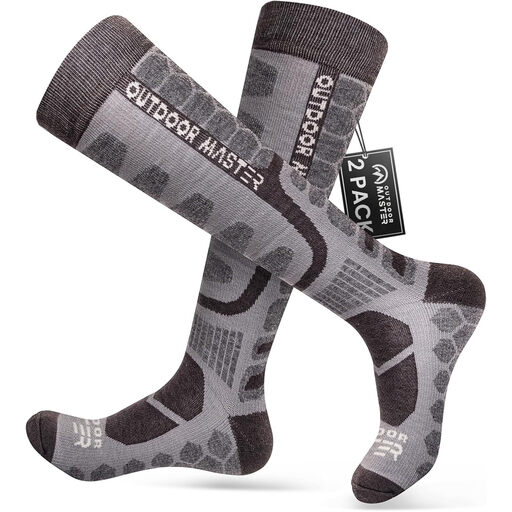
Why this product suits this profile: This style is aimed at people wearing winter sports and outdoor footwear who want a longer sock with a wool content and clearly defined zones.
The stated merino content is 30%. This makes it easier to assess the fabric than a generic description such as “merino socks”.
2 pairs, over-the-calf length, reinforced padded zones, targeted compression areas and EU size 39–42.
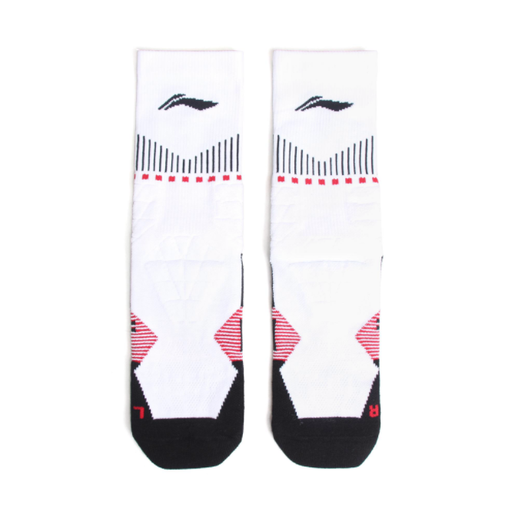
Why this product suits this profile: These unisex sports socks have a mid-calf length and are designed for basketball, training and sporty casual wear.
The product details list foot lengths, the fabric blend, an elasticated cuff and a mid-calf length. This makes it easier to check the fit against your shoes and intended activity before buying.
Stretch fit, jacquard pattern, soft inner knit and stated sizes for foot lengths from 220 to 310 mm.
Wash sports socks according to the care label. A cool wash or moderate temperatures can be a good choice for elasticated fibres; bleach and direct heat can affect the material and shape. Let your socks dry completely and check the heels, toes and cuffs regularly.
A multi-pack of sports socks means you won’t need to wash individual pairs as often. If you train frequently, owning several suitable pairs can be more economical than washing one pair particularly often.
We’ve put together a complete, regularly updated list of products that meet these strict selection criteria and fully comply with the safety regulations in force in the EU.
For running, lightweight, well-fitting running socks made from moisture-wicking fabric and with as few irritating seams as possible are a practical choice. Choose a thickness that works with your running shoes to avoid creating extra pressure.
How long they last depends on the material, how often you wash them, how well your shoes fit and how much you train. Reinforced heels and toes can help reduce wear, but they’re no substitute for the right size. Thin patches, stretched cuffs or creases that won’t come out are signs that it may be time to replace them.
Bamboo socks can feel soft and comfortable. For high-intensity sport, also look for good moisture management, reinforced areas, an elastane content and a secure fit. “Bamboo” on its own doesn’t tell you everything about how the sock performs.