
Lieferung heute & morgen

Qualitätsgarantie

Willkommens-Angebote freischalten: KOSTENLOSE Lieferung | Bis zu 80 % RABATT | Kostenlose 30-Tage-JoyPlus-Testphase
App herunterladen
Sports sunglasses with interchangeable lenses can be more practical for cycling, running, golf or fishing than several separate pairs of glasses. Depending on the light, you can fit tinted, polarised, clear or photochromic lenses. However, models vary considerably in terms of fit, light transmission and lens-changing mechanism.
If you focus only on an eye-catching tint or a long list of features, you can easily overlook crucial details. Three common purchasing misconceptions are particularly important:
For sunglasses with UV400 protection, UV400 refers to the protection range specified by the manufacturer, up to a wavelength of 400 nanometres. Buyers should look for clear product labelling and the manufacturer’s information. The term does not replace checking the fit or optical properties.
For sports use, the VLT rating is also important. VLT stands for ‘Visible Light Transmission’ and describes how much visible light passes through the lens:
For example, the BleeqUp Ranger Light Grey Photochromic Lenses are described as offering 18–43% light transmission in the activated state and 43–80% in the non-activated state. This information helps you assess the likely areas of use more realistically.
According to the manufacturer, polarised sports sunglasses reduce certain reflections, such as those on water, wet roads or bright surfaces. This can be useful for anglers, drivers and cyclists. However, polarised lenses do not automatically change their tint when lighting conditions change.
Photochromic sports glasses adjust their tint according to the surrounding brightness. They are therefore particularly suitable for routes with alternating shaded and sunny sections. How quickly and to what extent the adjustment takes place depends on the specific lens, temperature and lighting conditions.
If you mainly spend time on open water or around highly reflective surfaces, fishing glasses with polarisation may be worth considering. For a cycle ride from early morning through to the afternoon, however, photochromic lenses or a set with clear interchangeable lenses are often more versatile.
A lightweight TR90 sports glasses frame is often used for its flexibility and low weight. However, the key consideration remains whether the glasses sit securely without pressing on your temples or slipping during rapid movement.
Before buying, you should check:
Coatings such as scratch-resistant and water-repellent lenses can make everyday care easier. Even so, the lenses should be cleaned with a suitable microfibre cloth and stored in their case. Sand, hard particles or unsuitable cleaning products can damage the surfaces.
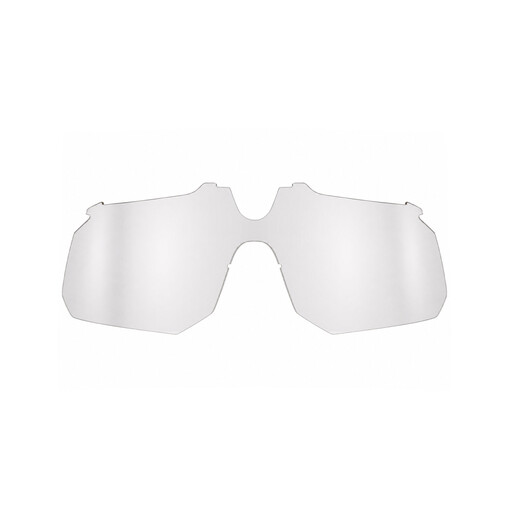
Why this product suits this profile: According to the product information, the photochromic interchangeable lens covers different lighting conditions and can be used for commuting, cycling and walks.
The stated light-transmission ranges make the tint easier to understand than a blanket description such as ‘for all weather conditions’.
Photochromic adjustment, UV400 specification, plus scratch-resistant and water-repellent coating according to the product description.
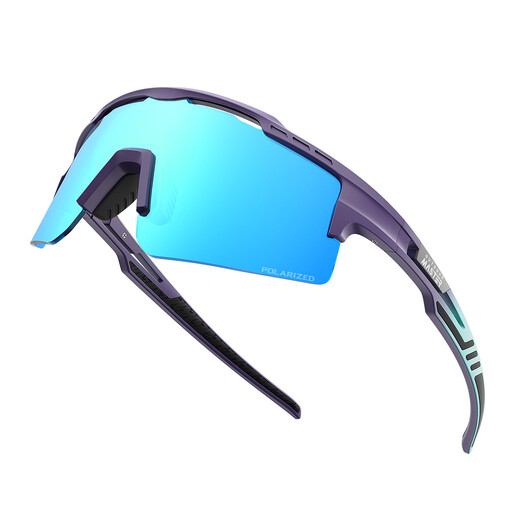
Why this product suits this profile: The combination of polarised TAC lenses, a UV400 specification and a TR90 frame is aimed at cyclists and other people who regularly spend time outdoors.
The product description clearly states the material, lens type and contents. The included test card helps you assess the polarisation.
Polarised TAC lenses, impact-resistant properties and an aerodynamically designed frame.
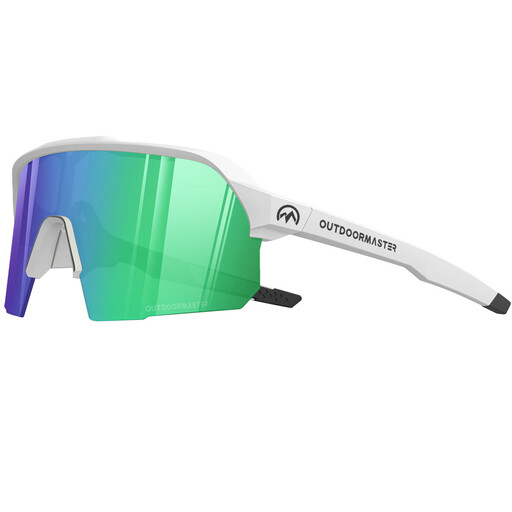
Why this product suits this profile: The set combines a polarised lens with a clear replacement lens, making it an interesting option for fishing, baseball, sailing, golf, cycling and driving.
The clear interchangeable lens is listed in the contents. This means the glasses are intended for use in overcast weather or lower-light conditions.
TR90 frame, polarised HD lenses, stated VLT of 12% and an additional clear interchangeable lens.
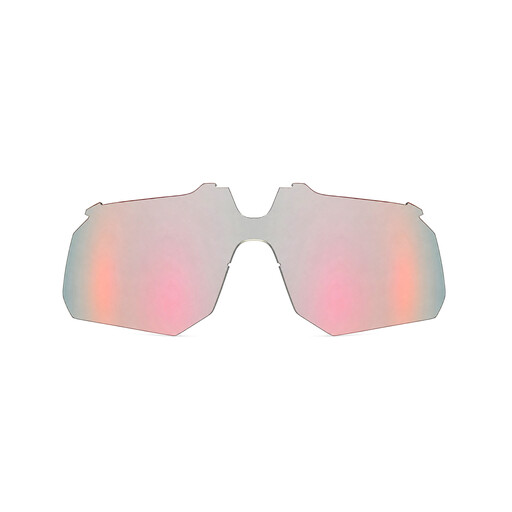
Why this product suits this profile: The interchangeable lens is designed to adjust automatically to different brightness levels and, according to the description, is suitable for commuting, driving and outdoor activities.
Light transmission is stated as 18–43% in the activated state and 43–80% in the non-activated state. This makes it easier to choose based on your actual intended use.
Photochromic technology, UV400 specification, plus a scratch-resistant and water-repellent surface according to the product data.
We have put together a complete, regularly updated list of products that fully meet these strict selection criteria and the safety regulations applicable in the EU.
The actual lifespan depends on use, cleaning and storage. For sports glasses with interchangeable lenses, we recommend:
A coating is no substitute for careful maintenance. Even water-repellent surfaces can be affected by aggressive cleaning products.
No. Replacement lenses must match the respective frame shape, size and attachment mechanism. Therefore, preferably buy interchangeable lenses that are explicitly stated to be suitable for the specific model.
That depends on how you intend to use them. Polarised lenses are particularly useful for reducing distracting reflections. Photochromic lenses respond to changing brightness. If you need both features, you can choose a set with several compatible lenses.
The price depends, among other things, on the frame material, lens coating, contents and lens-changing technology. Do not compare just the individual price. Also check whether a case, clear replacement lens or cleaning cloth is included.