Sports tops with a short drying window
If you wash a few tops frequently and need them ready for your next training session, the time available for drying matters, as does whether you need extra heat.


If your few sports tops have time to air-dry, a non-electric clothes airer is a good starting point: the German Environment Agency names clothes airers and washing lines as the most energy-efficient way to dry clothes. If you’re often short on time, a heated airer could be an option. First, check the care instructions for your tops, make sure the specific electrical appliance is suitable, and consider whether you can ventilate the room.
If you wash a few tops frequently and need them ready for your next training session, the time available for drying matters, as does whether you need extra heat.
For synthetic fabrics or elastane, check the care instructions for each top. Bosch Home Appliances Germany points out that technical sportswear is often made from more delicate synthetic fabrics; GINETEX GERMANY explains the symbols for natural drying.
If you dry clothes indoors, you’ll need to consider space for setting up and storing the airer, as well as ventilation. The German Environment Agency recommends paying particular attention to regular ventilation when drying damp laundry indoors.
A good choice if: Your tops have enough time to air-dry, or avoiding electricity use is your main priority.
The trade-off: Without extra heat, this option may be less practical if you’re short on time. The German Environment Agency names clothes airers and washing lines as the most energy-efficient way to dry clothes.
A good choice if: You want to use extra heat for regular small loads and have enough room to hang your tops.
The trade-off: A manufacturer’s claims about heat don’t guarantee a particular drying time or mean the airer is suitable for every sports fabric.
A good choice if: You need room for other small items of laundry as well as sports tops, and a taller design will fit in your space.
The trade-off: More tiers don’t automatically mean faster drying. Check the weight capacity and the usable space between tiers.
The percentages below group consumers by their main priority when drying frequent, small loads of sports tops.
| Priority | What to check before buying | Who it matters most to |
|---|---|---|
| Drying time | Consider the number and size of your tops, and the space between the rails. | If I need my few tops to be dry by my next training session, having enough time is key. Around 29% of consumers might make drying time their main buying priority. |
| Fabric care | Compare the care label on each top with the appliance instructions; tumble-drying symbols don’t mean it’s safe to use heated rails. | If you want to protect delicate technical fabrics or prints, check the care instructions before using extra heat. Around 23% of consumers might put fabric care first. |
| Space | Check the dimensions when set up and folded, and allow room to hang your clothes. | If you need to put the airer away between washes, its size and folding mechanism are key. Space could be the main priority for around 18% of consumers. |
| Electricity costs | Consider the rated power, actual running time and your electricity tariff separately. | If you often dry small loads and want to keep electricity use down, compare heated and non-electric options. Around 18% of consumers might prioritise electricity costs. |
| Room humidity | Consider ventilation and choose a location that’s suitable according to the appliance instructions. | If you dry clothes indoors, you should be able to open a window regularly. Around 12% of consumers might consider room humidity their main priority. |
Materials and care instructions vary from one garment to another. An appliance’s temperature rating doesn’t prove that a particular fabric can withstand contact with warm rails.
Compare the care label on your top with the airer’s instructions. If you’re unsure whether it’s suitable, dry the garment without switching on the heating function.
Wet laundry releases moisture into the air even when dried on a heated airer. The German Environment Agency recommends paying particular attention to regular ventilation when drying damp laundry indoors.
Choose a location that follows the appliance instructions, and make sure you can ventilate the room regularly while your clothes are drying.
The rated power alone doesn’t tell you how much electricity a particular load will use or how long it will take to dry.
Factor in the actual running time and your electricity tariff. If air-drying works with your schedule, you don’t need to switch on the heating function.
The 850-048 is a folding, two-tier heated clothes airer.
Todeco describes a three-tier heated clothes airer with castors as an option offering more hanging space.
The Pegasus Family Plus 18m is a non-electric alternative for air-drying without a heating function.
This selection includes clothes airers for non-electric air-drying and a folding heated model. Compare the hanging space, floor space and care instructions before deciding whether to use extra heat.
 No image available
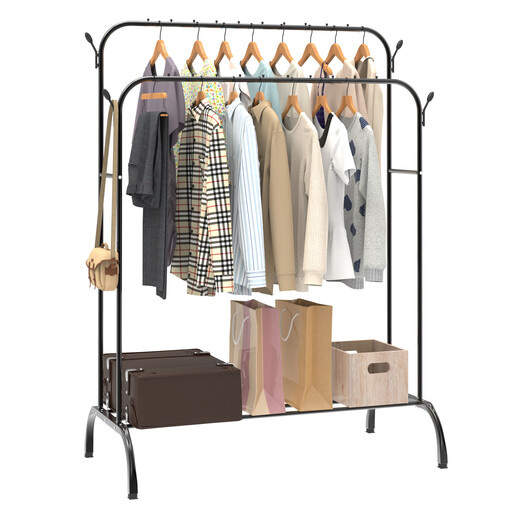
For small air-drying loads when you need two hanging rails.
The product details specify a weight capacity of 20–30 kg, a lower shelf and approximate dimensions of 110 × 55 × 150 cm.
 No image available
An option if you want to use a heating function for small loads and fold the airer away between uses.
The product details specify 230 W, a maximum weight capacity of up to 10 kg and dimensions of 144 × 53 × 96 cm. The temperature specification doesn’t prove that every sports fabric is suitable for contact with heated rails; check the care label and appliance instructions.
Before buying, check that the specific electrical appliance meets the required EU conformity requirements, including CE marking.
 No image available
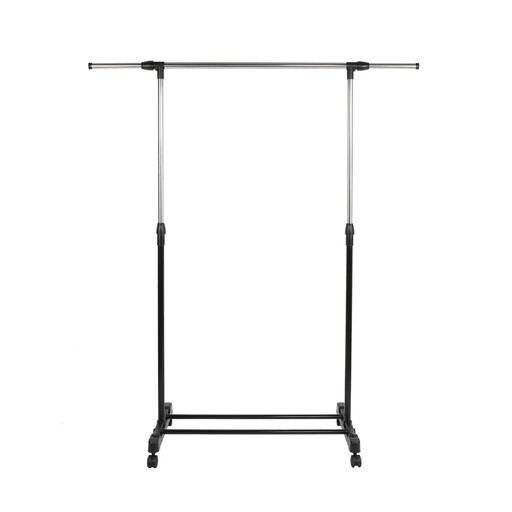
For air-drying on a single rail, with adjustable height and width to suit your space.
The product details specify a height-adjustable rail from 90–158 cm, a width of 80–145 cm, castors and a folding mechanism.
No. The term “sportswear” doesn’t mean every item is suitable. Check the care instructions for the specific top and the airer’s manual. Tumble-dryer symbols refer to a different drying process and don’t give explicit approval for heated rails.
Yes. The German Environment Agency recommends paying particular attention to regular ventilation when drying damp laundry indoors. The airer’s heating function doesn’t remove the need to let moisture out of the room.
Multiply the power consumption in kilowatts by the operating time in hours to calculate kilowatt-hours, then factor in your electricity tariff. 300 W is 0.3 kW; assuming a constant power consumption, that works out at 0.3 kWh per hour. Actual consumption depends on how the airer is used. A non-electric clothes airer doesn’t need electricity to operate.
According to the European Union, purchases from a trader are generally covered by a legal guarantee of at least two years from the date you receive the goods. This is separate from any voluntary manufacturer’s guarantee; if there’s a fault, contact the seller.
For the specific electrical appliance, check that it meets the required EU conformity requirements, including CE marking, and look for clear manufacturer details and instructions and warnings in German. The European Union describes CE marking as the manufacturer’s declaration that the product meets applicable requirements, not as an independent quality mark; the German Federal Network Agency lists marking and product information among the points to check.