Those who want to protect their sportswear
If you dry technical clothing, follow the care label on each individual garment. GINETEX Germany explains what the tumble-drying symbol means.


Use a clothes airer for garments that aren’t approved for tumble drying. A heat pump tumble dryer can be a useful addition if you regularly want to dry suitable sportswear more quickly or without relying on space on the airer. First, check the care label, temperature symbols and the corresponding programme, including its maximum load. Then compare the appliance’s dimensions, condensation efficiency, noise level and Eco programme energy use – the label figure for Eco cycles doesn’t tell you how much a sportswear programme uses.
If you dry technical clothing, follow the care label on each individual garment. GINETEX Germany explains what the tumble-drying symbol means.
If your airer and tumble dryer are both indoors, floor space, noise and ventilation all matter. The German Environment Agency recommends paying particular attention to regular ventilation when drying damp laundry indoors.
If you dry clothes regularly, compare the drum capacity and energy use with your usual loads. The Verbraucherzentrale recommends comparing energy consumption on a like-for-like Eco basis.
A good fit if: your clothes aren’t approved for tumble drying or you have enough time to air-dry them.
Things to consider: An airer takes up space, and damp laundry increases moisture in the room. The German Environment Agency recommends ventilating regularly in this situation.
A good fit if: you regularly have items that are suitable for tumble drying and have a safe place to install the appliance.
Things to consider: You’ll need to allow for the appliance, its running time and filter maintenance. The programme you choose must also follow the care instructions.
A good fit if: you’re comparing a specific appliance based on its current specifications and your needs.
Things to consider: The Verbraucherzentrale rates heat pump tumble dryers as more energy efficient, so compare current models on the same basis.
A good fit if: you don’t have room for a separate tumble dryer or enough space to hang clothes, and a smaller drying load suits your everyday needs.
Things to consider: According to the Verbraucherzentrale, washer-dryers use more electricity and water than separate appliances. You can often only dry part of a wash load straight away.
GINETEX Germany explains the tumble-drying symbols; for energy use, the Verbraucherzentrale recommends comparing kWh per 100 Eco cycles. This figure doesn’t show the energy use of a different programme.
| What matters | What to check when buying | Who it matters most to |
|---|---|---|
| Fabric care | Care label, temperature symbol and programme description; also check the programme’s maximum load. | When I dry sportswear, I first check whether the individual garment is approved for tumble drying. Around 33 % of consumers put protecting their fabrics first. |
| Space and room conditions | Appliance dimensions, including door clearance, noise level, condensation efficiency and ventilation options around the airer. | When the appliance and airer are in shared living spaces, floor space and moisture matter to me. Around 27 % of consumers prioritise space and conditions at home. |
| Energy use | Current A-to-G energy label, kWh per 100 Eco cycles and drum capacity suited to your usual loads. | If I dry clothes frequently, I want to compare Eco energy use with how I use the appliance, without treating it as the energy use of another programme. Around 20 % of consumers prioritise running costs. |
| Time needed | Check the manual for the suitability, programme duration and load limit of the sportswear or delicates programme that actually meets your needs. | If I need my sportswear again soon, the time taken by a suitable programme matters more than a general promise of a quick cycle. Around 20 % of consumers prioritise having their clothes ready when they need them. |
The care instructions apply to each individual garment. A programme name doesn’t replace the care label or checking that the temperature is suitable.
Check the label and temperature symbol first, then consult the manual for the specific programme. If they don’t match, use the clothes airer instead.
Comparable label figures relate to the Eco programme and don’t tell you directly how much energy another programme uses.
Compare Eco figures on a like-for-like basis only. For programme duration and suitability, check the information for the programme that actually meets your needs.
According to the Verbraucherzentrale, you can often only dry part of a wash load straight away in a washer-dryer. Washer-dryers also use more electricity and water than separate appliances.
Check that the drying capacity and available space suit your everyday needs, and include your existing clothes airer in the comparison.
For the TR9W75780, AEG lists an 8 kg rated capacity, along with MixDry and functions for certain delicate and outdoor fabrics.
Bosch lists a rated capacity of 9 kg, Auto Dry and a self-cleaning condenser for the WRB247C40.
According to the manufacturer, the Siemens WQ46B2D41 is a heat pump tumble dryer with a 9 kg capacity, autoDry and a self-cleaning condenser.
Samsung lists the DV90DG52A0TEEG as a 9 kg tumble dryer with Optimal Dry.
The Joybuy models below are heat pump tumble dryers that can be used alongside a clothes airer. For each appliance, check whether the specific programme follows the care instructions for your sportswear.
 No image available
The stated sensor drying and range of programmes may be useful for mixed loads of items suitable for tumble drying.
Joybuy lists an 8 kg capacity and several drying programmes. The product description includes sensor drying with automatic cycle termination.
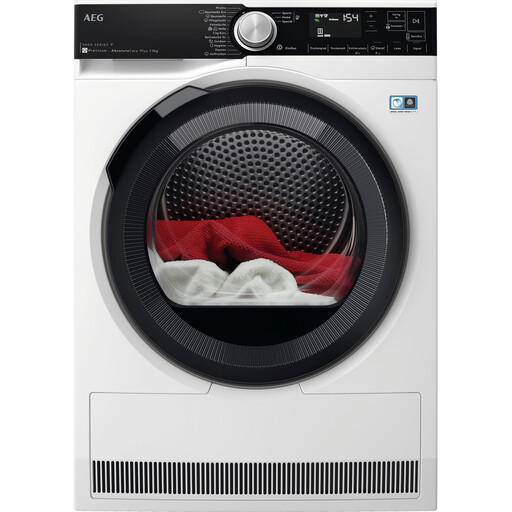 No image available
The product details list sportswear programmes and functions for delicate fabrics. Check that these match the care symbols on your clothes.
Joybuy lists a 9 kg capacity, energy efficiency class C, 63 dB(A), 91 % condensation efficiency and dimensions of 850 × 600 × 660 mm. AbsoluteCare, SensiDry and Sportswear programmes are also listed.
This model is listed as using the flammable refrigerant R290. Do not damage the refrigerant circuit and keep sources of ignition away.
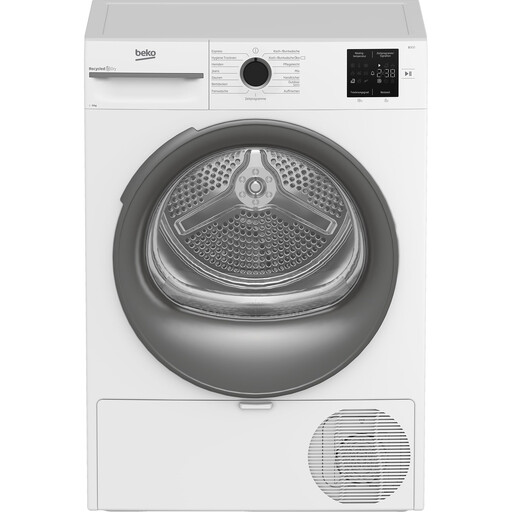 No image available
The listed choice of programmes may be useful for different fabrics suitable for tumble drying. Check that the programme you choose is appropriate for each garment.
Joybuy lists energy efficiency class E, 15 programmes and an AquaWave drum. The stated appliance dimensions are 60,7 × 59,8 × 84,6 cm.
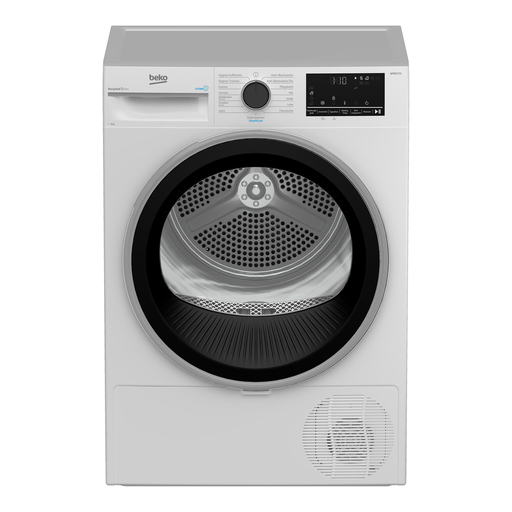 No image available
An Outdoor/Sports programme is listed for this model. Still, check whether the manual confirms it’s suitable for your sportswear fabrics.
Joybuy lists energy efficiency class B, 15 programmes and sensor drying. The dimensions are 67,2 × 59,8 × 84,6 cm.
The stated stacking installation requires a compatible Beko stacking kit, available separately.
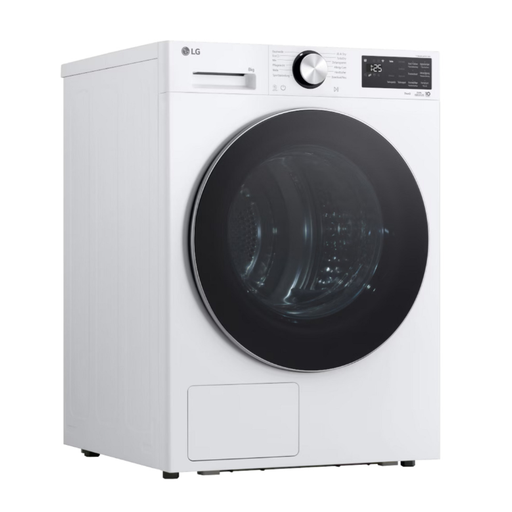 No image available
AI Dry and Sensor Dry are listed as features that adjust or monitor the drying process. Check the care instructions for your clothes to see whether the programmes are suitable.
Joybuy lists energy efficiency class B, 85 kWh per 100 cycles and 91 % condensation efficiency. The dimensions are 600 × 850 × 660 mm; the door is reversible.
No. Check the tumble-drying symbol on each individual garment: a circle inside a square means it can be tumble dried, dots indicate the permitted temperature setting, and a crossed-out symbol means it must not be tumble dried. The programme you choose must also follow these instructions.
The German Environment Agency recommends paying particular attention to regular ventilation when damp laundry adds moisture to the room. When comparing tumble dryers, also check the specific model’s condensation efficiency, noise level and dimensions.
Clean the fluff filter and condenser regularly, following the appliance instructions. The Verbraucherzentrale notes that a build-up of fluff and dust can also become a fire risk over time.
Compare the kWh per 100 cycles on the current EU Eco programme label, and take your actual use into account. This figure isn’t a direct measurement of the energy used by another programme, such as a delicates cycle.
Since 1 July 2025, household tumble dryers on the EU market have used the A-to-G energy label. Check the label for the specific model when comparing appliances.