Shared flats with a shared fabric sofa
If you want to treat stains on suitable cushions and then use the sofa together again, check the care label and consider residual moisture. Hoover explains what to look for on care labels.


A spot cleaner is only suitable for shared-flat sofa cushions if the care label for the specific cover allows water-based cleaning. If the cover is removable and machine-washable, washing it separately is another option. A compact machine may be more practical for individual stains, while a wider nozzle or longer reach could be useful for larger suitable areas – although these may mean more storage space and maintenance. You can’t assume a standard drying time.
If you want to treat stains on suitable cushions and then use the sofa together again, check the care label and consider residual moisture. Hoover explains what to look for on care labels.
For occasional stains, you’ll want the machine close at hand. After everyone has used it, the hose, tanks and attachments need to be cleaned and put away. Details on hose cleaning and accessories can help you compare models.
If you want to clean carpets or other suitable upholstery as well as suitable sofa cushions, weigh up the intended uses against the space the machine will take up. Philips, for example, specifies a wider brush for suitable fabric surfaces.
When choosing a spot cleaner for suitable shared-flat sofa cushions, there are four main priorities to consider. Always check the care instructions for the specific cover before using a wet cleaner.
| Priority | What to check before buying | Who is this especially important for? |
|---|---|---|
| Material compatibility | Check the care label for the cover and the machine’s instructions; consider a removable, washable cover as an alternative. | If I first need to check whether my cushion can be wet-cleaned at all, material compatibility comes first. Around 25% of consumers say it’s their top priority. |
| Targeted stain cleaning | Check for an upholstery nozzle and attachments for individual stains; consider tank capacity for larger jobs. | For individual food or drink stains, I want to clean the affected area rather than choose a machine designed for entire floors. Around 31% of consumers put spot cleaning at the top of their list. |
| Residual moisture and using the cushion again | Check the suction function and instructions; don’t use the cushion again until it is completely dry. | If several people share the same sofa, I want to plan when it can be used again based on when the specific cushion is completely dry. Around 25% of consumers say being able to use it again quickly is their top priority. |
| Storage and machine maintenance | Compare dimensions, accessory storage, emptying and the recommended hose-cleaning process. | In a shared flat with limited communal storage, I want to be able to put the machine and accessories away and clean them easily after use. Around 19% of consumers give the greatest weight to storage and machine maintenance. |
The care instructions apply to the specific cover. A machine marketed for upholstery doesn’t make every fabric suitable for wet cleaning.
Check the cover’s care label first, then choose your cleaning method.
BISSELL explicitly links its estimate of around 30 minutes to the independent steam mode on the SpotClean HydroSteam Pro 3700N. This doesn’t establish a general drying time for other modes or fabrics.
Follow the care instructions and the selected machine mode. Don’t use the cushion again until it is completely dry.
While it dries, the shared sofa may not be available for normal use.
Tanks, hoses and attachments vary in how they need to be emptied, cleaned and stored after use.
For the specific model, compare what’s included, which cleaning products are approved, how it is emptied and how much storage space it needs.
Cleaning products, machine maintenance and storage space all add to the ongoing effort.
The SE 2 Spot Care is designed for targeted cleaning of suitable fabrics and upholstery.
The Series 3000 XW3193/11 comes with a wide brush and a stain nozzle for suitable fabric surfaces.
The SpotClean HydroSteam Pro 3700N combines washing, suction and a separate steam mode for suitable upholstery.
The HS530 011 is a spot cleaner with attachments for suitable upholstery and other surfaces.
The StainStriker PX200EUT is an option for targeted stain cleaning.
The following machines are described as suitable for cleaning stains from upholstery and sofas. Always check the care label for the specific cover before use.
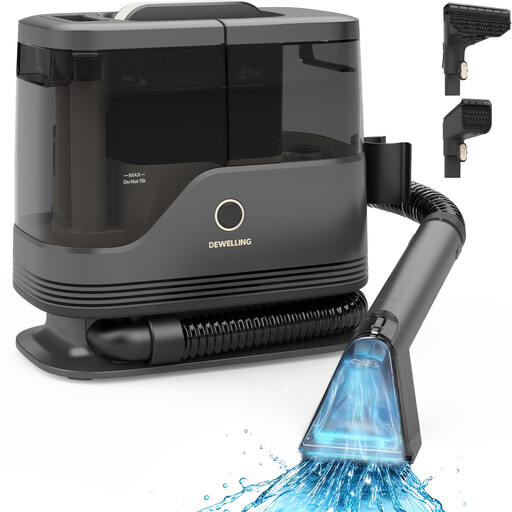 No image available
Described for targeted cleaning of suitable sofa upholstery.
400 W; 13 kPa; self-cleaning function.
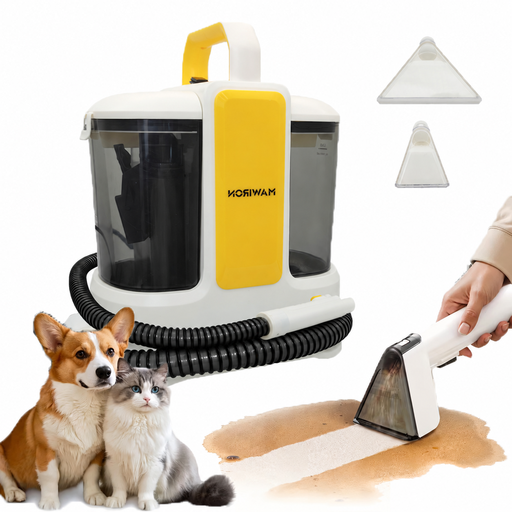 No image available
Described for targeted cleaning of suitable sofas and upholstery.
15 kPa; 3-in-1 spray, brush and suction function.
 No image available
Described for suitable sofa upholstery and other fabrics.
17 kPa.
According to the product description, vacuum the area thoroughly before deep cleaning.
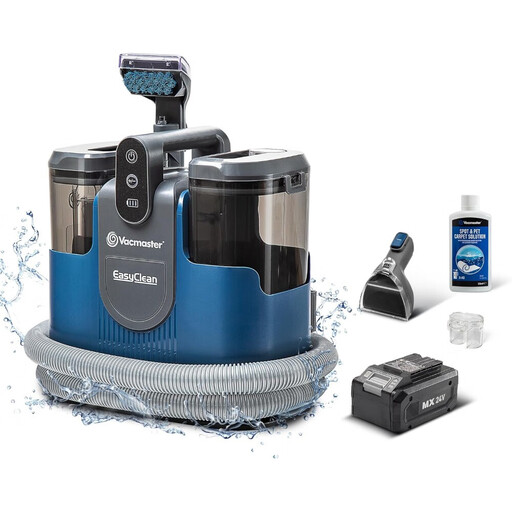 No image available
Described for cleaning upholstery stains without a cable.
Cordless; 24V; 15 kPa.
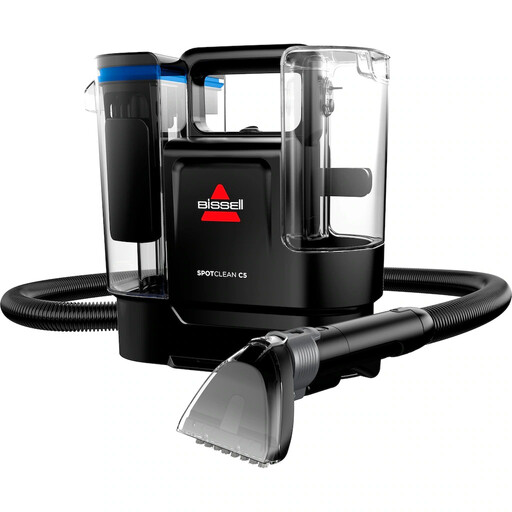 No image available
Described for targeted stain cleaning on suitable upholstery.
Two tanks; 15 kPa; self-cleaning function.
No. Check the care instructions for the specific cover: Hoover explains the symbols W for water-based cleaning, S for solvents and X for no wet cleaning. If the cover is removable, its own washing instructions also apply. A machine being suitable for upholstery doesn’t replace these checks.
Empty and clean the dirty water tank and attachments according to the instructions for the specific model, then let them dry before putting them away. Features vary: Philips specifies automatic hose cleaning, while Hoover has removable brush covers and a dirty water tank with a wide opening.
Your statutory rights are with the retailer. A manufacturer’s guarantee is an additional, voluntary service subject to its own terms. The Verbraucherzentrale explains that if a product is faulty, the first step is for the seller to put things right. Ongoing costs, such as cleaning products, are separate and should be planned for by checking the instructions for the specific model.
No. In Germany, electrical waste must be collected separately and can be taken to local collection points. The Federal Environment Ministry explains separate collection under the ElektroG; retailers’ take-back obligations depend on the applicable legal requirements.