
Lieferung heute & morgen

Qualitätsgarantie

Willkommens-Angebote freischalten: KOSTENLOSE Lieferung | Bis zu 80 % RABATT | Kostenlose 30-Tage-JoyPlus-Testphase
App herunterladen
A sprayer can dispense cleaning products, water plants, make car care easier or apply paint evenly. Options range from a simple spray bottle and a pressure sprayer to electric paint sprayers and pressure washers. The key isn’t choosing the model with the longest list of features, but finding the right combination of liquid compatibility, pressure, reach and cleaning requirements.
A pressure washer rated at 135 bar is suitable for robust outdoor surfaces, but it can damage delicate paintwork, grouting, wooden surfaces or seals. For car washing, choose an adjustable nozzle that lets you keep a suitable distance from the surface. A small cleaning sprayer or foam sprayer is often easier to control when applying pre-cleaner or working on delicate areas.
Not every spray bottle is suitable for oils, solvents, concentrated cleaners or thick liquids. PET and PP containers are designed for many water-based liquids, but they aren’t automatically compatible with every chemical. Before buying, check the manufacturer’s guidance on suitable liquids, temperature and viscosity.
Dried paint, limescale and cleaning product residue can block nozzles and intake tubes. A model with a detachable spray head, cleaning needle or easy-to-access tank can mean less maintenance in everyday use. With a battery-powered sprayer, you’ll also need to keep an eye on the charge level; for corded models, cable length and working area matter too.
For plants, cosmetic mists or smaller household jobs, a plant mister or compact spray bottle is often enough. The 450ML SPRAY TRANSP BOX holds 450 ml and has a transparent, rectangular design. This makes it easy to check the fill level, while its shape may also make it easier to store neatly.
For larger cleaning jobs, a container with a capacity of 1.5 litres or more is more practical. A larger tank means fewer top-ups, but it also adds weight when you’re holding it. For a battery-powered sprayer, check whether the battery is replaceable, how it’s charged and whether a charger is included.
An adjustable spray nozzle can switch between a fine mist and a concentrated jet. That’s useful for gardening, windows, household cleaning and car care. A foam sprayer, on the other hand, needs a system that mixes cleaning product with air. Foam formation depends, among other things, on the cleaning product, dilution and water pressure.
For an electric paint sprayer, you’ll also need to consider nozzle size, spray pattern, flow rate and permitted viscosity. DIN-S ratings describe how long a material takes to flow through a standardised measuring cup. They’re only comparable when the same measuring method and material preparation are used.
PET or PP containers are lightweight and transparent, while brass nozzles are used in some sprayer systems for a robust finish. However, the material alone doesn’t guarantee a particular lifespan. Seals, threads, spare parts and the instructions are important too.
When working with paint or solvent-based liquids, wear safety goggles, suitable respiratory protection and gloves, and make sure the area is well ventilated. Electrical equipment must be disconnected from the power supply before cleaning, assembly or disassembly. Never store liquids in unlabelled containers, and keep sprayers out of the reach of children.
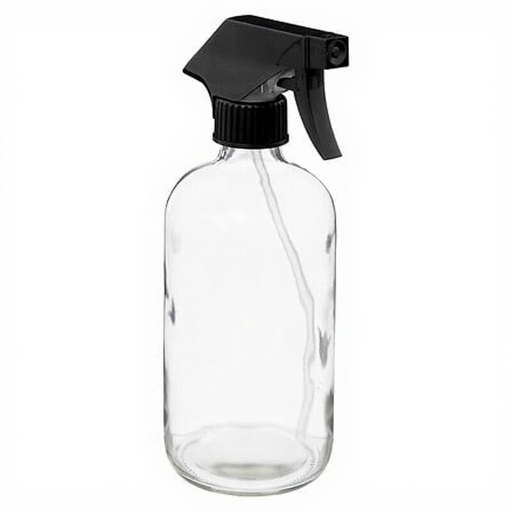
Why this product suits this profile: This 450 ml manual spray bottle is ideal for smaller household jobs, watering plants or dispensing water-based liquids.
The transparent bottle makes it easy to check the fill level. The rotating nozzle offers a mist or concentrated jet; bear in mind that it’s designed for thin liquids only.
450 ml capacity, PET/PP construction, rectangular shape and manual operation without a battery or power cable.
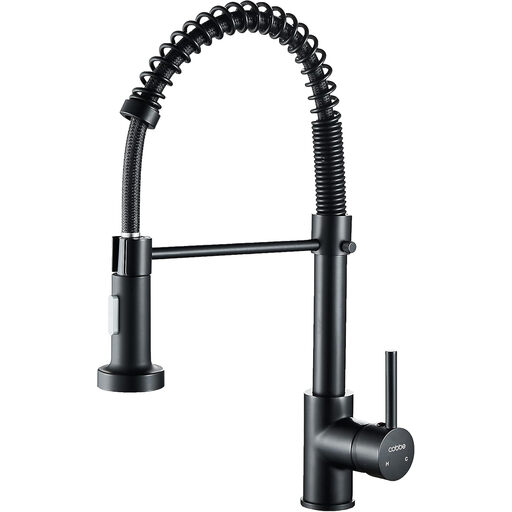
Why this product suits this profile: This kitchen tap offers both a standard water flow and a spray function, with a pull-out spout for the sink, pots and surrounding worktop.
The two water-flow modes are clearly differentiated. Before fitting, check the connection size, suitability for a single-hole installation and your existing water pressure.
360-degree swivel, pull-out stainless steel hose and two selectable water-flow modes.
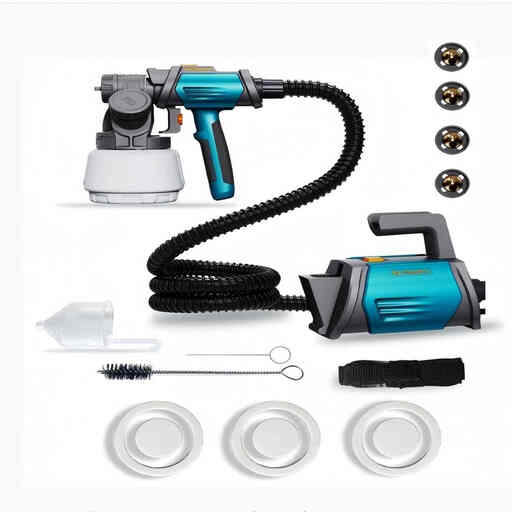
Why this product suits this profile: For renovators and DIY enthusiasts, this HVLP system offers 800 W of power, a 1,300 ml container, four brass nozzles and three spray patterns.
The four nozzle sizes, from 1 to 3 mm, and the stated material limit of up to 120 DIN-S make it easier to adjust the sprayer to the job. Check the viscosity before you start, and clean the unit as soon as you’ve finished.
800 W HVLP system, 2.5 m hose, 3 m power cable and three spray patterns for horizontal, vertical or round surfaces.
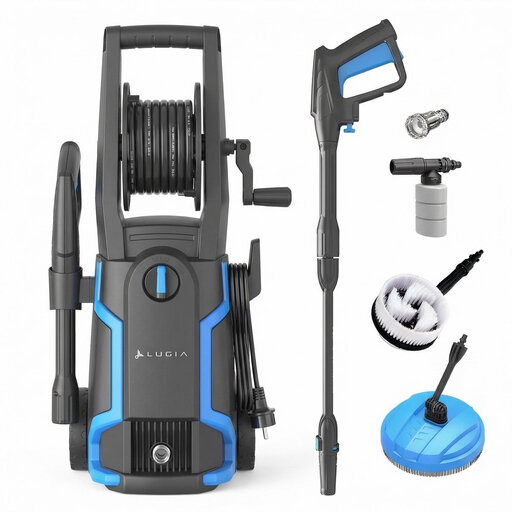
Why this product suits this profile: This model is designed for users who want to clean vehicles, patios, garden furniture or other outdoor surfaces, with a wide range of accessories included.
The adjustable nozzle lets you control the spray intensity. For delicate surfaces, keep a suitable distance and choose an appropriate attachment.
1600 W, stated pressure of 135 bar, 430 l/h, 5 m hose, plus a patio cleaner, rotary brush, turbo nozzle and external foam cannon.
We’ve put together a complete, regularly updated list of products that meet these strict selection criteria and fully comply with the safety regulations in force in the EU.
A foam sprayer or battery-powered sprayer may be enough for pre-cleaner and foam. A pressure washer is an option for wheels, tyres and robust outdoor surfaces. For delicate paintwork, make sure the pressure, nozzle, cleaning product and distance are suited to one another. An adjustable nozzle makes it easier to get the right setting.
Its lifespan depends on how it’s used, the liquid, the seals and how well it’s cleaned. After each use, rinse the tank and spray head with the product recommended by the manufacturer. Don’t let paint dry inside the system. For battery-powered models, charging cycles, storage and exposure to moisture all affect battery life.
As well as the purchase price, consider electricity use, water consumption, cleaning products, replacement nozzles and, where applicable, batteries. The actual cost depends on power, how long you use it and working pressure. A more powerful model won’t automatically be cheaper if you’re only using it for small jobs. For occasional dispensing tasks, a manual spray bottle is often sufficient.