For handheld photos in the Spreewald, your choice mainly depends on whether you prioritise distant details on the riverbanks, low-light performance or protection from actual exposure to water. Optical stabilisation can compensate for camera shake, but it won’t replace a suitable shutter speed for moving subjects. When it comes to splashes, check the protection rating for the specific model.
Which camera is right for you?
For capturing details on the riverbank
If you want to switch between river scenery and more distant subjects from a fixed position, the optical zoom range is an important factor. Sony Germany lists a 24–200 mm range for the RX100 VII; Panasonic Germany gives a 24–720 mm equivalent for 4:3 photos on the TZ99.
For taking photos from a boat
If you’re holding your camera on a punt or in a canoe, consider camera shake, subject movement and the risk of splashes separately. Nikon USA advises choosing a suitable shutter speed when photographing moving subjects.
For landscapes in changeable light
If you mainly photograph waterways and tree-lined scenery rather than distant individual subjects, you can weigh up the field of view and maximum aperture against the zoom range you want. Canon Germany lists a 24–100 mm range and F1.8–2.8 for the G7 X Mark III; Ricoh Imaging Europe gives the GR IV a fixed 28 mm lens.
What should you look for when buying?
First, decide which subjects you’ll photograph most often. Then you can make a more informed comparison of zoom, low-light performance, handling and water resistance.
| Buying priority |
What to check before buying |
Who will find this most important? |
| Distant subjects |
Compare the 35 mm equivalent focal length for your chosen aspect ratio, and check that the zoom is optical rather than digital. Also consider the maximum aperture at the telephoto end. |
If I want to capture distant details from the bank or a boat without changing position, optical telephoto reach matters to me. Around 28% of consumers put this first. |
| Taking photos from a boat |
Check image stabilisation, a secure grip and whether you can choose a suitable shutter speed. Also take subject movement into account separately. |
If I’m holding my camera on a punt or in a canoe, I want to manage camera movement while still capturing moving subjects sharply. Around 22% of consumers prioritise image stability and handling. |
| Low light |
Compare sensor size and maximum aperture at the focal length you’ll actually use. For moving subjects, consider the shutter speed you’ll need too. |
If I’m photographing beneath tree canopies or later in the day, I want to assess low-light performance and focal length together rather than focusing only on zoom. Around 22% of consumers prioritise low-light photography. |
| Water exposure while paddling |
Check that the exact model is explicitly rated as waterproof, and follow its guidance on covers and seals. |
If there’s a real risk of splashes or immersion while paddling, I need an appropriate protection rating and don’t want to rely on a compact body alone. Around 17% of consumers prioritise water resistance. |
| Wide landscapes |
Check the field of view and 35 mm equivalent focal length. If you’re considering a fixed lens, think about whether you’re happy to go without optical zoom. |
If I mainly photograph wide waterscapes rather than distant individual subjects, field of view can matter more to me than maximum telephoto reach. Around 11% of consumers prioritise wide views. |
Avoiding buying and photography mistakes
-
Assuming the biggest zoom figure is best for dusk
A long telephoto reach alone doesn’t tell you how well a camera performs in low light. Panasonic lists F6.4 at the telephoto end for the TZ99; CHIP observed a loss of detail with this model in low light.
Consider the light conditions alongside the focal length you actually want to use when choosing a camera.
-
Confusing image stabilisation with a fast shutter speed
Stabilisation compensates for camera movement, but it won’t freeze moving animals or people.
Check whether you can set the shutter speed to suit your subject, and take its movement into account as well as stabilisation.
-
Assuming a compact body is water-resistant
A compact design doesn’t mean a camera is waterproof. OM Digital Solutions explicitly rates the Tough TG-7 as waterproof to 15 m.
If exposure to water is a realistic risk, check the protection rating for the exact model and follow its usage guidance.
Camera brands at a glance
Sony
The RX100 VII is a compact zoom camera with an electronic viewfinder, designed for changing your composition on the go.
- Sony Germany lists a 24–200 mm range, optical image stabilisation for stills and a 1.0-type sensor.
- According to Sony, the maximum aperture ranges from F2.8 at the wide-angle end to F4.5 at the telephoto end. Its telephoto reach is shorter than that of the Lumix travel zooms featured here.
Panasonic
The Lumix TZ99 and TZ300 suit different travel zoom needs: the TZ99 offers greater reach, while the TZ300 combines a shorter telephoto range with a 1.0-type sensor.
- Panasonic Germany lists a 24–720 mm range for 4:3 photos on the TZ99 and 24–360 mm for the TZ300.
- Panasonic lists a 1/2.3-inch sensor and F6.4 at the telephoto end for the TZ99; CHIP observed a loss of detail in low light. CHIP notes that the TZ300 has no viewfinder or tilting screen.
Canon
The PowerShot G7 X Mark III combines a shorter zoom range with a wide maximum aperture.
- Canon Germany lists a 24–100 mm range, F1.8–2.8 and lens-based image stabilisation.
- Its optical telephoto range is shorter than that of the travel zooms mentioned here, making it less suited to capturing distant details.
OM System
The Tough TG-7 is a rugged compact camera for situations where there’s a real risk of getting wet while paddling.
- OM Digital Solutions rates the TG-7 as waterproof to 15 m.
- The manufacturer gives a 25–100 mm 35 mm equivalent range. Its rugged design doesn’t replace the guidance on using and caring for the model.
Ricoh
The GR IV is a compact APS-C alternative with a fixed lens, suited to carefully composed wide views.
- Ricoh Imaging Europe lists a fixed 28 mm 35 mm equivalent lens and sensor-shift image stabilisation.
- Without optical zoom, you can’t bring a distant subject closer by zooming in.
Cameras at Joybuy
This selection focuses on compact handheld cameras, as well as gimbal, action and 360° models. For conventional still photos along the Spreewald waterways, compare the design, field of view and zoom specifications of each model.
 No image available
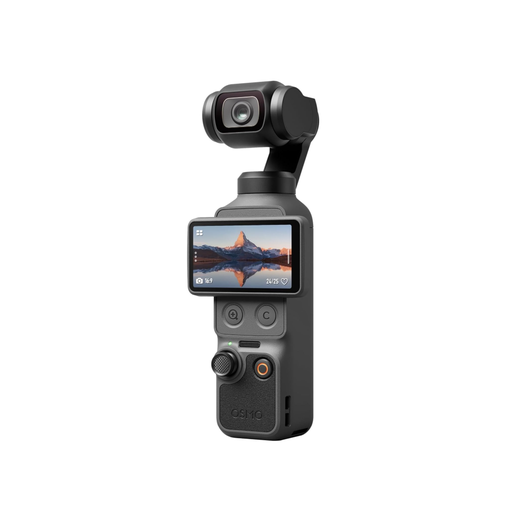
DJI Osmo Pocket 4 Standard Combo
This gimbal camera is a handheld option if you’re looking for stabilised photography and video. According to the product listing, it isn’t waterproof.
The product details list a 1″ CMOS sensor, 3-axis stabilisation, 2× lossless zoom, 107 GB of built-in storage, a 2″ rotating screen and 4K/240fps.
Don’t use it without protection if splashes are expected.
View at Joybuy
 No image available
KOMERY G7-A 4K Digital Camera, Pink
This portable digital camera could be an option for handheld photography if the zoom and anti-shake features listed in the product name suit your needs.
The product name lists 80MP UHD, 18× zoom, autofocus and anti-shake.
Before buying, check what type of zoom the specification refers to and whether the listed features meet your needs.
View at Joybuy
 No image available
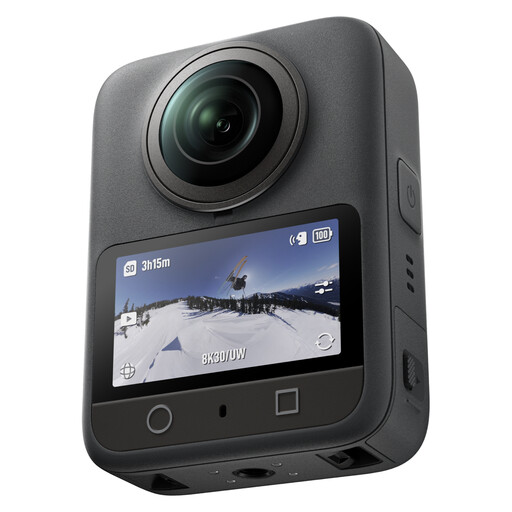
DJI Osmo 360 Standard Combo
As a 360° camera, this model is better suited to capturing panoramas or 360° videos than to situations where conventional optical zoom is essential.
The product details list a 1-inch sensor, 8K 360° video, 120-MP panoramic photos and waterproofing.
Before using it in wet conditions, check the protection requirements for the specific model.
View at Joybuy
 No image available
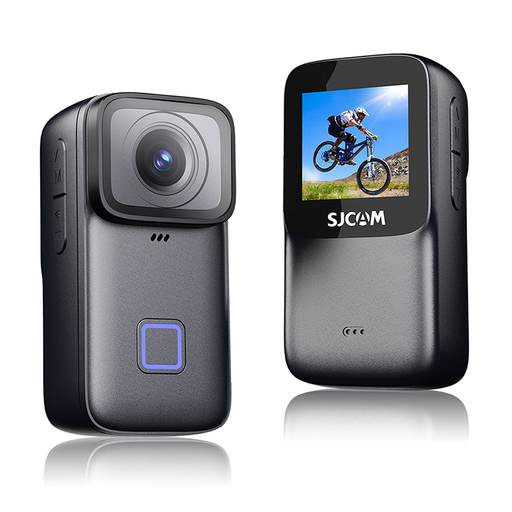
SJCAM C200 Pro 4K Action Camera
This compact action camera could be an option for handheld outdoor photography if you need a model with an explicitly stated waterproof rating.
The product details list 6-axis EIS stabilisation, a 1.3-inch touchscreen and 20-MP photos.
The product name gives a waterproof rating of up to 5 m without a housing; the housing is required for the stated rating of up to 40 m.
View at Joybuy
Frequently asked questions
Is image stabilisation enough for sharp photos from a moving punt?
No, not on its own. Stabilisation reduces camera shake, but it won’t freeze a moving subject. Nikon USA recommends choosing a suitable shutter speed when your subject is moving.
How should I prepare my camera for a paddling trip?
Plan your route using a waterway map; the Spreewald Biosphere Reserve recommends using one. If you expect to encounter water, also check the protection rating and operating instructions for your specific camera model.
What should I know if I want to photograph fellow travellers who can be recognised and publish the photos?
Under § 22 of the German Art Copyright Act (KunstUrhG), consent from the person depicted is generally required to distribute or publicly display an image. This does not determine whether a statutory exception applies in a particular case. If you’re planning to publish photos, get consent beforehand if in doubt.
What should I know about faults and advertised guarantees?
In Germany, statutory consumer rights for faulty goods are distinct from a guarantee, which is an additional voluntary promise with its own terms. The Verbraucherzentrale advises keeping the two separate, so check who your seller is and what additional guarantee conditions apply.


