Punt passengers who want zoom
If you want to capture waterscapes and distant subjects on the banks from a punt without changing lenses, compare the optical focal-length range and the weight of the camera ready to use.


For photos from a punt, a compact camera with a fixed travel zoom is a good fit if you want to switch between waterscapes and distant details on the banks without changing lenses. An interchangeable-lens camera may suit you if you prioritise lens choice or weather protection, but you’ll need to factor the lens into the weight and protection of your complete kit. Image stabilisation compensates for camera movement, but it won’t stop animals or a moving boat.
If you want to capture waterscapes and distant subjects on the banks from a punt without changing lenses, compare the optical focal-length range and the weight of the camera ready to use.
When taking photos under trees or on overcast days, the sensor and lens matter just as much as the shutter speed and the limits of image stabilisation.
For longer trips on the water, check which protection ratings apply to the camera body and the specific lens you’ll be using.
A good fit if: You want to capture wide-angle views and distant details on the banks during a punt trip without changing lenses.
The trade-off: Panasonic and Canon specify a 1/2.3-inch sensor for the models considered here; the specifications alone don’t prove how well they perform in low light.
A good fit if: You want a fixed lens and an electronic viewfinder, and are happy with a shorter telephoto range.
The trade-off: Sony specifies a 24–200 mm full-frame equivalent for the RX100 VII, giving you less telephoto reach than the travel zoom models mentioned here.
A good fit if: You want to choose your lens carefully and may want to edit RAW files.
The trade-off: Framing, overall weight and weather protection also depend on the lens you choose; camera body specifications alone don’t tell the whole story.
For handheld photos from the water, first decide what matters most to you: compensating for camera movement, reaching distant subjects, shooting in low light, keeping your luggage light or protecting your kit from moisture.
| Priority | What to check when buying | Who is it important to? |
|---|---|---|
| Taking handheld photos | Check whether stabilisation is specified for photos, video or both, and what conditions the manufacturer’s figures apply to. | If I’m taking photos from a punt without a tripod, stabilisation should compensate for camera movement; this is the top priority for around 25% of consumers. |
| Capturing distant details on the banks | Compare optical focal lengths in full-frame equivalents for the same photo mode, and look at the wide-angle and telephoto ends separately. | If I can’t freely choose where to shoot from on the water, optical reach matters; it takes priority for around 25% of consumers. |
| Shooting in low light | Check the sensor format and the maximum aperture at the focal length you’ll actually use; RAW matters if you want to edit your photos afterwards. | If I also take photos under trees or in overcast conditions, I want to weigh up the sensor and lens together; this is the top buying priority for around 20% of consumers. |
| Keeping luggage light | Compare weights on a like-for-like basis: compact cameras with battery and card, and system cameras with the specific lens as well. | If I want to take as little equipment as possible on the trip, the weight of the complete setup matters; it’s the main consideration for around 15% of consumers. |
| Protection from moisture | Check the protection ratings for the camera body and lens separately; a rating for the body doesn’t cover the complete setup or mean it’s waterproof. | If my trip on the water might involve changeable weather, I want to know how well my ready-to-use kit is protected; around 15% of consumers prioritise this. |
Panasonic and Canon list optical zoom separately from additional digital or combined magnification. These figures aren’t interchangeable when you’re photographing distant subjects on the banks.
Start by comparing the optical telephoto end, and check which photo mode the focal length applies to.
The 418 g quoted by OM SYSTEM for the OM-5 Mark II is for the camera body with battery and card; you’ll need to add a suitable lens. Weather protection ratings for the body don’t automatically apply to every lens either.
Compare complete setups with the lens you need for your subjects, and check the protection ratings for both components.
Stabilisation can compensate for camera movement, but not for the movement of an animal or a boat. Manufacturers’ ratings in stops also depend on specific test conditions.
For moving subjects, consider the shutter speed and light conditions as well as stabilisation.
The LUMIX TZ99 is a compact camera with travel zoom, for capturing wide-angle and distant subjects without changing lenses.
The PowerShot SX740 HS Lite Edition is a compact camera with a built-in optical zoom.
The RX100 VII is worth considering if you’re looking at a compact camera with a viewfinder and a shorter telephoto range.
The OM-5 Mark II is an interchangeable-lens option if you’re considering a camera body with a stated protection rating.
The X-S20 is an APS-C interchangeable-lens camera for putting together a photo kit tailored to your needs.
This Joybuy selection includes compact gimbal and action cameras, as well as an APS-C interchangeable-lens camera for taking photos on the go. For waterscapes and distant subjects on the banks, check the angle of view, available focal-length range and moisture protection for each model.
 No image available
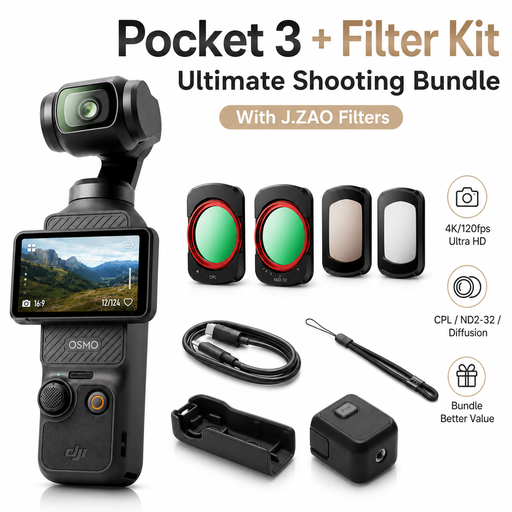
The product name describes a 3-axis handheld gimbal for taking photos on the go; check whether the camera meets your needs for photos from the water.
1-inch CMOS sensor; 4K/120fps video; 2-inch rotatable touchscreen; includes a bundle of UV, CPL and ND filters.
 No image available
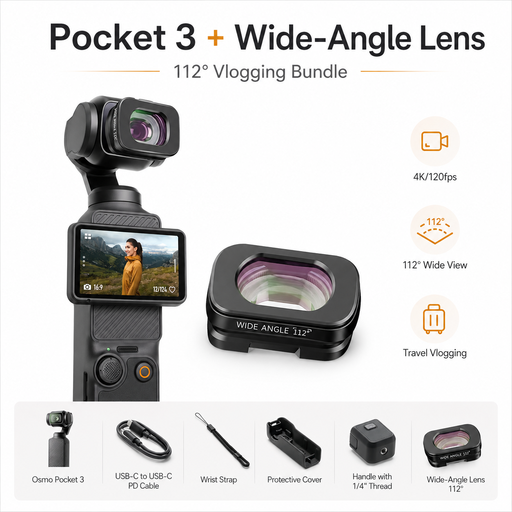
This bundle pairs a handheld gimbal camera with a wide-angle lens; check whether its angle of view suits the landscapes you want to capture.
1-inch CMOS sensor; mechanical 3-axis gimbal; the included lens is specified as having an angle of view of around 112°.
 No image available
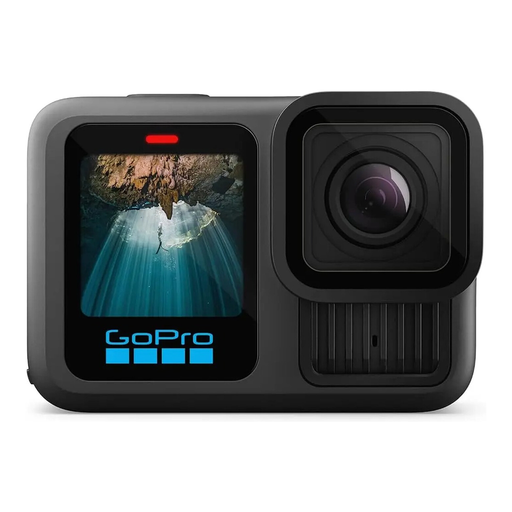
The product description presents this as an action camera for outdoor use; by the water, make sure you follow the stated limits for use.
5.3K60 video and 27 MP photos; according to the product description, waterproof to 10 m without a housing.
 No image available
This setup is an interchangeable-lens option supplied with a zoom lens; the product description warns against exposing the camera to moisture.
APS-C sensor; 16–50 mm power zoom lens; tilting screen.
 No image available
Optical zoom is useful for distant subjects; the product description advises against exposing the camera to liquids or damp conditions.
8x optical zoom lens; the product description specifies 64 MP photos and electronic image stabilisation.
No. Manufacturers’ specifications describe compensation for camera movement; you’ll also need a suitable shutter speed for a moving animal. Only compare advertised stop ratings under the test conditions stated for each one.
Dust and moisture can get into a camera when you change lenses, as Sony Deutschland Support explains. Sony recommends removing loose dust with a suitable brush or blower and any remaining dirt with a soft cloth before storing the camera; always follow the instructions for your specific model.
No. Verbraucherzentrale distinguishes a voluntary manufacturer’s warranty from the statutory warranty, for which the retailer is generally responsible if goods are faulty. New goods are normally covered for two years; check the retailer and warranty terms for each camera and accessory.
No. The Spreewald Biosphere Reserve administration points out that waterways marked with a red-white-red no-entry sign are off limits to punts and paddle boats too. Choose your photo location along a permitted route.
Not without checking first. Under § 22 KunstUrhG, distributing or publicly displaying images of people generally requires the consent of the person shown; any possible legal exceptions and the rights of those affected must be considered on a case-by-case basis.