What to consider when choosing
Compact camera with built-in zoom
A good fit if: you want to photograph landscapes and distant details from a punt without changing lenses.
Consider: a wide zoom range alone doesn’t tell you how well a camera performs in low light.
Mirrorless camera with interchangeable lens
A good fit if: you want to choose a focal length and lens to suit landscapes, distant subjects or changing light.
Consider: lenses add to your travel load, so plan for the complete kit rather than just the camera body.
The guide below is for shoppers choosing a travel camera for the Spreewald waterways; the most important consideration will depend on your main priority.
| Priority |
What to check before buying |
Who will find this particularly important? |
| Changing light |
Compare the sensor, maximum aperture at the zoom setting you’ll use, and stabilisation of the specific camera-and-lens combination. Stabilisation is no substitute for an appropriate shutter speed when your subject is moving. |
If I’m taking photos in shade and brighter spots, I want to be able to tailor the camera to my subjects; around 40% of consumers prioritise taking photos in changing light. |
| Travelling light |
Compare the weight of the camera, lens and accessories you’ll take as a complete kit; on a punt trip, also think about the view you want to capture. |
If I want to switch between the waterway and details on the riverbank without changing lenses, straightforward equipment matters to me; around 30% of consumers prioritise light luggage and being able to switch subjects quickly. |
| Distant subjects |
Check the optical focal length and image format alongside the maximum aperture at the telephoto end. Panasonic lists 24–720 mm equivalent to 35 mm for 4:3 photos and F6.4 at the telephoto end for the TZ99; Sony lists 24–200 mm and F4.5 at the telephoto end for the RX100 VII. |
If I want to photograph distant details on the riverbank, reach is my main consideration; around 20% of consumers prioritise these subjects. |
| Taking photos in wet weather |
Check the protection rating for the specific camera body and attached lens separately, and plan to keep your kit dry while travelling. OM SYSTEM lists IP53 for the OM-5 Mark II camera body; this does not mean it can be submerged. |
If I want to take photos in the rain, I need to know what protection my complete kit offers; around 10% of consumers put protection in wet weather first. |
Camera models at Joybuy
The Joybuy options below include compact, mirrorless and action cameras. For each model, check that the lens, angle of view and features suit the subjects you want to photograph in the Spreewald.
 No image available
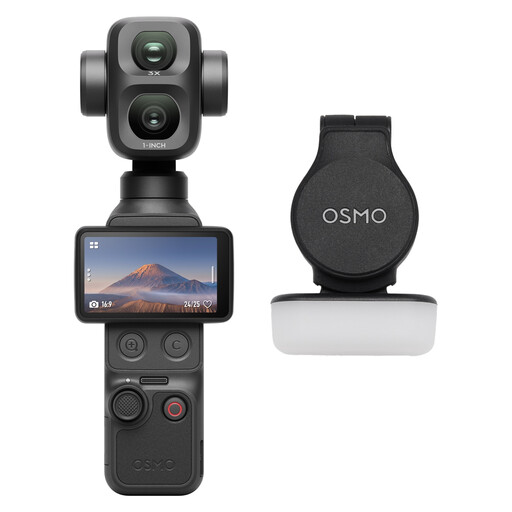
Osmo Pocket 4P Standard Combo, Black
Listed as a Pocket camera in the Standard Combo configuration; before choosing, check that the model and photo features suit the subjects you want to capture.
View at Joybuy
 No image available
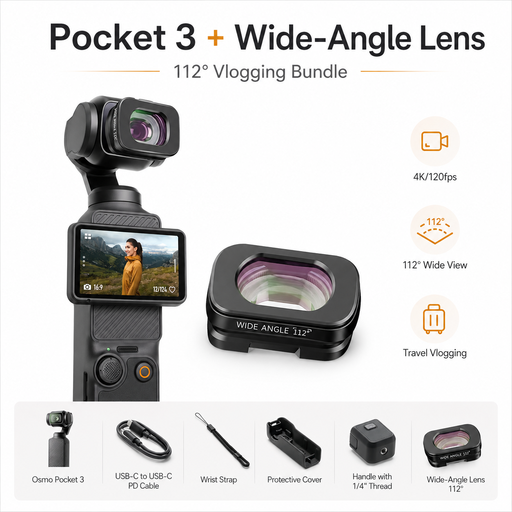
DJI Osmo Pocket 3 Standard Combo with ULANZI F35 wide-angle lens
This bundle may suit wide views and handheld video clips; check that the focal length and photo features work for the subjects you want to capture.
The product description lists a 1-inch CMOS sensor, a 3-axis gimbal and a 112° wide-angle lens. It also lists 4K/120fps; this frame rate is a video feature.
View at Joybuy
 No image available
Sony Alpha 6100 with 16–50 mm power zoom lens
This APS-C mirrorless camera with zoom lens may suit travellers who want to take an interchangeable-lens setup with them.
The product description lists a 24.2 MP CMOS sensor and real-time tracking autofocus. Check whether the lens range is sufficient for distant details on the riverbank.
View at Joybuy
 No image available
Komery W6 digital camera with 12x optical zoom
Optical zoom may be useful for distant subjects; before choosing, also check the maximum aperture and camera features for the situations in which you’ll be taking photos.
The product title lists 12x optical zoom and 64 MP. These specifications alone don’t demonstrate low-light image quality.
View at Joybuy
 No image available
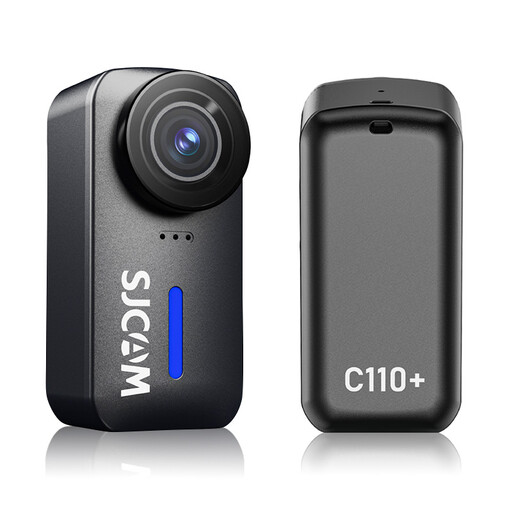
SJCAM C110+ 4K action camera
This action camera may suit very wide views or additional video footage; check that the angle of view works for the subjects you want to capture.
The product title lists a 170° wide-angle lens. The product description lists a waterproof housing for use at depths of up to 30 m; this specification applies to the housing configuration described.
View at Joybuy
Frequently asked questions
Does image stabilisation help with every shot from a punt?
No. Manufacturers distinguish between optical, sensor-based and video stabilisation; Panasonic specifically excludes 4K video from its stated 5-axis HYBRID O.I.S. function. For moving subjects, you should also use an appropriate shutter speed.
What should I prepare before a paddle trip?
The Spreewald Biosphere Reserve recommends specialist waterway maps when planning your trip. Also check your battery and memory card, and plan a safe, dry way to transport your equipment.
Can I publish photos in which other punt passengers are recognisable?
Not in every case. Section 22 of the KunstUrhG regulates consent for distributing or publicly displaying images of people. Section 23 sets out exceptions, including people appearing merely as incidental details alongside a landscape, but these are limited, among other things, by the legitimate interests of the people depicted. The answer depends on the specific image and how you plan to publish it.
Can I travel along any Spreewald waterway to take a photo?
No. The Spreewald Biosphere Reserve administration points out that waterways marked as closed with red-and-white signs may not be used by punts or paddle boats. Choosing a different camera does not change this local rule.
What are my rights regarding returns and faults when buying online?
According to the consumer advice centre, online contracts generally come with a 14-day right to cancel, starting when you receive the goods. Your statutory rights against the seller are separate from any voluntary guarantee; check the seller and guarantee terms for the specific offer.


