If you’re preparing just a few spring onions and want distinct rings, a knife is often a better choice than a chopper: EDEKA describes fine rings as a specific cutting style, while a chopper isn’t designed specifically for this. A compact food chopper is worth considering if you regularly chop ingredients; a food processor with a slicing disc is more suitable if you also often slice or grate other vegetables. Compare the recommended batch size and cleaning instructions. For lunch, you should also follow the BfR’s food hygiene advice.
Which option is right for you?
Lunch prep for small portions
If you only slice a few spring onions on weekdays, it’s worth comparing your options with using a knife: the Hamburg Consumer Advice Centre recommends considering how often you’ll actually use a kitchen appliance and how versatile it is. The BfR recommends washing vegetables thoroughly under running water.
Fans of distinct spring onion rings
If the shape of your spring onions matters to you, check whether a knife or suitable slicing disc can give you the cut you want. EDEKA describes cutting fine rings as a preparation step; Kenwood lists slicing and grating discs for its MultiPro Go FDP23.140GY.
Preparing several ingredients
If you regularly want to slice or grate other vegetables as well as spring onions, using an additional appliance may better suit your everyday routine. Kenwood lists slicing and grating discs for the FDP23.140GY; the Hamburg Consumer Advice Centre recommends considering versatility alongside how often you’ll use it.
What should you look for when buying?
First decide whether you want rings or chopped pieces. Then compare the batch size, cleaning and other uses with your lunch routine.
| What matters to you |
What to check before buying |
Who is this most relevant to? |
| Cut |
Check whether a knife, chopper or slicing disc is suitable for the shape you want. A stated disc thickness doesn’t guarantee a particular result with spring onions. |
If you want distinct rings rather than chopped pieces, the cutting style is what matters most to you. Around 30% of consumers prioritise this. |
| Small portions |
Compare the amount you usually prepare with the batch sizes and guidance in the instructions for the specific model. |
If you only prepare a few spring onions for lunch, you’ll want to know whether the appliance is suitable for your portion. Around 30% of consumers prioritise small batch sizes. |
| Cleaning |
Check the care instructions for the bowl, blade, lid and motor unit separately. |
If you use the appliance regularly, cleaning should fit into your preparation routine. Around 20% of consumers prioritise an easy-to-manage cleaning process. |
| Other ingredients |
Check which slicing and grating tasks you actually do regularly, and which accessories are designed for them. |
If you also prepare other vegetables, the value of extra functions matters more to you than a single lunch-time task. Around 10% of consumers prioritise versatility. |
| Lunch hygiene |
Wash vegetables thoroughly and plan how to store your prepared lunch, whatever appliance you choose. |
If you prepare ingredients to eat later, how you handle the whole lunch matters to you. Around 10% of consumers prioritise hygiene during preparation and transport. |
The percentages indicate how these considerations rank for this buying decision; they aren’t measured market shares. The BfR recommends storing perishable foods at 2 °C to no more than 7 °C and keeping them chilled when you’re out and about.
Common buying mistakes
-
Choosing a chopper when you want rings
Chopping and slicing with a disc are different ways of preparing food. There’s no evidence that any of the models described here produce a particular result with spring onions.
Decide on the cut you want first, then check the tool and feed chute. For a small portion, you can also slice the onions by hand.
-
Assuming bowl capacity means it’s suitable for a single spring onion
A stated capacity doesn’t tell you the minimum amount the appliance’s blade can process reliably.
Compare your usual portion with the quantities and instructions in the manual for the model you’re considering.
-
Assuming ‘dishwasher-safe’ applies to every part
Tefal gives different care instructions for the bowl and rotor, on the one hand, and the lid, on the other, for the Tefal K13204.
Check the instructions for every part. The bowl and rotor of the Tefal K13204 can be washed by hand or in the dishwasher; clean the lid with a sponge and don’t immerse it.
-
Confusing clean slicing with safe lunch storage
A food chopper doesn’t wash ingredients or keep prepared food chilled.
Wash vegetables thoroughly under running water. The BfR recommends storing perishable foods at 2 °C to no more than 7 °C and keeping them chilled when you’re out and about.
Brands to consider
The information below relates to the specific product ranges and models mentioned, not to a general assessment of the brands.
WMF
The 0.3 l KÜCHENminis chopper is a compact electric option for chopped ingredients.
- WMF lists a removable double blade and removable, dishwasher-safe parts.
- The stated capacity doesn’t confirm that it’s suitable for preparing individual spring onions or guarantee a particular cut.
Tefal
The manual 5 Second Chopper K13204 is available with a pull cord and a 900 ml bowl.
- According to Tefal, the bowl and rotor can be washed by hand or in the dishwasher.
- The care instructions say not to immerse the lid. The manual operation and chopping blade don’t guarantee precise rings.
Kenwood
The MultiPro Go FDP23.140GY is designed for buyers who want to slice and grate as well as chop.
- Kenwood lists a 1.3 l bowl, a usable dry capacity of 0.75 l, and 2 mm and 4 mm slicing and grating discs.
- Extra attachments need storage space, and the disc specifications don’t guarantee a particular result with spring onions.
Rommelsbacher
The MZ 500 is a larger electric chopper for a wider range of chopping tasks.
- Rommelsbacher lists a 1.5 l glass bowl and removable, dishwasher-safe parts.
- The larger bowl capacity doesn’t mean it’s particularly suitable for a small portion of spring onions.
Bosch
The MMR08A1 is an electric universal chopper with a pulse switch.
- Bosch lists 400 W, a plastic bowl and some dishwasher-safe parts.
- The power rating alone doesn’t tell you what the cut will be like.
Joybuy products
This selection includes electric and manual appliances for slicing or chopping onions and other vegetables.
 No image available
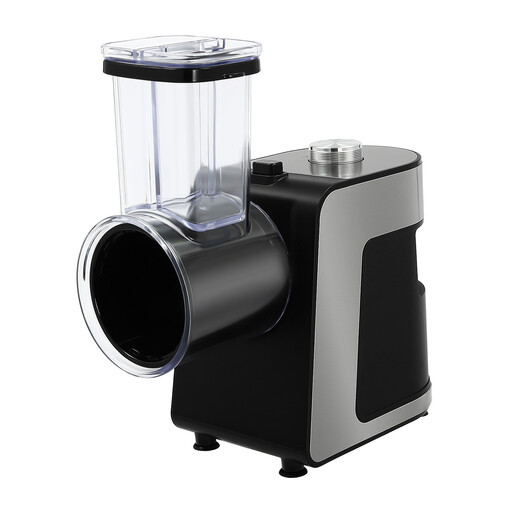
Multi-function vegetable slicer with slicing and chopping blades
For preparing vegetables in different ways; the product name lists coarse, fine, wavy, chopped and slicing blades.
The product description recommends using it for short intervals to prevent overheating.
View at Joybuy
 No image available
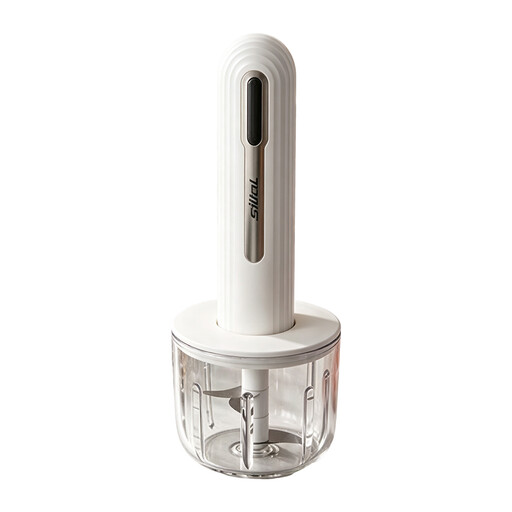
Cordless mini chopper for fruit and vegetables, white
For small portions of vegetables when you’d rather chop them than slice them into rings.
According to the product information, the removable parts should be washed by hand; the blades are sharp.
View at Joybuy
 No image available
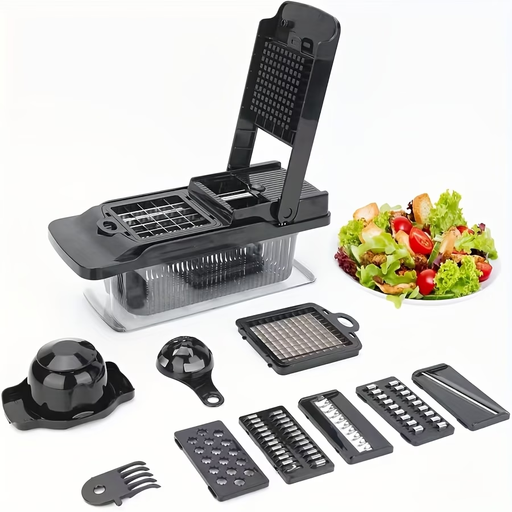
Manual vegetable slicer with 7 stainless steel blades
For preparing onions by hand; the product name lists slicing, grating and dicing functions.
The product name states that the set comes with seven stainless steel blades.
View at Joybuy
 No image available
Bear QSJ-D03Q1 chopper with two glass bowls
For preparing different quantities; the product name lists 0.6 l and 2 l glass bowls and 300 W.
According to the product information, the bowls and lids are not heat-resistant or microwave-safe.
View at Joybuy
 No image available
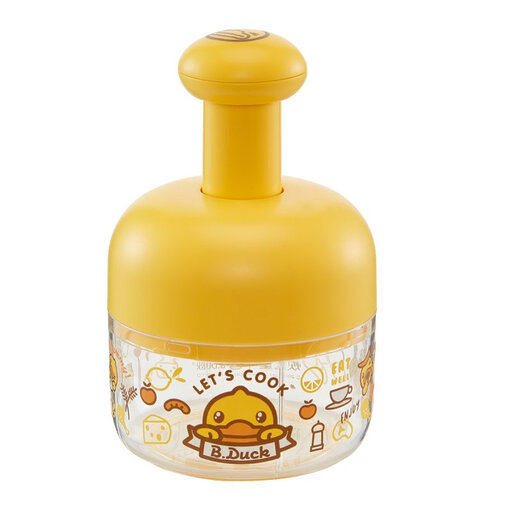
COOKER KING x B.DUCK manual chopper, 220 ml
For chopping small quantities by hand; the container is listed as 220 ml.
View at Joybuy
Frequently asked questions
Do I need a food processor to make distinct spring onion rings?
Not necessarily. If you only want to slice a small amount, you can use a knife. If you’re using a machine, check the slicing disc and feed chute on the specific model; a stated disc thickness doesn’t guarantee a particular result with spring onions.
Can I put the lid of a manual pull-cord chopper in the dishwasher?
It depends on the model. The bowl and rotor of the Tefal K13204 can be washed by hand or in the dishwasher; clean the lid with a sponge and don’t immerse it. For other appliances, follow the care instructions for the specific model.
What should I consider when it comes to cleaning and storage?
Before buying, check the care instructions for every part and think about how often you’ll actually use the accessories. The Hamburg Consumer Advice Centre recommends considering how often you’ll actually use kitchen appliances and how versatile they are.
Does my prepared lunch need to be kept chilled?
That depends on the ingredients. The BfR recommends storing perishable foods at 2 °C to no more than 7 °C and keeping them chilled when you’re out and about. Fruit and vegetables should be washed thoroughly under running water.
Which EU requirements are relevant to food preparation appliances?
EU rules on food contact materials also cover food processing equipment. This doesn’t tell you whether a specific model complies. CE marking is only required for products covered by harmonised EU rules that explicitly require it; it isn’t a general proof of compliance for every manual kitchen utensil.


