Which kitchen tool is right for you?

For cooks who want to serve spring onion rings

If you want spring onions to be served as clearly defined rings or strips, the cut you want is key. The Federal Centre for Nutrition distinguishes between finely chopped pieces, strips and coarse rings, depending on the recipe.

For households that regularly prepare ingredients

If you often chop spring onions alongside other ingredients, compare different appliance types for ease of use, bowl capacity and storage space. Manufacturers’ specifications for bowl size and functions vary by model.

For anyone who wants compact, fuss-free cooking

For smaller quantities, weigh up hand preparation, counter space and cleaning. Kenwood describes the Easy Chop, with its 500 ml bowl, as a compact option; Tefal says the K13204 uses a manual pull-cord mechanism.

What should you look for when buying?

Kitchen knife

A good choice if: you want clearly defined rings or strips for a salad or garnish.

The trade-off: You do the cutting yourself and have direct control over the shape.

Manual chopper

A good choice if: you want to chop spring onions without using electricity.

The trade-off: The pull-cord requires manual effort; check the actual fill capacity of the specific model.

Electric food chopper

A good choice if: you regularly chop spring onions and other ingredients and prefer an electric appliance.

The trade-off: Bowl capacity and operation vary by model, and neither alone tells you how much you can process in practice.

Compact food processor

A good choice if: you want to do more than chop, such as slicing or grating ingredients regularly.

The trade-off: Extra attachments take up space and need to be factored into cleaning.

Buying priority What to check Who is it important to?
Cut Decide whether you want chopped pieces or rings and strips; if you’re considering attachments, check that the specific model is confirmed to produce the cut you want. If I want to serve spring onions as clearly defined rings or strips, the shape matters more than chopping speed. Around 36% of consumers are likely to make the cut their main buying priority.
Batch size Compare the stated capacity with the permitted fill level, and take any operating limits into account. For a family meal, I want to plan the preparation around the quantity I need and avoid unnecessary batches. Around 29% of consumers are likely to prioritise a suitable batch size above all.
Cleaning Check the care instructions for every part, especially the lid, blades and removable components. After cooking, I want to clean the bowl and blades without unnecessary extra effort. Around 21% of consumers are likely to see cleaning effort as their main concern.
Space and power Compare the dimensions and storage requirements, as well as mains power or manual operation. If my kitchen has limited counter space or I want to work without electricity, the appliance needs to suit my space and preferred way of operating it. Around 14% of consumers are likely to prioritise these specific points.

Avoid common buying mistakes

  • Buying a chopper to make clearly defined spring onion rings

    The Federal Centre for Nutrition distinguishes between chopped pieces and rings or strips. The chopper blades researched do not guarantee a particular ring shape.

    Decide which cut your recipe calls for before you buy. If you want clearly defined rings, slice the spring onions with a knife or check that an attachment for the specific model can produce the result you want.

    If you need to use a knife anyway to make rings, you could end up with an extra step as well as an additional appliance.

  • Assuming the stated capacity equals the usable amount

    A bowl’s stated capacity does not tell you how many spring onions you can process in one go. The appliance’s operating time may also be limited.

    Check the fill markings and instructions for the specific model, including guidance on ingredients and run times.

    If the quantity you need won’t fit in one go, you may have to process it in additional batches and do more cleaning.

  • Assuming every part is ‘dishwasher-safe’

    Care instructions can vary between the bowl, blade and lid of the same appliance. For the K13204, Tefal recommends wiping the lid with a damp cloth.

    Check the instructions for each part separately and follow the guidance before cleaning for the first time.

    A lid that needs to be wiped by hand means extra cleaning compared with parts that are dishwasher-safe.

Notable brands and appliance types

Rommelsbacher

According to Rommelsbacher, the MZ 500 is an electric food chopper with a 1.5 l glass bowl.

  • The manufacturer says it has removable dishwasher-safe parts and a safety system.
  • Rommelsbacher Support recommends short pulses of 2–3 seconds or a maximum of 20 seconds of continuous operation. This does not guarantee a particular cut for spring onions.

Kenwood

According to Kenwood, the Easy Chop CHP61.100WH is a compact electric chopper with a 500 ml bowl.

  • Kenwood lists two speeds and a four-blade system.
  • The bowl capacity does not specify how many spring onions you can add or guarantee a particular cut.

Tefal

The manual 5-Second Chopper K13204 is a model that works without electricity and has a 900 ml bowl.

  • Tefal says that pulling the cord more times chops the ingredients more finely.
  • The pull-cord requires manual effort. Tefal says the bowl and blade are dishwasher-safe, but the lid should be wiped with a damp cloth.

Bosch

The MultiTalent 3 MCM3501M is a compact food processor for households looking for functions beyond chopping.

  • Bosch lists a 2.3 l bowl, two speeds, and universal and slicing blades among the accessories.
  • Extra attachments need to be considered when it comes to cleaning and storage; they do not guarantee a particular ring shape.

WMF

WMF offers compact electric and manual choppers; features vary from one model to another.

  • WMF’s product overview includes, among other options, a 0.3 l KÜCHENminis chopper and a 650 ml manual multi-chopper.
  • Specifications for individual appliances cannot be applied to the entire product range without checking the model.

Electric choppers at Joybuy

This selection includes electric choppers for chopped ingredients. For clearly defined spring onion rings, a knife is the better option. If you’re buying an appliance for the EU market, also check the information about the parts intended to come into contact with food; these materials are subject to Regulation (EC) No 1935/2004 when placed on the market.
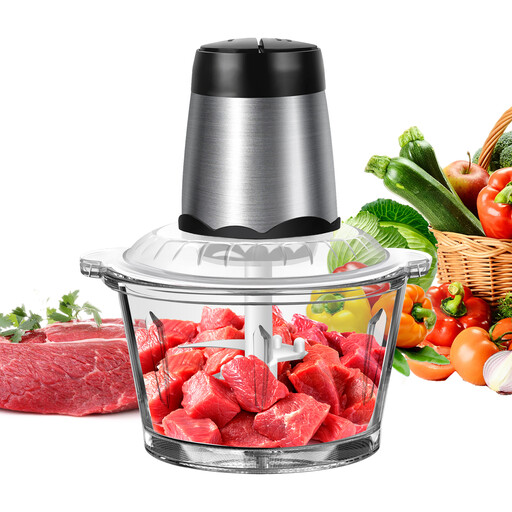
Electric chopper with glass bowl and stainless steel blades

Electric chopper with 2 l glass bowl

Worth considering if you want to chop vegetables electrically and control the ingredients using two speeds or a pulse function.

The product description lists a 2 l glass bowl, four stainless steel blades and removable dishwasher-safe parts. The stated capacity does not guarantee a particular batch size for spring onions.

View at Joybuy

IAGREEA MS-25JM08 chopper with three stackable bowls

IAGREEA MS-25JM08 with three bowls

The product description lists vegetables among its uses and includes a pulse function for chopping ingredients gradually.

The model is specified as 350 W with two speeds and three stackable stainless steel bowls measuring 2.5 l, 2.2 l and 1.8 l. The stated capacity does not indicate a specific batch size for spring onions. According to the description, the pulse cycle is limited to a maximum of 30 seconds per go.

View at Joybuy

Bear QSJ-D03Q1 with two glass bowls

Bear QSJ-D03Q1 with two glass bowls

The product description lists onions as a soft ingredient and specifies a setting for them.

The model is specified as 300 W with two speeds and glass bowls measuring 2 l and 0.6 l. The description notes that the bowls and lids are not heat-resistant or microwave-safe.

View at Joybuy

Bear QSJ-D03W5 with 2 l glass bowl and stainless steel blades

Bear QSJ-D03W5, 2 l

The description recommends the low-speed setting for onions and says the appliance is operated by pressing a button.

The model is specified as 300 W with two speeds, a 2 l glass bowl and four stainless steel blades. According to the description, it can run continuously for a maximum of 40 seconds, followed by a break of at least two minutes; after three cycles, it needs time to cool down. The blades are sharp and the motor unit must not be immersed in water.

View at Joybuy
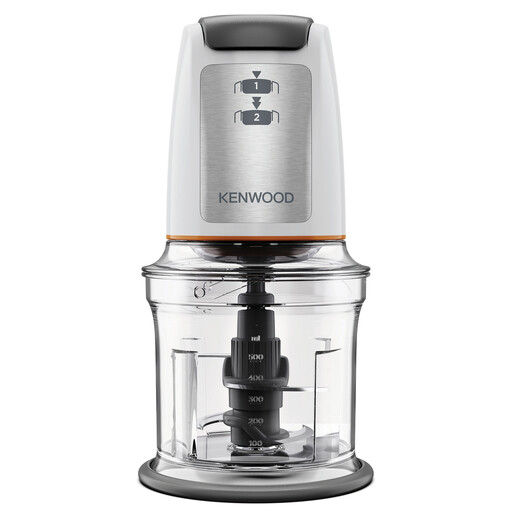
Kenwood Easy Chop CHP61.100WH electric mini chopper

Kenwood Easy Chop CHP61.100WH

This compact model could be a good fit if you want to prepare smaller quantities with an electric appliance offering two speeds.

Kenwood lists a 0.5 l bowl and 500 W. The stated capacity alone does not specify a particular portion size for spring onions.

View at Joybuy

Frequently asked questions

How should I prepare spring onions before cutting them?

The Federal Centre for Nutrition recommends washing spring onions thoroughly under cold water and shaking them dry. Trim the root end and the tips of the leaves; you can use both the white and green parts, depending on the recipe.

How can I stop chopped spring onions from becoming too fine?

Check the result after each short burst. Tefal says that pulling the cord more times with the K13204 chops ingredients more finely; Rommelsbacher recommends 2–3-second pulses for the MZ 500. These are manufacturer guidelines for specific models, not a guarantee of a particular result with spring onions.

Can the lid, blades and motor unit go in the dishwasher?

It depends on the model and the individual part. For the K13204, Tefal says the bowl and blade are dishwasher-safe, but recommends wiping the lid with a damp cloth. Rommelsbacher describes the removable parts of the MZ 500 as dishwasher-safe. Check the instructions for the model you buy before cleaning it, and don’t treat the motor unit as a removable dishwasher part.

What are the rules in Germany for faults and online purchases?

Your statutory rights against the seller are separate from any voluntary guarantee. For goods bought online, you generally have a 14-day right to cancel; the conditions of the specific purchase still apply. The Verbraucherzentrale explains the difference. You can also ask the seller or manufacturer whether replacement parts, such as bowls or blades, are available.

What regulations apply to a chopper’s food-contact parts?

Parts intended to come into contact with food are subject to Regulation (EC) No 1935/2004 when placed on the EU market. The European Commission sets out these requirements for food contact materials. Check the product documentation to confirm that the parts in a specific listing meet the relevant requirements.