
Lieferung heute & morgen

Qualitätsgarantie

Willkommens-Angebote freischalten: KOSTENLOSE Lieferung | Bis zu 80 % RABATT | Kostenlose 30-Tage-JoyPlus-Testphase
App herunterladen
A springform cake tin makes it easier to bake cheesecakes, gateaux, sponge cakes and desserts, as the sides can be released from the base after baking. However, cake tins can vary significantly in size, material, coating and leak resistance. An appealing product description is therefore no substitute for checking the technical specifications.
A non-stick baking tin can make it easier to release your cake. However, the coating will only remain intact if you avoid using sharp knives, metal spatulas and abrasive scourers. In addition, ‘dishwasher-safe’ often applies only to the base, while the springform ring should be washed by hand.
Therefore, check whether the manufacturer approves cleaning the complete product or only individual components. If the coating is damaged or flaking, the tin should no longer be used.
A fastening mechanism holds the ring together, but it does not automatically make a tin completely leakproof. Liquid cheesecake fillings or very runny batters may escape at the join. A leakproof springform cake tin should be explicitly described as such and have a precisely fitting base and a sturdy fastening mechanism.
For particularly runny recipes, baking paper or an additional outer oven dish may also be useful. This protects your oven from spills, but does not replace a tin that closes properly.
A 20 cm baking tin requires a different baking time with the same quantity of batter than a 28 cm baking tin or 30 cm baking tin. In a larger tin, the batter is usually shallower, while in a smaller tin it will be deeper. Comparing only the diameter can therefore mean overlooking the capacity and height of the sides.
Before buying, check whether the tin is suitable for the quantity specified in your recipe. 20 or 24 cm tins are often suitable for smaller households, while 28 or 30 cm tins offer more space for larger cakes and family-sized portions.
Steel and carbon steel are common materials for springform cake tins. A sturdy construction can help prevent the sides from warping with frequent use. The carbon steel model from Le Creuset is described as having a heavy-duty construction designed to resist bending. According to the product specifications, the tin is suitable for oven use up to 240 °C.
The KAISER and WMF La Forme Plus models are made from steel. The listed models are heat-resistant up to 250 °C. This temperature is a technical upper limit and should not be exceeded. The relevant information about hob types is also important: several models are not suitable for induction hobs or open flames.
A springform cake tin with a removable base consists of a detachable ring and a separate base plate. The fastening mechanism should close securely without the ring visibly protruding. A larger handle or a SafeClick release mechanism can make the tin easier to use.
Quick release is particularly useful for delicate cake bases and cheesecakes. When choosing a cake tin with a release mechanism, you should still check that the fastening mechanism locks securely and that the base separates cleanly from the ring.
The classic round springform cake tin is versatile and suitable for gateaux, fruit cakes and cheesecakes. A square springform cake tin measuring 24 × 24 cm is suitable for brownies, traybakes and square layered cakes, among other things. A heart-shaped springform cake tin is designed for heart-shaped bakes and can be a suitable alternative for special occasions.
Alongside the diameter, height and capacity also matter:
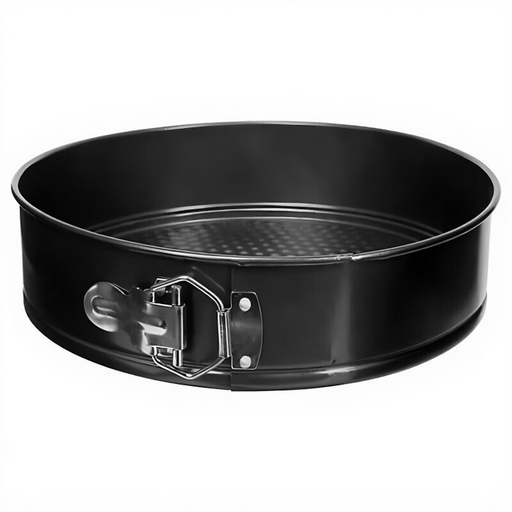
Why this product suits this profile: This round 26 cm cake tin offers a popular intermediate size for everyday cakes and, with sides measuring 6.8 cm high, is suitable for a range of recipes.
The described spring mechanism loosens the ring to help release the cake. The steel construction supports even heat distribution.
26 cm diameter, 6.8 cm height and a weight of 0.378 kg.

Why this product suits this profile: This model combines a 28 cm diameter with a SafeClick fastening mechanism, a design described as leakproof and an enamelled base.
The fastening mechanism is explicitly specified as a SafeClick system. Only the base is dishwasher-safe; the ring should be washed by hand.
3.4 l capacity, heat-resistant up to 250 °C and a cut-resistant base.
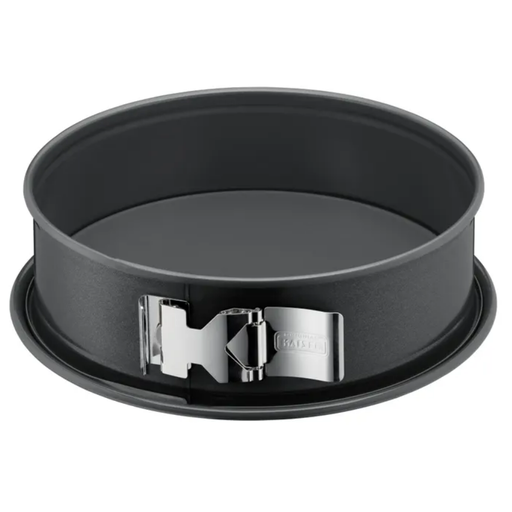
Why this product suits this profile: This 30 cm tin is designed for people who regularly bake larger cakes, gateaux or multiple portions.
The product specifications mention the SafeClick fastening mechanism, a non-stick coating and dishwasher suitability for the base only.
4 l capacity, steel construction and heat resistance up to 250 °C.
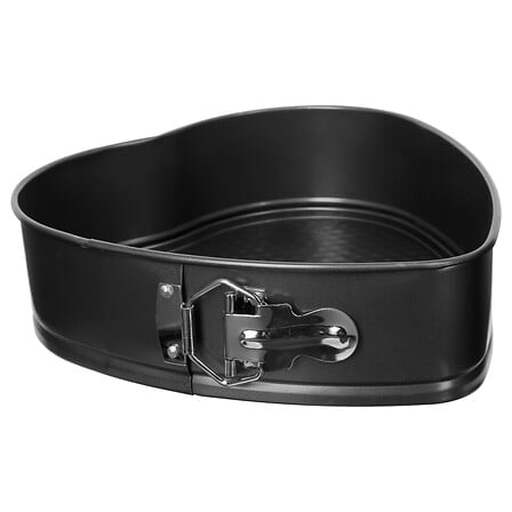
Why this product suits this profile: This heart-shaped springform cake tin is designed for shaped cakes for special occasions and uses a removable base to release the bake.
The tin is assembled and greased before use. To protect the coating, hand-washing with warm water and mild detergent is recommended.
Heart shape, 24 cm diameter, 6.8 cm height and steel as the stated material.
We have put together a complete, regularly updated list of products that fully meet these strict selection criteria and the safety regulations applicable in the EU.
A 24 cm baking tin is considered versatile for many standard recipes. A 20 cm tin is suitable for smaller quantities, while 28 or 30 cm tins can hold more batter. For existing recipes, check that the specified tin size matches the model you want to use.
This type of tin allows the base to be separated from the side ring. Once the ring has been opened, the cake can be removed more easily. Particularly delicate cake bases benefit from this design, provided that the fastening mechanism is closed correctly and the base has been fitted properly.
There is no standard service life that applies in every case. It depends on how often the tin is used, how it is cleaned and how the coating is handled. Hand-washing, soft sponges and suitable kitchen utensils can help protect the surface. If the cake tin is scratched, the coating is coming away or the tin has become misshapen, it should be replaced.