
Lieferung heute & morgen

Qualitätsgarantie

Willkommens-Angebote freischalten: KOSTENLOSE Lieferung | Bis zu 80 % RABATT | Kostenlose 30-Tage-JoyPlus-Testphase
App herunterladen
A growing shoe collection can quickly lead to clutter in your hallway, dressing room, or wardrobe. Shoes gather dust, lose their shape, or are impossible to find at a moment's notice. A smart shoe storage solution solves this problem by creating order, extending the lifespan of your footwear, and optimising valuable space.
This article serves as a practical guide. It explains what to look for when choosing stackable shoe boxes and presents specific product options suited for various needs and shoe collections. The goal is to provide you with the information you need to make a confident decision for a tidy and well-organised home.
Choosing the right system depends on several factors. The following three criteria will help you find a functional and durable solution.
Most plastic shoe boxes consist of a polypropylene (PP) body and a frame made of acrylonitrile butadiene styrene (ABS) or polystyrene (PS).
A system with interlocking elements provides extra stability, turning individual boxes into a sturdy shoe rack made of boxes.
The internal dimensions of the box are the most important criterion. Before buying, measure the length, width, and height of your largest pair of shoes. Pay special attention to:
While a transparent shoe box helps with quick identification, only the right size ensures that shoes can be stored without pressure marks or deformation.
A good shoe organiser should not only store but also provide easy access. Models with a front-facing flap have a clear advantage here. They allow you to retrieve any pair of shoes without having to dismantle the entire stack.
Also, look for integrated ventilation holes. These prevent the build-up of moisture and unpleasant odours, which is especially important for the long-term storage of leather or athletic shoes. This kind of sneaker box actively contributes to preserving your shoes.
Based on the criteria mentioned, we have curated a selection of shoe box sets that stand out for their functionality and distinct features.
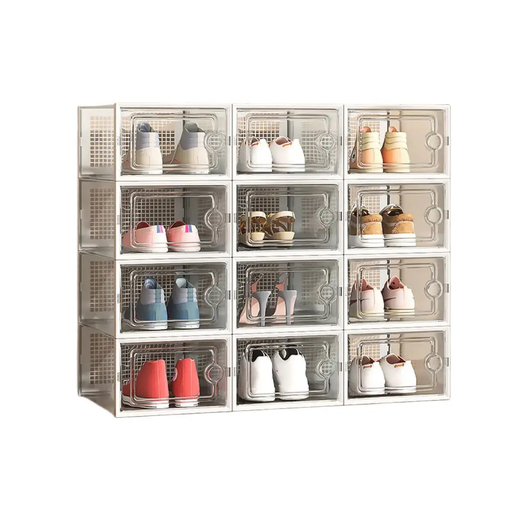
Why it stands out: This set offers a straightforward and cost-effective base solution for organising a small to medium-sized shoe collection. The fully transparent design allows for maximum visibility.
Pros:
Who it's for: Ideal for individuals looking for a basic and affordable solution for the dust-free storage of flat shoes, sandals, and trainers up to around size EU 44.
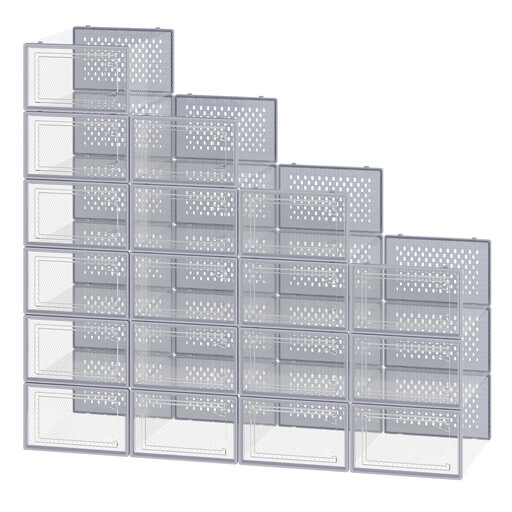
Why it stands out: This 18-piece set combines a high quantity with thoughtful details like a front flap for easy access and a sturdy frame for secure stacking.
Pros:
Who it's for: Suitable for shoe enthusiasts with a growing collection who value quick access and a stable, modular storage solution.
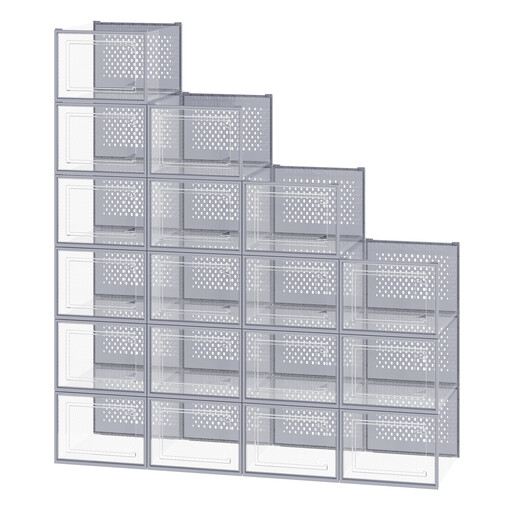
Why it stands out: This set is specifically designed for larger footwear. The generous internal dimensions provide ample space for high-top trainers, ankle boots, and oversized shoes.
Pros:
Who it's for: The optimal choice for sneaker collectors with many high-tops or individuals with shoe sizes above EU 45 who need a spacious yet tidy storage solution.
If the models featured don't exactly meet your needs, or if you're looking for different materials and sizes, you can find a wider selection of storage solutions in our category.
? Discover more options for a polypropylene box with a lid
The maximum stacking height depends on the material's stability, the frame design, and the weight of the shoes. Boxes with a reinforced ABS plastic frame and interlocking connections offer the highest stability. Always follow the manufacturer's instructions. As a general rule, store heavier shoes in the bottom boxes.
Yes, they offer effective protection against dust, dirt, and physical damage. However, if stored in direct sunlight, the shoe materials may fade over long periods due to UV radiation. A location away from direct sunlight is therefore recommended. The integrated ventilation is also crucial to prevent the build-up of moisture and mould.
Standard shoe boxes are often not tall or long enough for high-top trainers, boots, or shoes from size 45 upwards. It is essential to check the internal dimensions of the box (length x width x height) and compare them with your shoes' measurements before purchasing. Models explicitly labelled as 'large' or 'for sneakers', like the third option presented here, typically offer sufficient space.