A mechanical pencil is only as reliable as its lead. When the feed mechanism comes up empty, a precise drawing or an important note is abruptly interrupted. Finding the right refill leads, especially Staedtler 0.7mm leads, should be straightforward. This article serves as a practical guide to help you select the right 0.7mm mechanical pencil leads for your specific application—be it for technical drawing, creative sketching, or everyday use in the office and at university.
What to Look for When Choosing 0.7mm Fine Leads
The choice of the right lead significantly impacts the writing and drawing experience. Three criteria are particularly relevant.
1. The Right Hardness Grade for Your Purpose
Graphite leads are offered in various hardness grades, which describe the ratio of graphite to clay in the material. The choice depends directly on your application.
- Hard leads (e.g., 2H, H): These leads contain more clay, release less graphite, and thus produce lighter, finer lines. They are ideal for precise technical drawings and preliminary sketches as they smudge less and are easy to erase. Look specifically for 2H 0.7mm leads when precision is a priority.
- Medium leads (HB): The HB hardness grade is the standard for everyday writing. It offers a perfect balance between durability and the blackness of the line. HB 0.7mm leads are a universal choice for school, university, and the office.
- Soft leads (e.g., 2B): With a higher graphite content, these leads produce a rich, dark line. They are excellently suited for expressive sketches, shading, and artistic work. 2B 0.7mm leads are particularly popular among artists and creatives.
2. Material Quality and Break Resistance
A common problem with fine leads is breaking under pressure. High-quality 0.7mm graphite leads are characterised by high elasticity. Products like the Staedtler Mars Micro Carbon series use a special polymer formula that makes them exceptionally break-resistant. This feature ensures uninterrupted work, even with higher writing pressure.
3. Compatibility and Refilling
Refill leads for 0.7mm mechanical pencils are standardised. This means that any 0.7mm lead will fit into any mechanical pencil designed for this line width. However, the packaging still plays a role in handling. Containers with a sliding mechanism or a narrow opening make it easier to dispense single leads and refill the pencil cleanly without leads getting lost or breaking.
Our Selection of Staedtler Mars Micro Carbon 0.7mm Leads
Based on the criteria mentioned, we have compiled a selection of Staedtler leads that cover various applications.
STAEDTLER Mars Micro Carbon – 0.7mm, 2H Grade
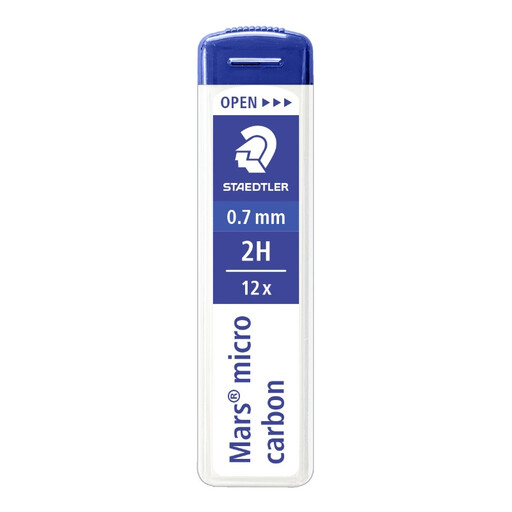
- Why it stands out: Thanks to its elastic formula, this lead is designed for high break resistance. The 2H hardness grade delivers consistently clear and precise lines required for technical documentation.
- Advantages:
- High break resistance for reliable use.
- Smooth, gliding performance on paper and drawing board.
- ISO colour-coding for quick identification of the hardness grade.
- Best for: Architects, engineers, and technical illustrators who need fine, clean lines for plans and construction drawings.
STAEDTLER Mars Micro Carbon – 0.7mm, HB Grade
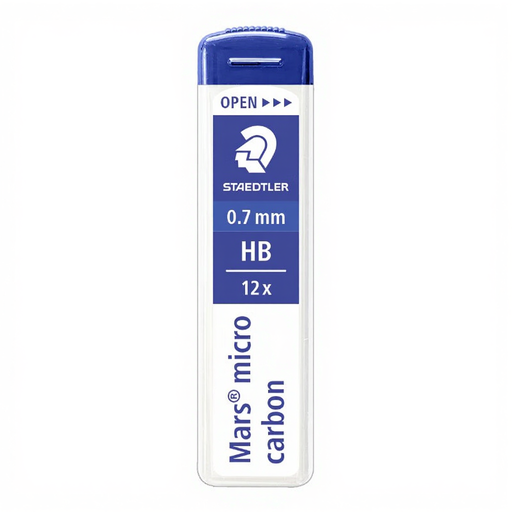
- Why it stands out: As an all-purpose option, the HB lead combines durability with a legible, deep black line. Its high resistance and flexibility make it a dependable choice for daily use.
- Advantages:
- Balanced hardness grade for both writing and drawing.
- Consistent and smooth line delivery.
- High resistance to breakage under variable pressure.
- Best for: School pupils, university students, and office professionals who need a reliable lead for notes, transcriptions, and general writing tasks.
STAEDTLER Mars Micro Carbon – 0.7mm, H Grade
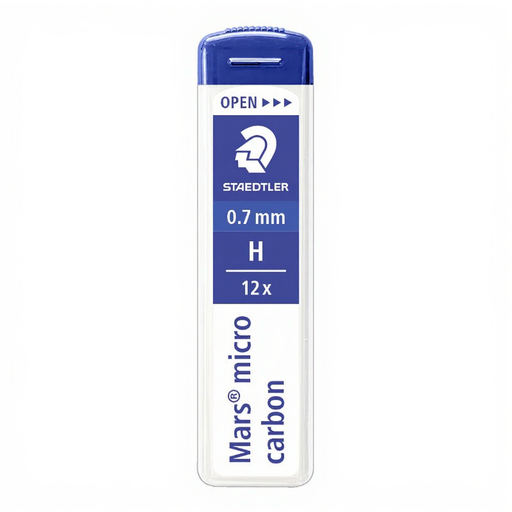
- Why it stands out: This lead offers high precision while being effortlessly erasable. According to the manufacturer, the formula consists of over 90% natural raw materials and is free from PVC and plasticisers.
- Advantages:
- Very smooth, strong, and precise line.
- High break resistance and elasticity.
- Compatible with all standard 0.7mm mechanical pencils.
- Best for: Users who prefer a slightly harder and lighter line than HB, for example, for detailed notes or initial drafts.
STAEDTLER Mars Micro Carbon – 0.7mm, 2B Grade
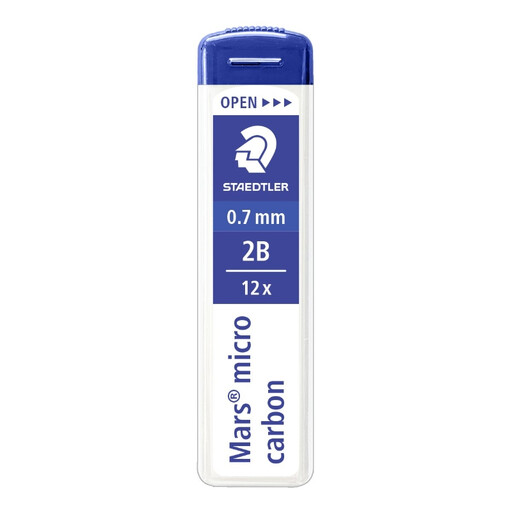
- Why it stands out: The 2B lead is designed for a rich, dark colour laydown and a velvety-smooth writing feel. The high polymer content provides exceptional flexibility and minimises breakage, even with expressive lines.
- Advantages:
- Soft hardness grade for a deep, dark line.
- Low friction for fatigue-free drawing.
- Easily erasable with minimal residue.
- Best for: Artists, designers, and anyone who enjoys sketching or shading and prefers an expressive, soft line.
Looking for More Options?
If you need a different hardness grade, another line width, or leads from a different brand, you will find a broader selection in our comprehensive category.
? Explore our entire range of leads here
Frequently Asked Questions (FAQ)
Which hardness grade is best for everyday writing? For everyday writing tasks at school, university, or in the office, the HB grade is the most common choice. It offers a good balance between a dark, easily readable script and sufficient hardness to reduce smudging and make the lead durable.
Are Staedtler Mars Micro Carbon leads compatible with all 0.7mm mechanical pencils? Yes, Staedtler's 0.7 fine leads are designed for all mechanical pencils that require a 0.7mm lead diameter. Compatibility is universal across all brands.
What does "high break resistance" mean for pencil leads? The term "high break resistance" or "break-resistant leads" refers to the material composition. A high proportion of polymers makes the graphite lead more elastic and flexible. As a result, it is less likely to break under normal writing or drawing pressure compared to conventional leads without this feature.


