
Lieferung heute & morgen

Qualitätsgarantie

Willkommens-Angebote freischalten: KOSTENLOSE Lieferung | Bis zu 80 % RABATT | Kostenlose 30-Tage-JoyPlus-Testphase
App herunterladen
If you’re looking for a STAEDTLER Karat Aquarell Watercolour Pencil 6-Pack, you’re probably hoping to buy a specific colour as a refill, or to put together a small palette for illustrations, sketches and watercolours. Product descriptions often sound very similar: soft lead, intense colours and water-solubility are all mentioned. But for a sensible choice, what really matters are concrete features like the type of lead, the origin of the wood, the colour code and the painting technique you plan to use.
Watercolour pencils – also called watercolour crayons – are used dry like ordinary coloured pencils and then activated with water and a brush. However, the result depends heavily on the paper, the amount of water and how the colour is applied. On thin copier paper, the surface can buckle or become rough. For controlled colour gradients, watercolour paper with a higher paper weight is therefore a better choice.
A soft lead is usually easy to apply and blend. At the same time, it needs more care when sharpening than a hard drawing lead. Too much pressure, a blunt sharpener or dropping the pencil on the floor can damage the lead. A suitable metal sharpener – for example, one with the right opening for artist coloured pencils – reduces the risk when re-sharpening.
Names like Light Orange, Sepia or French Green make orientation easier, but they can look different depending on your screen. If you want to add a single shade, you should therefore also check the model or colour number. For the STAEDTLER Karat Aquarell 125, the colour codes include 125-42 for Light Orange, 125-77 for Sepia and 125-54 for French Green.
The Karat Aquarell range has a water-soluble coloured pencil lead. This makes several techniques possible:
According to the product information, the lead is designed to be soft and intended for use with water and a brush. For precise lines, a well-sharpened lead is recommended; for larger areas, the pencil can be used on its side or with less pressure.
The classic hexagonal pencil shape supports a controlled grip and stops the pencil from rolling off the table easily. Several product variants state that they use FSC-certified wood from responsibly managed forests. This feature describes the origin of the wood, not the painting effect of the lead.
When buying, you should also check whether the product really is a 6-pack of the colour you want. Product data can include similar model names, while the shade, colour number and pack quantity may differ.
For watercolour pencils, absorbent, textured paper is more practical than smooth writing paper. A small round brush is good for dissolving lines; a larger brush can spread colour washes. After use, the pencils should be stored dry and protected from direct moisture. This keeps the wooden casing stable and allows the lead to be sharpened in a controlled way later on.
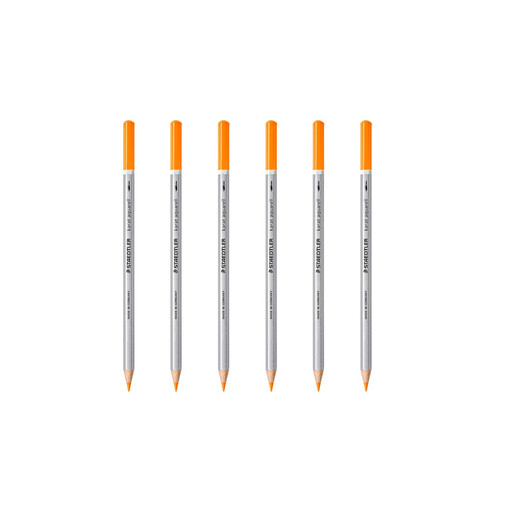
Why this product fits the profile: The clearly defined shade Light Orange offers a manageable introduction to watercolour painting, or works as a refill for warm accents in drawings.
The colour name and model number 125-42 are provided. This makes it easier to distinguish the desired orange tone from similar variants.
6 pencils, water-soluble lead, hexagonal wooden casing and stated FSC certification of the wood.
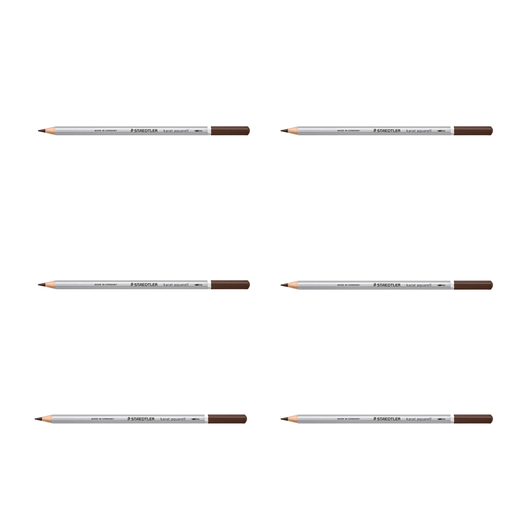
Why this product fits the profile: Sepia is ideal for monochrome studies, sketches, architectural drawings and warm shading where a single earth tone takes centre stage.
The product details mention the water-soluble lead, the hexagonal shape and the colour number 125-77. This makes technical and colour checking easier before purchase.
Soft, water-soluble lead, suitable for dry and wet techniques; wood stated to be FSC-certified.
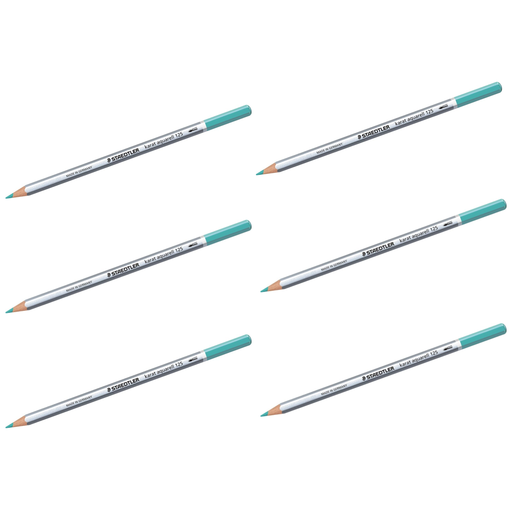
Why this product fits the profile: French Green is a practical colour addition for botanical subjects, landscapes and recurring green areas in illustrations.
The inclusion of colour code 125-54, lead diameter and FSC wood creates a traceable basis for comparison with other colour variants.
Water-soluble lead, soft colour application, hexagonal shape and 6-pack for repeated use.
We’ve put together a complete, regularly updated list of products that fully meet these strict selection criteria and the safety regulations in force in the EU.
The pencils can first be used dry, like ordinary coloured pencils. Then the colour application is dissolved with a damp brush. For fine lines, the dry application remains visible; for colour washes, the pigment can be spread on suitable watercolour paper.
The lifespan depends on pressure, how often they are sharpened and the intended use. Fine illustrations use less lead than large-area colouring. Storing them dry and using a sharp, suitable sharpener helps to avoid unnecessary material loss.
Additional watercolours are not necessary for basic use. However, watercolour paper, one or more brushes, a water container and a protective mat for your workspace are useful. For precise drawings, a suitable sharpener completes the set-up.