
Lieferung heute & morgen

Qualitätsgarantie

Willkommens-Angebote freischalten: KOSTENLOSE Lieferung | Bis zu 80 % RABATT | Kostenlose 30-Tage-JoyPlus-Testphase
App herunterladen
As a Joybuy Product Recommendation Officer, I analyse the art supply market on your behalf. When choosing watercolour pencils, it's easy to be swayed by marketing promises. Many products fail to deliver, leading to frustration and wasted money. This guide will show you what to look for to make an informed decision.
Before you invest, you should be aware of the typical problems that arise with low-quality products. These issues often result in the pencils being left unused in a drawer.
To avoid the problems mentioned above, focus on three verifiable technical parameters. These define the quality and usability of artist-grade watercolour pencils.
The quality of the lead is the heart of any coloured pencil. For watercolour pencils, a soft lead with high pigment density is essential. Such a lead allows for a rich, even application when dry and releases a large amount of colour upon contact with water. High-quality pencils like the STAEDTLER Karat Aquarell series use specially bonded leads to increase break-resistance. This ensures reliability when sharpening and applying various levels of pressure.
True water-soluble pencils are distinguished by the fact that their pigments dissolve completely when touched with a wet brush. Look for product descriptions that explicitly mention suitability for various techniques:
The ability to master these techniques is what separates simple pencils that are merely water-soluble from professional tools.
An often-overlooked but important feature is the quality of the wood and its origin. A pencil made from high-quality wood sharpens cleanly and easily without splintering. The FSC (Forest Stewardship Council) certification is a reliable indicator here. It guarantees that the wood comes from sustainably managed forests. Many products in the STAEDTLER Aquarell range carry this seal, which is an objective commitment to quality and environmental responsibility.
Instead of making a blanket recommendation, we have selected products tailored to clearly defined user profiles.
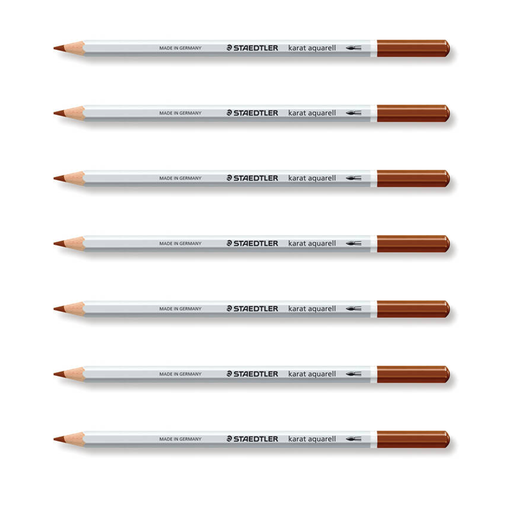
Why it's a match: Ideal for architectural sketches, detailed illustrations, and creating shadows. The stable, rich brown tone is a foundation for technical drawings and portraits where precision is required.
The high-quality lead dissolves completely, preventing grainy residue in fine washes. The special bonding minimises lead breakage during detail work.
Excellent for both dry detail work and wet washes, offering true versatility. The hexagonal barrel prevents it from rolling off the drawing table.
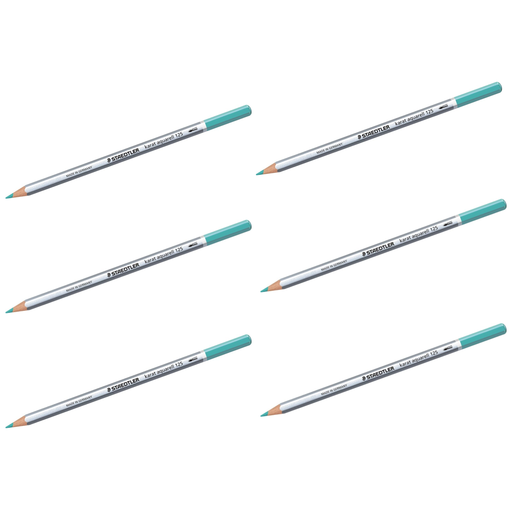
Why it's a match: According to the manufacturer, this specific mid-tone green is designed for botanical illustrations and landscapes. It retains its brilliance even when heavily diluted, which is crucial for depicting flora.
The artist-grade pigment concentration ensures high lightfastness. This protects the integrity of finished works from fading and secures the longevity of the colours.
A specific hue for nature scenes that offers high colour intensity. The wood is FSC-certified and sourced from sustainably managed forests.
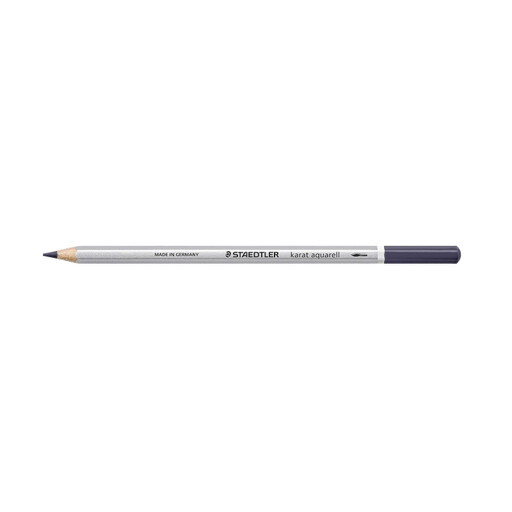
Why it's a match: Indigo is a fundamental colour for mixing shadows, deep sky tones, and a wide range of other hues. It is a workhorse for any palette, suitable for students, hobbyists, and professionals alike.
The soft lead allows for a smooth application and impressive light effects. It avoids the scratchy feel and uneven colour laydown of inferior pencils.
High versatility for mixed media and colour blending. The soft lead ensures smooth transitions and is equally suitable for dry and wet applications.
We have compiled a complete, up-to-date list of products that fully meet these strict selection criteria and German quality standards.
For optimal results, using dedicated watercolour paper is recommended. Look for a paper weight of at least 200 g/m?. This paper is more absorbent and will buckle less when in contact with water than standard drawing paper, which is essential for clean washes and colour transitions.
Due to the soft consistency of the lead, a high-quality sharpener is crucial. Ideally, use a metal sharpener with a sharp blade. Turn the pencil slowly and with even pressure. Some manufacturers, like STAEDTLER, recommend specific sharpener models (e.g., Mars 510 25 double-hole sharpener) that are designed for the geometry and lead hardness of their pencils.
Yes, absolutely. The STAEDTLER Karat Aquarell pencils also function as high-quality artist's coloured pencils when used purely dry. Their soft lead and high pigmentation allow for intense colours and smooth shading, similar to classic artist's coloured pencils. The water solubility is an additional feature, not a mandatory use.