
Lieferung heute & morgen

Qualitätsgarantie

Willkommens-Angebote freischalten: KOSTENLOSE Lieferung | Bis zu 80 % RABATT | Kostenlose 30-Tage-JoyPlus-Testphase
App herunterladen
Whether for a lecture hall presentation, warehouse organisation, or labelling storage jars in the kitchen, choosing the wrong pen often leads to frustration. A permanent marker on a wipeable transparency can cause expensive damage, while a water-soluble pen on a shipping box will become illegible in the rain. Many users invest in pens that either dry out quickly or have a tip unsuitable for the intended task.
This guide will help you understand the key features of the STAEDTLER Lumocolor series. It will enable you to make an informed decision and find the right universal pen for your specific needs, without falling for exaggerated marketing claims.
To select the right STAEDTLER Lumocolor pen, you should check three fundamental parameters: the ink type, the tip, and useful additional features.
The most important distinction is the ink. The choice depends entirely on your intended application.
The tip determines how precisely or boldly you can write. STAEDTLER uses letters to denote the line widths:
Two features of the Lumocolor series offer significant practical value:
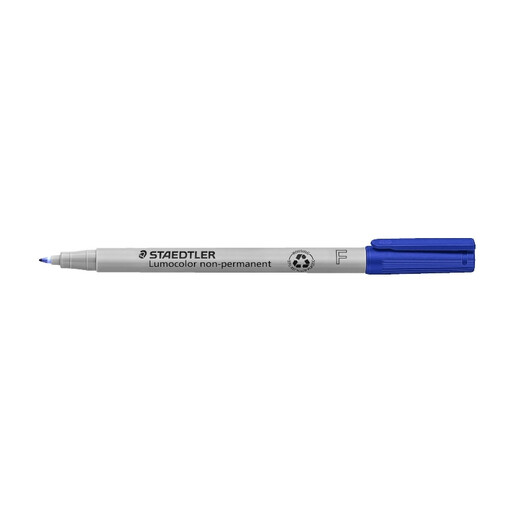
Why this model is a good fit: Ideal for use on overhead transparencies (OHP) or laminated worksheets. The fine tip allows for clear, legible notes that can be easily corrected during a presentation or lesson.
The water-soluble ink prevents permanent damage to expensive transparencies or whiteboards. A damp cloth is all that's needed for cleaning.
The fine tip (0.6 mm) offers precision for diagrams and text. Additionally, the pen is refillable with the 487 15 refill station.
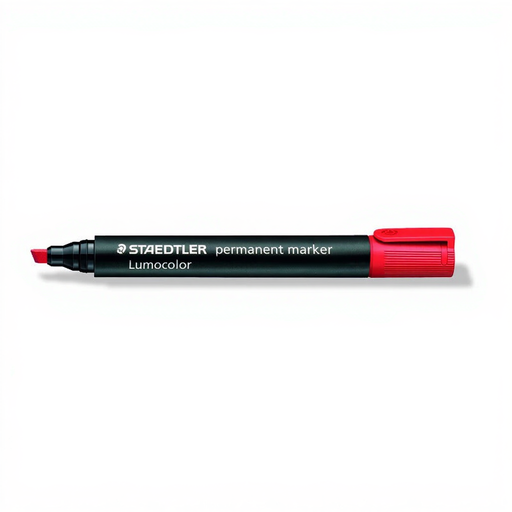
Why this model is a good fit: Perfect for the permanent labelling of storage boxes, tools, or shipping cartons. The ink adheres to almost all surfaces and is smudge-proof and waterproof.
The DRY SAFE technology prevents it from drying out, even if the cap is forgotten in a hectic workday. The permanent ink ensures that labels last.
The versatile chisel tip (2-5 mm) allows for both broad, highly visible markings and finer lines. The pen is also refillable.
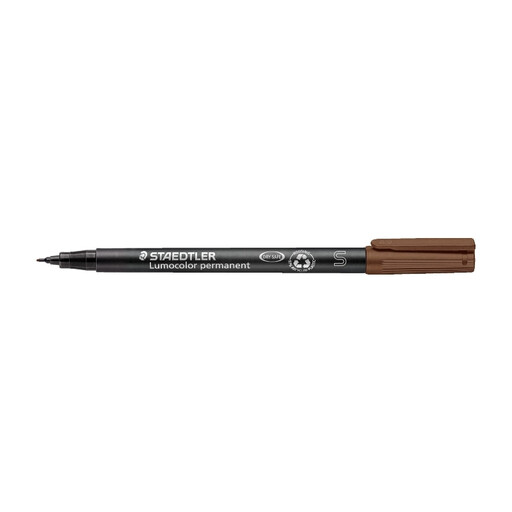
Why this model is a good fit: For anyone who needs to permanently and legibly label small objects like lab samples, CDs/DVDs, electronic components, or model parts. It adheres reliably to glass and plastic.
The superfine tip (0.4 mm) prevents illegible "bleeding" of the ink on small surfaces. The permanent ink ensures the label is not accidentally wiped away.
Its DRY SAFE feature and refillability (with station 487 17) make it a durable and reliable tool for professional users.
We have compiled a complete, up-to-date list of products that fully meet these strict selection criteria.
The ink of a Lumocolor permanent marker is designed for durable adhesion. On smooth, non-porous surfaces like glass or metal, the ink can often be removed with alcohol-based solvents (e.g., isopropyl alcohol or methylated spirits). It is recommended to test this on an inconspicuous area first to avoid damaging the surface. The ink is generally not removable from porous materials like paper or fabric.
Yes, many models in the Lumocolor series are designed as a refillable marker. Special refill stations are available for this purpose (e.g., models 487 15 for non-permanent or 487 17 for permanent). Simply insert the pen with its tip facing down into the station's opening. Within a few hours, the tip will be fully saturated with ink, and the pen is ready to use. This reduces waste and is more cost-effective in the long run.
The DRY SAFE technology is an ink system developed by STAEDTLER. According to the manufacturer's specifications, which refer to the ISO 554 standard, this system prevents the pen tip from drying out even if it is left uncapped for several days. This makes the pen particularly reliable in environments where it is used frequently and with interruptions.