
Lieferung heute & morgen

Qualitätsgarantie

Willkommens-Angebote freischalten: KOSTENLOSE Lieferung | Bis zu 80 % RABATT | Kostenlose 30-Tage-JoyPlus-Testphase
App herunterladen
Glass, metal, plastic and porcelain cannot be labelled reliably with every writing instrument. Conventional fibre-tip pens often adhere unevenly to smooth surfaces, while pencil leads are barely visible on dark materials. The STAEDTLER Lumocolor glass marker was therefore developed for labelling non-absorbent and partially dark surfaces.
Before buying, however, you should distinguish carefully between a permanent glass marker and a non-permanent glass marker. The type of lead, water resistance and subsequent removal of the marking also determine whether a product is suitable for laboratories, workshops, quality control or creative projects.
A waterproof marker can remain visible on glass or metal for a long time. This is useful for permanent identification, but may create extra work if corrections are needed later. Depending on the product, scrapers or suitable cleaning agents may be required on smooth surfaces. Removal can be considerably more difficult from porous materials such as untreated wood or stone.
For changing labels, laboratory containers or temporary markings, a wipeable marker is usually more suitable. According to the product description, the non-permanent Omnichrom version can be removed from many smooth surfaces with a damp cloth.
On transparent glass, dark plastic or black metal parts, you need an opaque pigment lead. A thin, transparent layer of colour may offer too little contrast on these surfaces. Depending on the background, white, yellow, red or green shades provide different levels of visibility.
That is why the colour name alone is not decisive. The combination of pigment opacity, line width and surface colour is what matters. Test the pen on an inconspicuous area before using it regularly.
Omnichrom and Glasochrom leads are based on a wax-like pigment composition. In high temperatures, the lead may become softer and the tip may lose precision. Storing the pen in a hot vehicle or in direct sunlight is therefore not advisable. Keep it dry and at moderate room temperature.
The most important choice concerns the desired durability:
Please note: “Permanent” does not mean that a marking is impossible to remove under all circumstances. Depending on the surface, special cleaning agents or a scraper may be used on non-porous surfaces. On absorbent materials, the marking may remain clearly visible for considerably longer.
A glass marker with a wax-based lead adheres differently from a liquid ink marker. The lead applies an opaque layer of colour to the surface and can produce even lines with suitable pressure control. For fine lettering, sharpen the tip; for broader markings, a blunter tip may be more practical.
Make sure you use a sharpener suitable for thicker leads. With some versions, a knife can alternatively be used if you need a customised tip shape. Check the relevant product description before buying.
A marker for glass and metal should be specified as suitable for the particular surface. According to the available product information, the STAEDTLER Lumocolor models are intended for a wide range of smooth or dark materials. These include glass, plastic, metal, porcelain, leather and stone, among others.
For delicate or coated surfaces, a brief compatibility test is recommended. Before marking, clean the surface to remove dust, grease and coarse dirt. This can help ensure a more even application. Workplaces with specific hygiene or safety requirements must also follow their internal operating instructions.
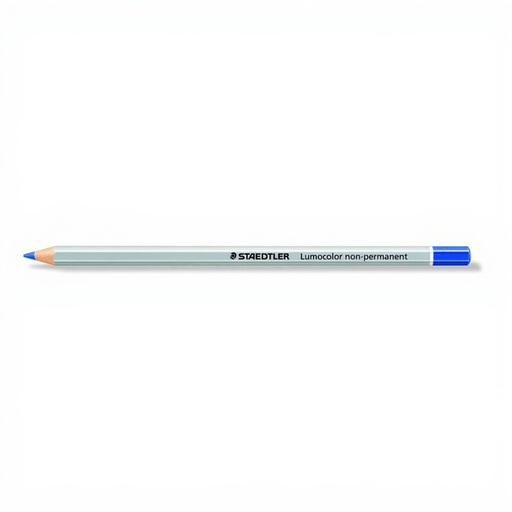
Why this product suits the profile: The blue non-permanent lead is suitable for initial labelling on smooth, non-porous surfaces where corrections may be required.
The marking is not designed for permanent adhesion and can be removed from many smooth surfaces with a damp cloth.
Wax-based Omnichrom lead, opaque colour application and intended use on glass, porcelain, metal, plastic and stone.
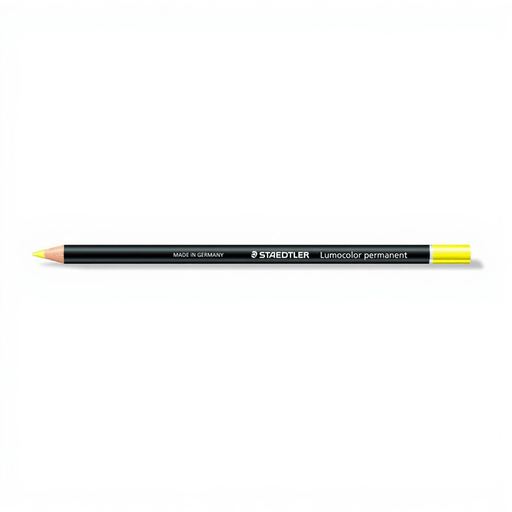
Why this product suits the profile: The yellow permanent version is designed for durable, clearly visible markings on a range of materials.
The product information states that the lead is waterproof and lightfast. This clearly distinguishes it from a wipeable marker.
Permanent, waterproof and lightfast according to the product description; PEFC-certified wooden barrel.
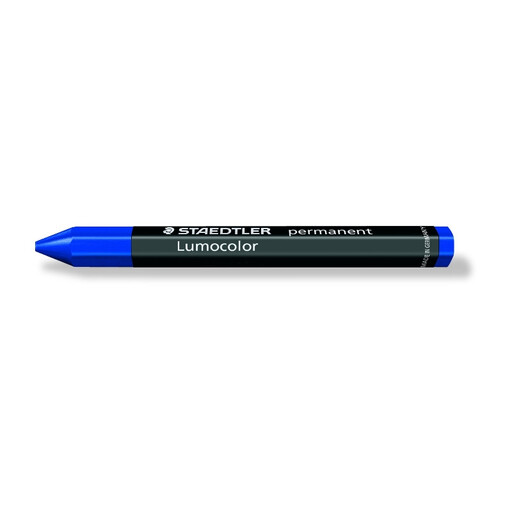
Why this product suits the profile: The bold Omnigraph crayon is designed for intensive marking in workshops, trades and industry, including on damp or uneven surfaces.
This version should not be confused with a fine, wipeable glass marker. It is intended for robust, permanent markings on a wide range of surfaces.
Waterproof, low-odour and lightfast wax crayon with a hexagonal shape and paper sleeve.
We have put together a complete, regularly updated list of products that fully meet these strict selection criteria and the safety regulations applicable in the EU.
For laboratory and quality-control applications, it is also advisable to establish a consistent labelling system: define which colour represents each status, stage of work or inspection area. This makes colour selection traceable rather than based solely on visual preference.
That depends on the version. According to the product information, a non-permanent Omnichrom marker is designed to be removed with a damp cloth. With a permanent Glasochrom or Omnigraph model, cleaning agents or a scraper may be required on smooth surfaces. Test the method on an inconspicuous area first.
Yes, according to the relevant product information, the versions mentioned are intended for several smooth materials, including metal and plastic. For painted, coated or delicate surfaces, check compatibility before applying the marker over a larger area.
There is no universal answer. It depends on line width, pressure, how often the lead is sharpened and the length of the markings. As the pens use a wax-based lead that can be sharpened, suitable tip care can influence their service life.